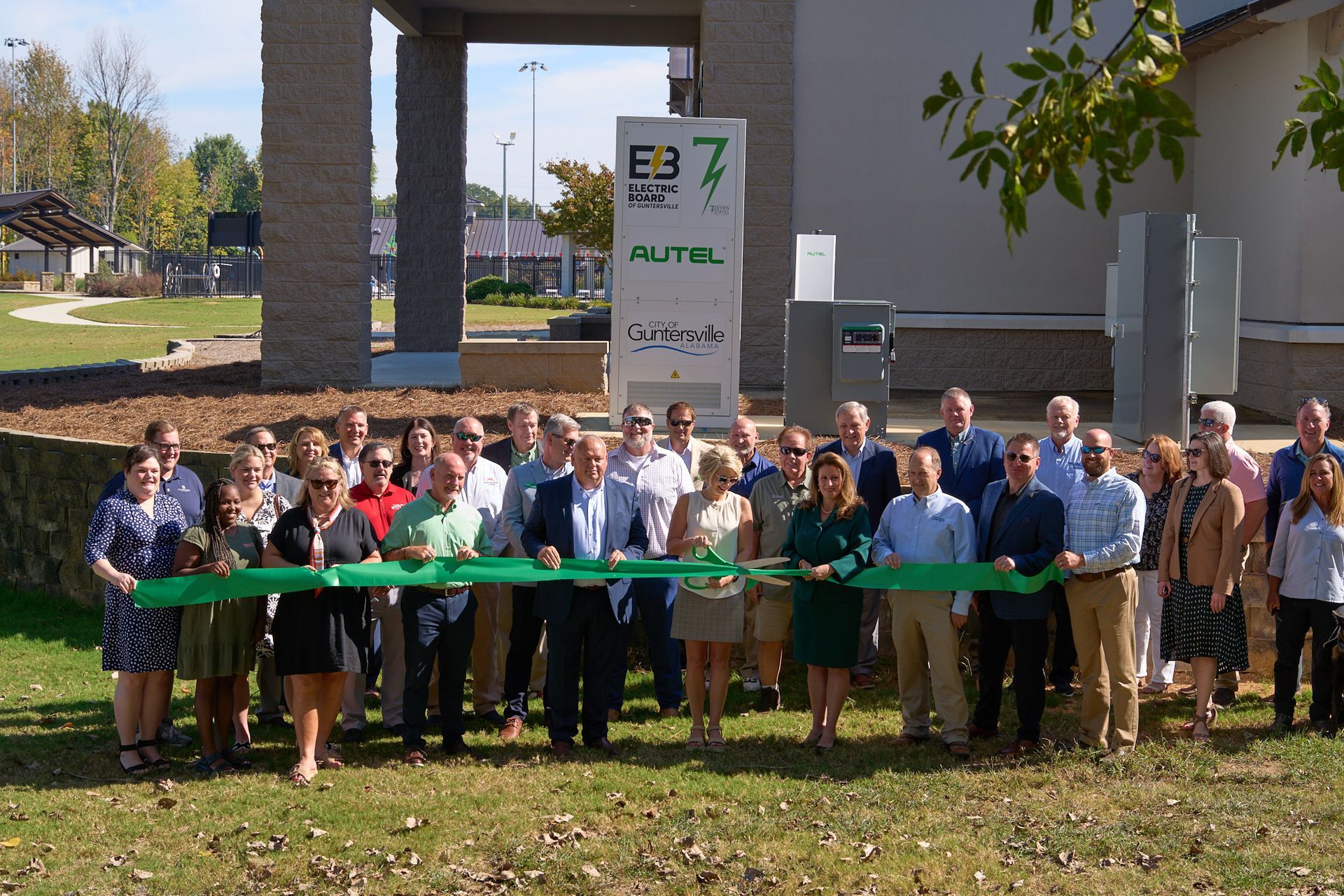
GUNTERSVILLE, AL — October 2, 2026 — Electric Board of Guntersville and the City of Guntersville, in partnership with Seven States Power Corporation, today celebrated the ribbon cutting and official unveiling of a new battery energy storage system (BESS) and two electric vehicle (EV) charging ports at the Guntersville Senior Center. The project represents an investment in reliability, emergency preparedness and modern energy infrastructure for the Guntersville community. The battery system is designed to provide backup power to the Senior Center during outages, helping the facility continue serving residents when reliable electricity is needed most. The addition of battery storage will also enable the Senior Center to meet critical emergency preparedness requirements for designation as a FEMA shelter, strengthening its ability to serve residents during severe weather and other emergency events. “This project is about putting innovative technology to work in a way that directly benefits the people we serve,” said Jason Kirkland, General Manager of Electric Board of Guntersville. “By adding battery storage and EV charging at the Senior Center, we are investing in infrastructure that supports reliability today while preparing our community for the needs of tomorrow.” The City of Guntersville partnered with Electric Board of Guntersville and Seven States to bring a 261kWh battery energy storage system (BESS) to the Senior Center, supporting an investment that strengthens the facility’s role as a vital community resource and enhances its ability to serve residents during emergencies. The battery unit will store energy during off-peak hours and be used as necessary to supply power to the facility during an outage or to deploy power for up to 2 hours back onto the Guntersville electric grid. The two new EV charging ports complement the battery installation by expanding access to charging infrastructure for residents and visitors. Together, the technologies demonstrate how community-scale energy projects can provide practical benefits while helping local power companies modernize infrastructure. “What makes this project special is its purpose. This battery is more than a piece of energy infrastructure, it provides another tool to help Guntersville care for its residents and keep an important community facility powered when it matters most,” said Guntersville Mayor Leigh Dollar. “Seven States was created to help local power companies turn opportunities like this into projects that deliver meaningful benefits in their communities,” said Betsey Kirk McCall, President & CEO of Seven States Power Corporation. The Guntersville project is part of Seven States’ broader work with local power companies across the Tennessee Valley to develop and finance energy infrastructure tailored to local needs.
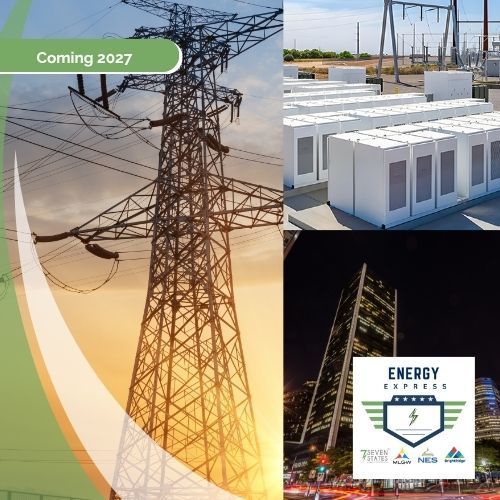
CHATTANOOGA, Tenn. — September 02, 2026 — Seven States Power Corporation has issued a Request for Proposals (RFP) seeking a qualified provider to supply battery energy storage systems and a 20-year long-term service agreement for the Energy Express Project, a 220-megawatt battery storage initiative being developed in partnership with Memphis Light, Gas and Water (MLGW), Nashville Electric Service (NES), and BrightRidge. The competitive procurement represents another major milestone as Seven States advances one of the Tennessee Valley’s most significant investments in distribution-connected battery storage. The Energy Express Project will deploy battery energy storage across multiple locations in west, middle, and east Tennessee, including 100MW in partnership with MLGW, 100MW with NES, and 20MW with BrightRidge. Seven States will own and operate the assets, which will be interconnected with the local utilities’ distribution systems and designed to charge during lower-demand periods and discharge when demand is highest. The systems will provide the utility partners with greater operational flexibility while helping manage peak demand, strengthen reliability, and make more efficient use of existing grid infrastructure. “Moving into procurement marks an important step toward delivering these assets for our local power company partners and the communities they serve,” said Betsey Kirk McCall, President and CEO of Seven States Power Corporation. “Through Energy Express, we are combining federal financing, local partnerships and innovative energy technology to make a long-term investment in the Tennessee Valley’s electric infrastructure. This RFP will help us identify a partner capable not only of delivering the technology, but of supporting its performance and reliability throughout the life of the project.” The Energy Express Project is backed by Seven States’ $439 million award through the U.S. Department of Agriculture’s Rural Utilities Service New Empowering Rural America (New ERA) program. Construction is expected to begin in 2027, with the battery assets targeted for commissioning in late 2028. Interested respondents can access the RFP and additional procurement information at https://www.sevenstatespower.com/rfp-inquiry.
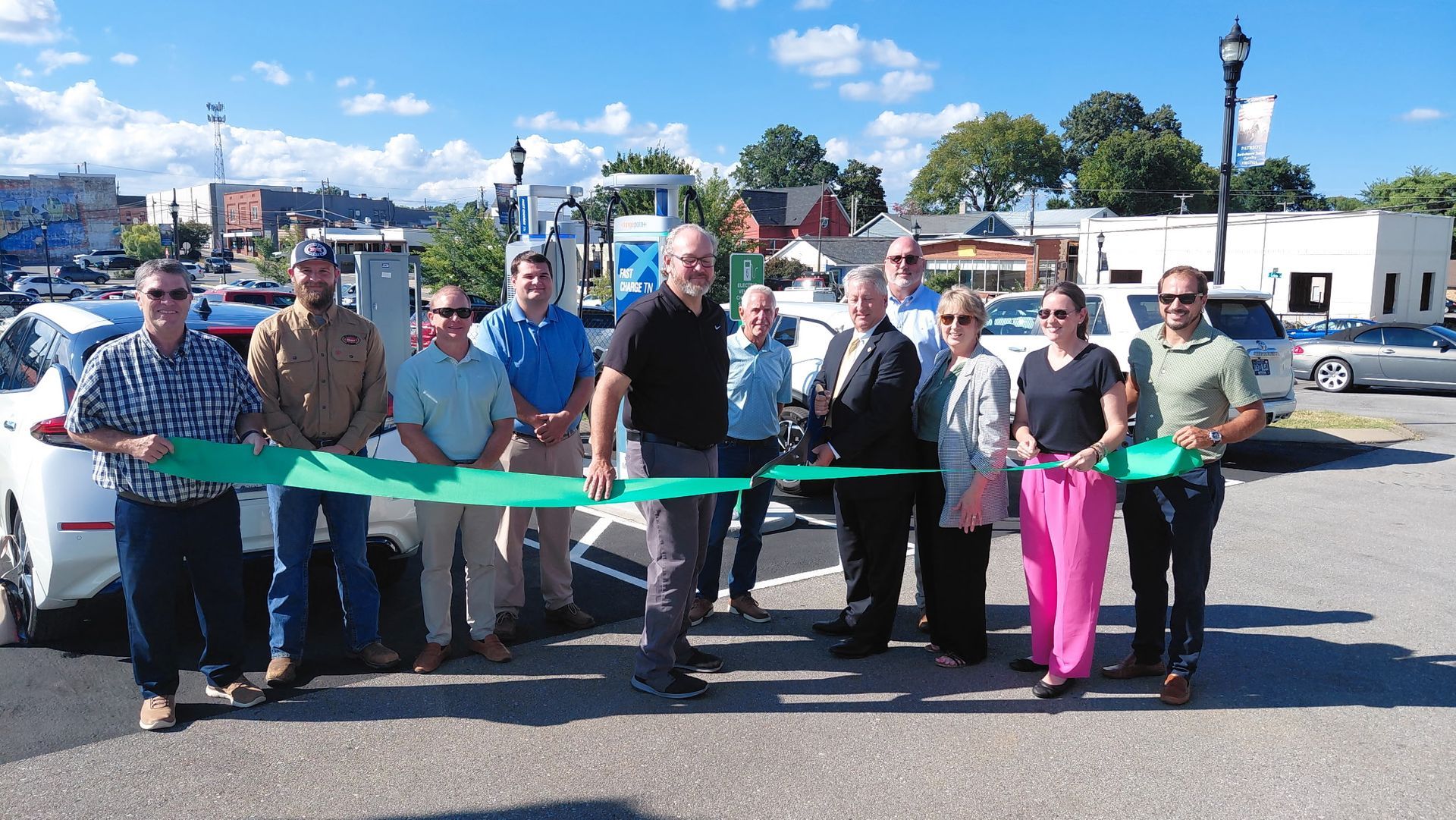
DICKSON, Tenn. — August 4, 2026 — Dickson Electric System, in partnership with Seven States Power Corporation (Seven States), on Tuesday celebrated the official opening of 2 new DC Fast Charge electric vehicle (EV) charging ports that will expand charging access for residents and travelers while supporting continued economic growth throughout the region. Community leaders, elected officials, utility representatives, and project partners gathered for a ribbon-cutting ceremony to commemorate the investment. The new DC Fast Charge EV charging ports mark another exciting step forward in advancing regional transportation infrastructure that will expand convenient charging options for residents and visitors throughout the community. “This project represents our commitment to providing reliable, forward-looking infrastructure that serves our customers both today and in the future,” said Darrell Gillespie, General Manager of Dickson Electric System. “As electric vehicle adoption continues to grow, investments like these help ensure our communities remain connected and ready for what’s next.” The charging ports are part of broader efforts to expand EV infrastructure throughout the Tennessee Valley, providing drivers with increased confidence and accessibility as electric transportation continues to grow. The project was made possible through funds supplied through the TN Fast Charge Network which is a statewide EV charging initiative developed by the Tennessee Department of Environment and Conservation (TDEC) and Tennessee Valley Authority (TVA) to place chargers every 50 miles along major highways. “Seven States is proud to partner with Dickson Electric to bring this project to life,” said Betsey Kirk McCall, President & CEO of Seven States. “Together, we’re helping local utilities meet evolving energy needs while creating lasting value for the communities they serve.” The charging stations will be available for use beginning August 4, 2026. They are located at 210 East College Street, Dickson, TN.
Source: Chattanooga Times Free Press | 2 August 2026 | BY DANIEL DASSOW Nearly 20 years ago, the Tennessee Valley Authority and its main customers -- local electric utilities -- formed a new power company with a specific and unprecedented goal. Seven States Power Corp. , a cooperative owned by the region's local utilities, like EPB in Chattanooga , would co-own power plants with TVA. The cooperative would put ownership of power plants in local hands rather than with the U.S. government, which owns TVA and its assets. Seven States would help the federal agency stay below its $30 billion legal debt limit. From 2008 to 2013, Chattanooga-based Seven States owned a 90% stake in TVA's Southaven gas plant in Mississippi. After TVA lowered its debt and bought Seven States out of the plant, the cooperative pivoted to being a development partner for local utilities as they installed solar panels, electric vehicle charging stations and grid-level batteries. Now, Seven States leadership and members say the group is ready to return to its full founding mission of owning a stake in TVA power plants as the federal utility faces many of the same challenges from two decades ago. (READ MORE: Trump budget does not propose privatizing TVA as utility's debt rises) In a video interview, several managers of utilities in the region said Seven States had an opportunity to help TVA stay under its debt limit and meet higher power demand while keeping assets in local hands. "That original intent has never gone away," said Jeff Dykes, CEO of Johnson City-based utility BrightRidge and chair of the Seven States board. "Even though not a lot of action has happened over the years, it's always come back to that hope and desire and intent. We want TVA to be successful at the end of the day. We need TVA to be successful." Seven States is a generation and transmission cooperative , a model in which utilities band together to form a group that can own power plants. While the model is common in other parts of the U.S., TVA's central authority over its seven-state domain is its own model. "TVA is unique in that it owns the generation, it owns the transmission, it's self-regulating and it regulates its own customers," Wes Kelley, CEO at Huntsville Utilities, said in a video interview. "There's nothing else in the country that fits that paradigm." TVA customers have benefited from the model for more than 90 years, Kelley said, though there is room to integrate best practices from other parts of the country. TVA's debt is expected to rise from $23.8 billion at the beginning of 2026 to $27.3 billion by the end of 2027, according to a recent White House budget. The utility has found ways to offload some of the debt, including by entering lease-purchase agreements. The deals allow TVA to receive payment from a third party in exchange for a master lease on a power plant. TVA continues to own the plant while making payments back to the third party, similar to a mortgage. TVA entered a $2 billion lease agreement in May for its Cumberland gas plant in Middle Tennessee, scheduled for completion by the end of the year. The value of the deals is even greater if Seven States is the third party, said Doug McGowen, CEO of Memphis Light, Gas and Water, TVA's largest customer. Because Seven States is owned by the end customers of the product, its interest in maintaining low power costs is the same as residents of the region. "If Seven States was to take ownership of some of the assets through alternative financing, now you have the customers of TVA who are de facto owners of the assets that are generating the electricity that they are ultimately buying," McGowen said. "For us, that means there is a built-in hedge of protection or inherent checks and balances." Seven States is prepared to finance deals on the magnitude of the Cumberland deal, said Betsey Kirk McCall, CEO of the cooperative. The U.S. Department of Agriculture awarded Seven States $439 million in loans and grants last year, which the cooperative is using to build battery systems for its members. The award made Seven States eligible for greater financing, potentially up to the billions of dollars needed to take stake in a major gas plant, McCall said. Funding agencies include the USDA and the U.S. Department of Energy, she said. "None of them have shied away from numbers and volume of plants that we've put in front of the organizations we've been interacting with," McCall said. Seven States is a "force multiplier" for TVA that acts as an extension of its local power customers for the purpose of increasing power supply, McCall said in a later email. She told the TVA board of directors in May that Seven States had completed 222 projects with 80 utilities and received $475 million in state and federal funds since its founding. At its founding in 2007, the cooperative was designed to issue bonds backed by long-term contracts to purchase power. TVA was building gas plants at the time to meet power demand. The TVA board of directors, the members of which are nominated by the president and confirmed by the Senate, approved negotiations with Seven States in 2008. The move was meant to provide stability in ownership if TVA assets were ever sold by the U.S. government. (READ MORE: Climate groups, senators criticize TVA for fossil gas expansion plans) In the process, Seven States would empower local distributors that operate in a power system where one entity has historically owned and operated all the power plants and transmission lines. "(TVA was) up against the same challenges we're up against today," said Edward Kemp, general manager of Starkville Utilities in Mississippi. "At that time, as well as today, all the local power companies really want to be a part of the solution. We want to help. We're not just depending upon TVA to do everything for us." In 2020, TVA granted its local power companies the ability to generate or buy up to 5% of their electricity. Seven States found a niche in helping local utilities develop their own generating sources, work it continues to do. But as TVA's power demand is rising again after a period in the 2010s marked by flat demand growth, Seven States sees a chance to go big again. The cooperative could once again become a major finance partner to TVA, said Chris Jones, president of the Middle Tennessee Electric Membership Corp. The move would only enhance the public power model that's characterized the region since Congress created TVA during the Great Depression. "It can be even better whenever local power companies are given more priority as a practical partner," Jones said. "I think we're seeing that day come, and Seven States is going to be part of it."
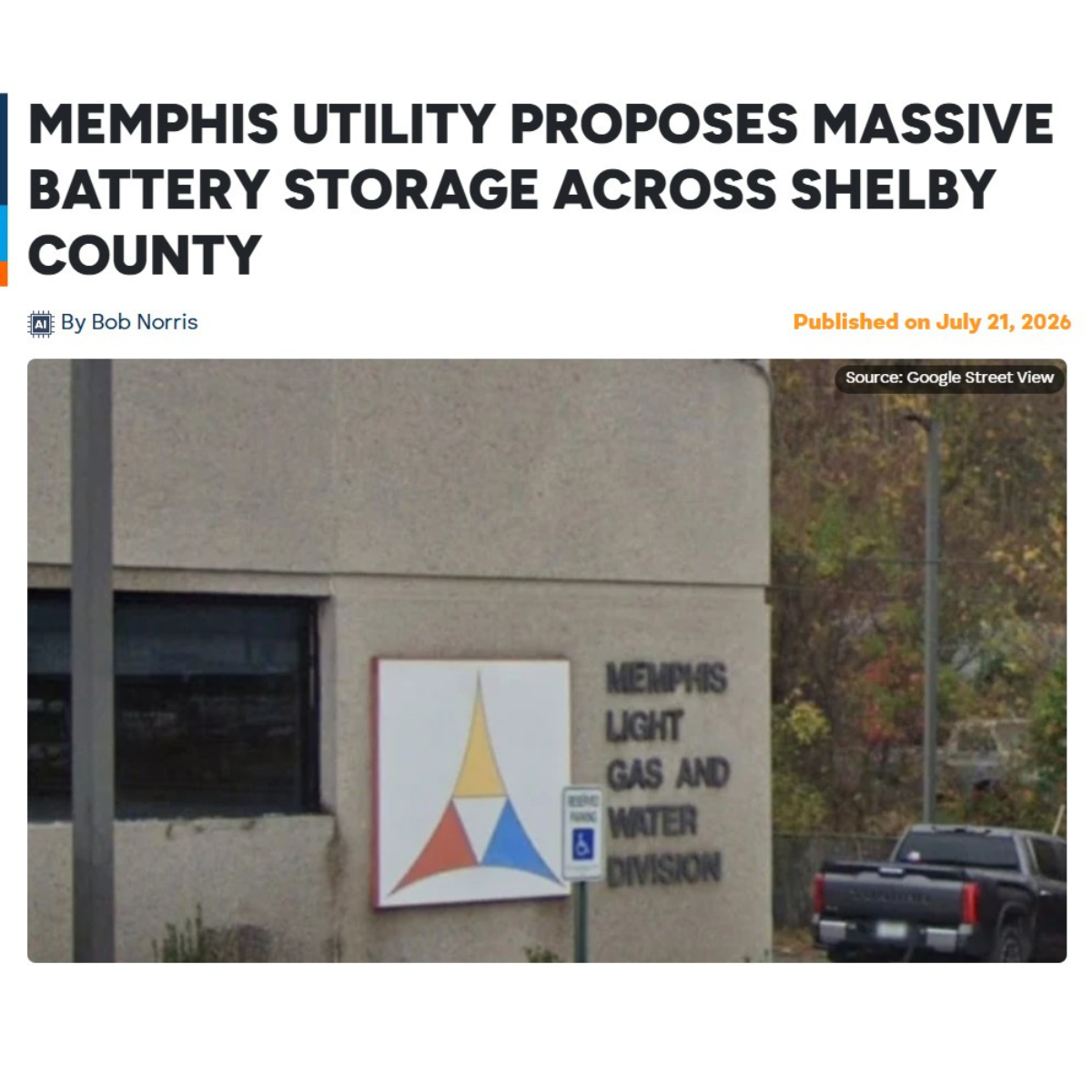
Source: Hoodline | 21 July 2026 | By Bob Norris Memphis Light, Gas & Water is gearing up for a massive battery play that could reshape how Shelby County keeps the lights on and the bills in check. Utility leaders say a new countywide battery storage network could cut pricey wholesale power purchases and help keep electric rates steady well into the next decade. The idea is simple enough, even if the hardware is anything but. MLGW wants large-scale batteries stationed at key substations around the county, ready to kick in when demand spikes and wholesale prices jump. What’s Being Proposed MLGW outlined a plan to install 125 megawatts of battery storage spread across nine substations in Shelby County. The systems would quietly charge up overnight when power is cheaper, then discharge during peak hours to reduce what the utility has to buy from the Tennessee Valley Authority at premium prices. Locations floated by officials include Cordova, Collierville, Whitehaven and North Memphis, according to Action News 5 . It is a far cry from a backup battery in your hallway closet. Project Partners And Funding Regional developer Seven States Power, which is leading the broader Energy Express initiative, is lining up the pieces behind the scenes. The MLGW portion is expected to account for roughly 100 megawatts of a 220-megawatt rollout across Tennessee, supported by about $439 million in zero-interest loans and grants from USDA’s Rural Utilities Service. Seven States Power says construction is scheduled to start in 2027, with a goal of having the full system up and running by December 2028. What City Leaders Were Told Speaking to the Memphis City Council, MLGW President Doug McGowen framed the storage push as a direct play to keep customer bills from climbing. He said the strategy is “designed to push rates downward, down, not up,” and MLGW told council members it does not expect an electric rate increase until after 2030, according to Action News 5 . How This Fits With MLGW’s Earlier Plans This battery push did not come out of nowhere. In March 2025, MLGW issued a request for proposals seeking roughly 100 megawatts of solar generation paired with about 80 megawatts of utility-scale battery storage, along with smaller distribution-level projects. According to MLGW , that RFP let vendors pitch either utility-owned projects or third-party power purchase deals as the utility began testing the waters on local generation and storage. Benefits And Outstanding Questions Seven States estimates the combined battery installations would support power needs for roughly 12,000 homes and create construction jobs along the way. The setup is also expected to limit MLGW’s exposure to the most expensive peak market purchases. But some big pieces still have to fall into place. Siting, permitting and contract details have not been finalized, and the partners say they plan public outreach and technical reviews before any shovels hit the ground, as outlined by Seven States Power . Next steps include more detailed technical studies, regulatory sign-offs, and public briefings before contracts are locked in and crews mobilize in 2027. If the schedule holds, the batteries would be online by December 2028, giving MLGW a new tool to shave peak costs and put continued downward pressure on rates across Shelby County.
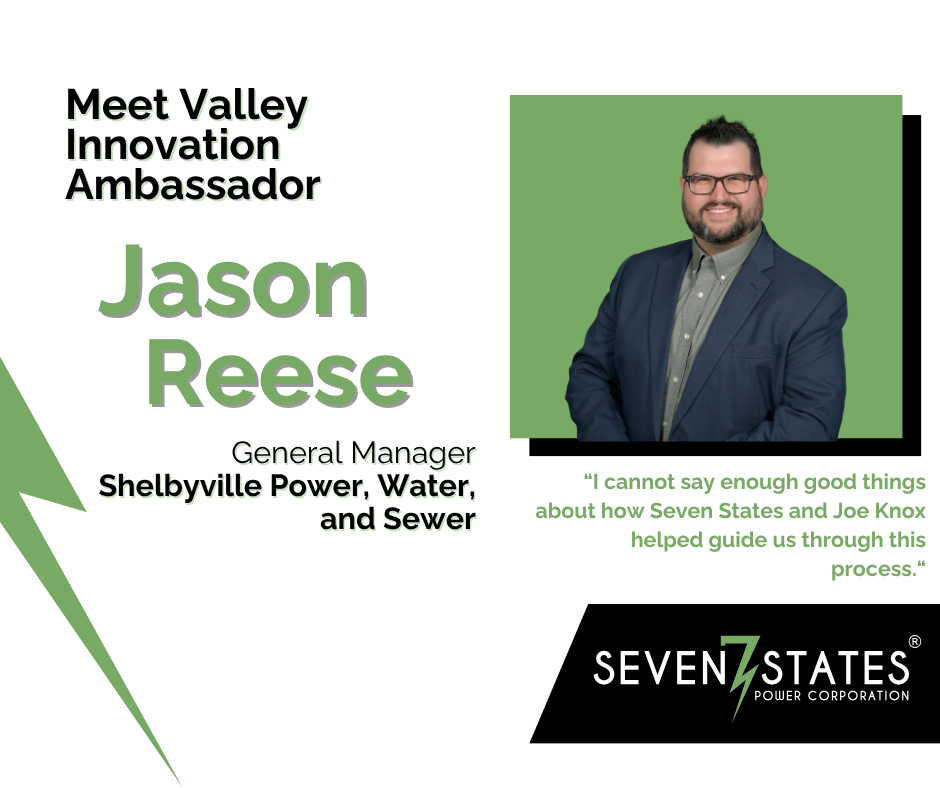
Jason Reese, General Manager of Shelbyville Power, Water, and Sewer System, leads his LPC with a focus on the evolving technology that strengthens reliability, improves efficiency, and enhances service for his customers. He took a moment to highlight some of the innovation that is truly making a difference across his community. AMI technology has had the greatest impact on Shelbyville Power, Water, and Sewer Systems and our community. Our system converted to AMI meters nearly 14 years ago, and this technology has enabled us to streamline many manual utility processes and improve operational efficiency in our electric and water systems. AMI electric meters with remote disconnect capabilities have enabled us to remotely disconnect and reconnect customers on the collections list, reducing truck rolls, improving operational efficiency, and enhancing employee safety. AMI water meters allow us to identify water leaks much sooner than was previously possible, benefiting both our customers and our efforts to reduce water loss. Our team is also very proud of our recent pilot distribution automation project installed on three circuits, each served by a different substation, which provide power to Shelbyville's two main corridors. Implementing distribution automation on these circuits helps minimize the number of customers affected during outages or the loss of a power source, improving service reliability for the community. Building on its success, our long-term goal is to expand distribution automation across all eighteen circuits and all three substations to further enhance system reliability, resiliency, and service to our customers. As the Valley continues to evolve and change, Jason knows firsthand that Seven States is a trusted industry resource and a valuable partner in helping LPCs navigate the process of implementing new technology projects. In June 2026, we completed our first EV charger project as part of the TN Fast Charge Network, and I cannot say enough good things about how Seven States and Joe Knox helped guide us through that process. These chargers have already been a hit with our community and have also brought in travelers from out of town to our downtown square. Everything from start to finish went as smoothly as it possibly could, and that is due to Seven States. While technology continues to transform the utility industry every day, Jason believes some aspects of the system will always depend on the knowledgeable workers who keep everything running behind the scenes. Hands-on infrastructure maintenance is one traditional utility practice that I believe will never completely disappear, regardless of how much technology advances. No matter how sophisticated our systems become, maintaining physical infrastructure will always require skilled workers to perform inspections, repairs, and upgrades in the field. Just as the utility industry is built on connections that span across communities, music has a way of bringing people together, even across generations. When asked which celebrity he would most like to meet for dinner, his choice was a musician who has stood the test of time. It would have to be Elvis Presley. As someone who has a love for all genres of music, to be able to sit down and talk with him about his career and experiences from gospel to rock-n-roll would be an absolute thrill!
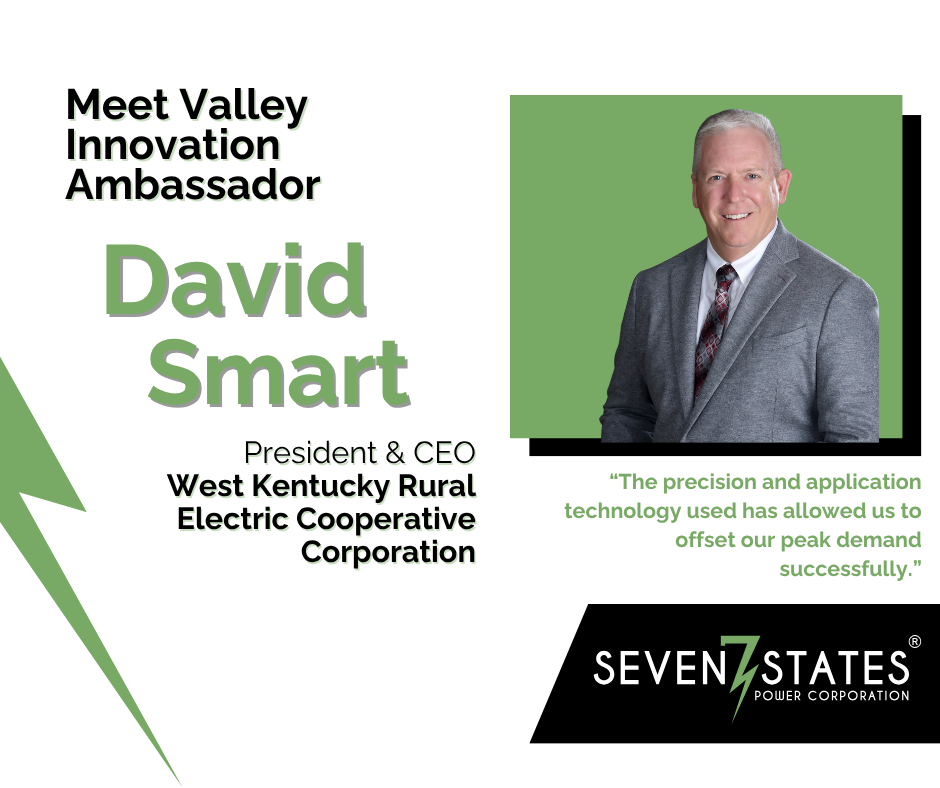
As utilities continue evolving to meet changing member expectations, David Smart, President and CEO of West Kentucky Rural Electric Cooperative Corporation (WKRECC), has focused on blending convenience with programs that directly improve quality of life. Smart points to both digital modernization and energy efficiency initiatives as areas where WKRECC has made meaningful strides for its members. One modernization effort that’s impacted our community has been the implementation of a mobile app and other digitized forms that make it easier for members to do business with their cooperative, including drive-thru registration and tablet voting at our annual meeting. Another would be Home Uplift initiatives, home energy audits, cold climate heat pump conversions and other programs we have implemented to improve the standard of living, comfort, and efficiency in our members’ homes. Innovation at WKRECC has also extended into advanced energy management and distributed energy resources. Smart elaborated on one of the cooperative’s proudest accomplishments involving internally managing demand and system performance. Our team is especially proud of our PowerShift Program, which utilizes our members’ whole home generators and batteries for demand response. The precision and application technology used has allowed us to offset our peak demand successfully. We have built our own DER gateway allowing us to meter, control, and interrogate home generators and inverters, and our own DERMS platform that incorporates an operational load forecast. Even as utilities embrace new technologies and digital tools, Smart believes some longstanding member habits will remain an important part of cooperative culture. Despite all of the technological advances in the utility world, I think many cooperative members will continue to pay their bill in person at one of our offices. Personal interaction and in-office service continue to matter for our members. In an industry focused on infrastructure and technology, Smart recognizes the value of strong communicators and trusted voices who help bring people and communities together. When asked a lighter question about who he’d like to have dinner with, he pointed to a well-known Kentucky figure who brings folks together. If I could have dinner with anyone, I would love to have dinner with the legendary voice of the Wildcats, Cawood Ledford. I think the stories he could tell would be enlightening and fascinating.
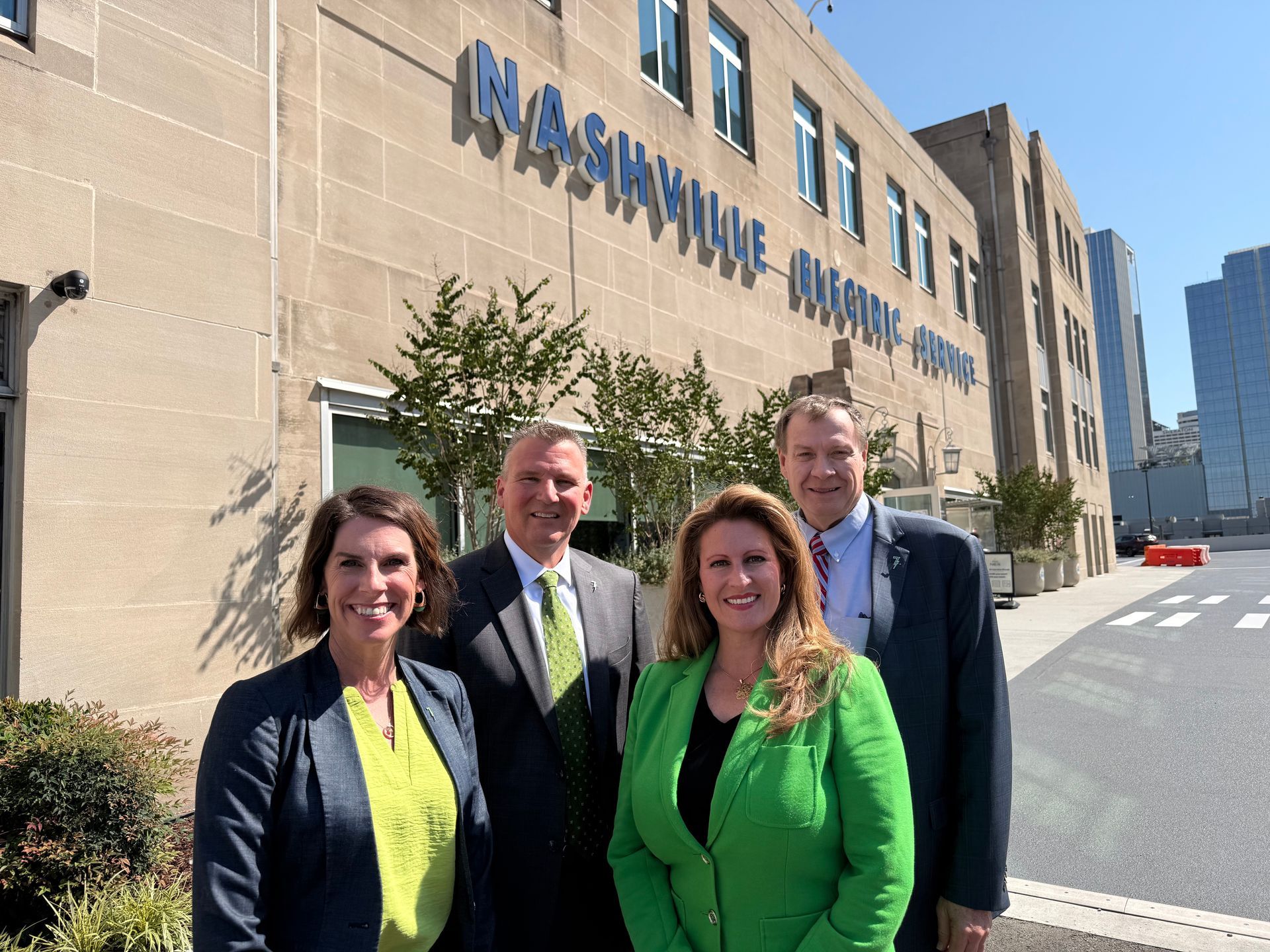
June 25, 2026 Seven States Power Corporation, headquartered in Chattanooga, Tenn., is pleased to announce that it will deliver a significant infrastructure investment to modernize the electric grid in partnership with Nashville Electric Service (NES), a municipal public utility based in Nashville, TN. The initiative, named the Energy Express Project, will deploy battery storage as a standalone resource designed to support peak demand, improve grid resiliency, and provide NES with greater operational flexibility. The project is backed by Seven States’ award of a landmark $439 million zero-interest loan and grant from the U.S. Department of Agriculture’s Rural Utilities Service (USDA RUS). This announcement follows similar recent announcements related to additional project locations across the state in partnership with Memphis Light, Gas and Water in Memphis, TN and BrightRidge in Johnson City, TN. The approach reflects a strategic decision to prioritize dispatchable energy assets that can respond immediately to system needs. By focusing solely on battery storage, Seven States and its partners aim to enhance reliability, allowing the utilities to better manage demand fluctuations and unexpected outages while maintaining some of the lowest electric rates in the country. “The Energy Express Project demonstrates how federal financing, local ownership, and collaborative partnerships can accelerate deployment of advanced grid technologies to help manage growing demand to meet the region’s energy needs,” said Betsey Kirk McCall, President and CEO of Seven States Power Corporation. “Battery storage provides an innovative tool that aligns with national priorities around energy dominance, affordability, and reliability.” Led by Seven States, the project will consist of 100 megawatts of battery storage capacity interconnected with NES’s electric distribution system. The batteries will be capable of storing energy from the existing grid and deploying it during periods of peak demand or system stress, helping stabilize the grid while reducing exposure to high-cost power purchases. “Our partnership with the team of experts at Seven States will allow us to deliver a battery solution that will modernize our grid, improve operations, and provide reliability for our customers,” said Teresa Broyles-Aplin, president and CEO of NES. “It gives us greater control during peak demand periods and supports our ongoing effort toward reliable energy distribution.” The battery installations will be constructed at several NES substations throughout Greater Nashville. Construction is expected to begin in 2027, with the project targeted for completion by December 2028. Once operational, the initiative is expected to support the electric needs of approximately 12,000 homes and businesses across the Greater Nashville area and create jobs during construction. Seven States will utilize the award from USDA to build 220MW of battery storage with its electric utility partners in west, middle and east Tennessee. The initiative is among the first of its kind in the Tennessee Valley and represents a significant investment in grid reliability and local energy infrastructure. Seven States and NES view the project as a model for future battery-focused investments across the Southeast.
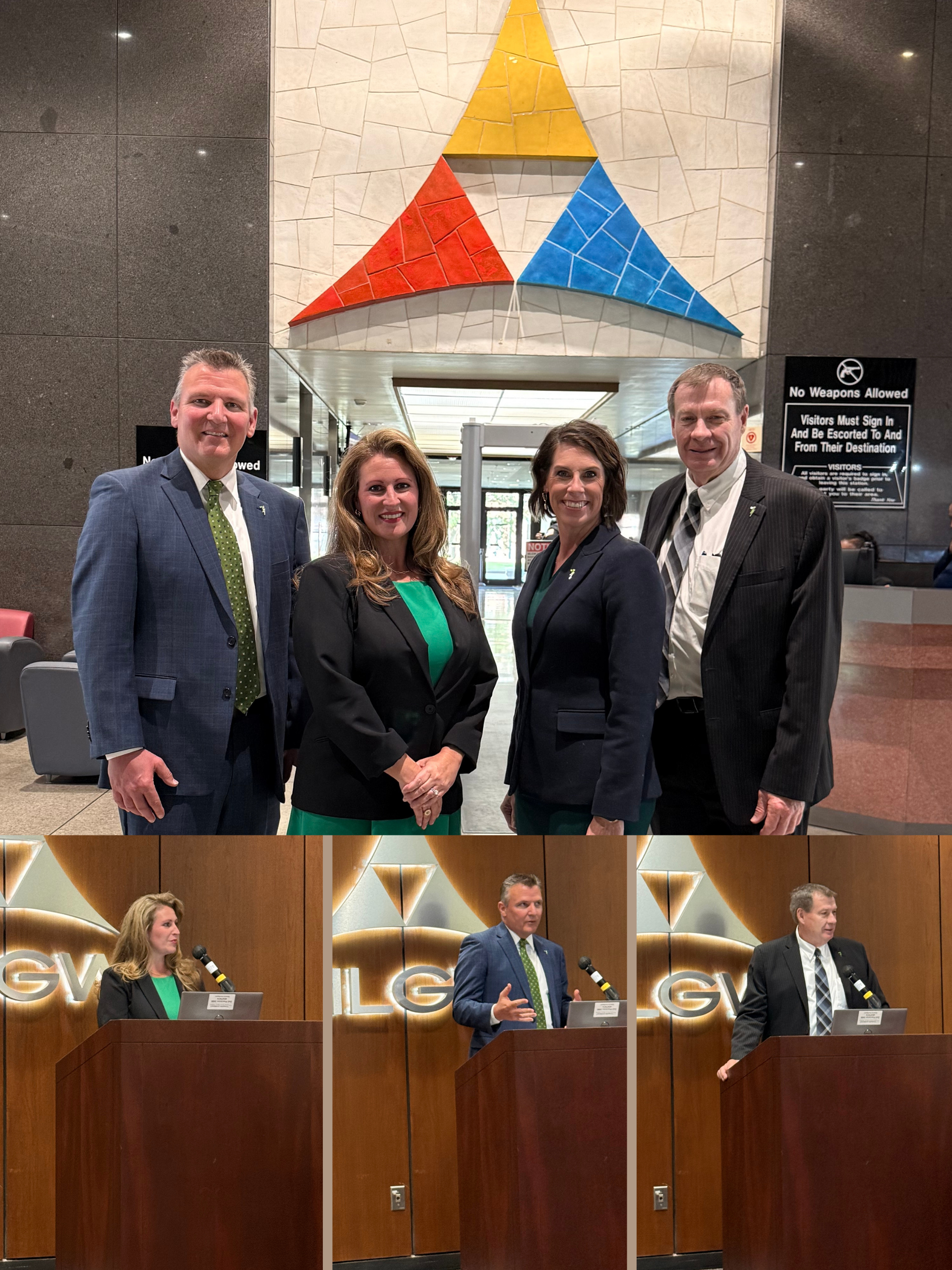
June 18, 2026 Seven States Power Corporation, headquartered in Chattanooga, Tenn., announced in September a partnership with MLGW that would deliver a significant infrastructure investment to modernize the electric grid in partnership with Memphis Light, Gas and Water (MLGW) a municipal public utility based in Memphis, TN. Since that time, the project has expanded beyond its original scope. Originally envisioned as a combined solar-and-storage project, the initiative will now deploy battery storage as a standalone resource designed to support peak demand, improve grid resiliency, and provide MLGW with greater operational flexibility. The project remains backed by Seven States’ award of a landmark $439 million zero-interest loan and grant from the U.S. Department of Agriculture’s Rural Utilities Service (USDA RUS). The revised approach reflects a strategic decision to prioritize dispatchable energy assets that can respond immediately to system needs. By focusing solely on battery storage, Seven States and MLGW aim to enhance reliability, allowing the utility to better manage demand fluctuations and unexpected outages while maintaining some of the lowest electric rates in the country. “We are thrilled to build new electric infrastructure to support growing demand and meet the region’s energy needs,” said Betsey Kirk McCall, President and CEO of Seven States Power Corporation. “Battery storage provides a powerful, flexible, and innovative tool that aligns with national priorities around energy dominance, affordability, and reliability.” Led by Seven States Power Corporation, the project will consist of 100 megawatts of battery storage capacity interconnected with MLGW’s electric distribution system. The batteries will be capable of storing energy from the existing grid and deploying it during periods of peak demand or system stress, helping stabilize the grid while reducing exposure to high-cost power purchases. “This scalable battery solution allows us to modernize our grid and improve reliability for our customers,” said Doug McGowen, president and CEO of MLGW. “It gives us greater control during peak demand periods to support power supply to our customers across Memphis and Shelby County.” The battery installations will be constructed at several MLGW substations throughout Memphis and Shelby County. Construction is expected to begin in 2027, with the project targeted for completion by December 2028. Once operational, the initiative is expected to support the electric needs of approximately 12,000 homes and businesses across Shelby County and create jobs during construction. Seven States will utilize the award from USDA to build 220MW of battery storage with its electric utility partners in west, middle and east Tennessee. The initiative is among the first of its kind in the Tennessee Valley, demonstrating how federal financing, local ownership, and collaborative partnerships can accelerate deployment of advanced grid technologies. Seven States and MLGW view the project as a model for future battery-focused investments across the Southeast. Additional Related Articles MLGW, Seven States make deal to deploy battery storage; xAI solar sublease scrapped Memphis leads TN in lead service line removal efforts MLGW proposes battery storage projects to strengthen electric grid

Source: Chattanooga Times Free Press | 28 May 2026 | BY DANIEL DASSOW Seven States Power Corp., a Chattanooga-based energy cooperative, will use $439 million in loans and grants from the U.S. Department of Agriculture to build grid-level batteries across Tennessee. The group announced a 20-megawatt installation in partnership with Johnson City-based public utility BrightRidge on Tuesday as the first investment of its Energy Express project. Seven States won a $415 million zero-interest loan and a $24 million grant last year from the USDA’s Rural Utilities Service. The nonprofit corporation is owned by its members, the 153 local utilities in seven states that buy wholesale electricity from the Tennessee Valley Authority. Seven States was created in 2007 by TVA, the nation’s largest public power provider, and the local utilities that buy electricity from TVA. The co-op was established to help finance power plants, expand energy production and modernize grid infrastructure. Through the Energy Express project, Seven States will build, own and operate up to 220 megawatts of battery storage across Tennessee, said Betsey Kirk McCall, president and CEO of Seven States. “The project will enhance reliability by powering up to 25,000 homes for eight hours,” McCall said at a public comment session before the TVA board May 21. “We will create up to 100 new construction jobs.” Seven States and BrightRidge will focus on improving power reliability and management of unexpected outages while keeping electric rates below the national average, the pair said in a press release. Local utilities in the region can use batteries to reduce their peak power usage, which in turn reduces their power bill to TVA. BrightRidge is evaluating locations for the project, which is expected to support around 5,500 homes and businesses. The partners plan to begin construction in 2027 and complete the installation by December 2028. BrightRidge serves more than 84,000 customers in Carter, Greene, Sullivan and Washington counties. Jeffrey Dykes, CEO of BrightRidge, serves as chair of the Seven States board of directors. “This scalable battery solution is another example of how the team at Seven States is on the leading edge of deploying technologies that will define the future of the energy sector,” Dykes said in the press release. GRID SUPPORT From 2008-13, Seven States and TVA jointly owned the Southaven Power Plant, an 800-megawatt natural gas plant in Mississippi. The joint ownership was meant to help TVA stay within its $30 billion legal debt limit set by Congress in 1979. Since its founding, Seven States has delivered 222 projects with 80 local utilities and received $475 million in state and federal funding for regional grid projects, McCall told the TVA board. The group has helped its members install electric vehicle charging stations, solar power installations, battery systems and natural gas backup generators. Its projects include installations at Dollywood and Rock City. Seven States leaders have promoted the corporation as a financing option within the Tennessee Valley region to help TVA meet rising power demand. Its status as a power generation and transmission coop owned by TVA customers means it has “inherent checks and balances” to keep power costs affordable for ratepayers, McCall said. “Seven States is pursuing additional financing to acquire generation and support more power supply,” McCall said. “Utilizing Seven States to finance power supply is a ready-now solution for unleashing American energy faster.” The group originally announced the USDA funding would go to power generation projects, including solar and battery storage, but now plans to focus solely on battery storage. Contact business reporter Daniel Dassow at ddassow @timesfreepress.com 423-757-6318.
GUNTERSVILLE, AL — October 2, 2026 — Electric Board of Guntersville and the City of Guntersville, in partnership with Seven States Power Corporation, today celebrated the ribbon cutting and official unveiling of a new battery energy storage system (BESS) and two electric vehicle (EV) charging ports at the Guntersville Senior Center. The project represents an investment in reliability, emergency preparedness and modern energy infrastructure for the Guntersville community. The battery system is designed to provide backup power to the Senior Center during outages, helping the facility continue serving residents when reliable electricity is needed most. The addition of battery storage will also enable the Senior Center to meet critical emergency preparedness requirements for designation as a FEMA shelter, strengthening its ability to serve residents during severe weather and other emergency events. “This project is about putting innovative technology to work in a way that directly benefits the people we serve,” said Jason Kirkland, General Manager of Electric Board of Guntersville. “By adding battery storage and EV charging at the Senior Center, we are investing in infrastructure that supports reliability today while preparing our community for the needs of tomorrow.” The City of Guntersville partnered with Electric Board of Guntersville and Seven States to bring a 261kWh battery energy storage system (BESS) to the Senior Center, supporting an investment that strengthens the facility’s role as a vital community resource and enhances its ability to serve residents during emergencies. The battery unit will store energy during off-peak hours and be used as necessary to supply power to the facility during an outage or to deploy power for up to 2 hours back onto the Guntersville electric grid. The two new EV charging ports complement the battery installation by expanding access to charging infrastructure for residents and visitors. Together, the technologies demonstrate how community-scale energy projects can provide practical benefits while helping local power companies modernize infrastructure. “What makes this project special is its purpose. This battery is more than a piece of energy infrastructure, it provides another tool to help Guntersville care for its residents and keep an important community facility powered when it matters most,” said Guntersville Mayor Leigh Dollar. “Seven States was created to help local power companies turn opportunities like this into projects that deliver meaningful benefits in their communities,” said Betsey Kirk McCall, President & CEO of Seven States Power Corporation. The Guntersville project is part of Seven States’ broader work with local power companies across the Tennessee Valley to develop and finance energy infrastructure tailored to local needs.
CHATTANOOGA, Tenn. — September 02, 2026 — Seven States Power Corporation has issued a Request for Proposals (RFP) seeking a qualified provider to supply battery energy storage systems and a 20-year long-term service agreement for the Energy Express Project, a 220-megawatt battery storage initiative being developed in partnership with Memphis Light, Gas and Water (MLGW), Nashville Electric Service (NES), and BrightRidge. The competitive procurement represents another major milestone as Seven States advances one of the Tennessee Valley’s most significant investments in distribution-connected battery storage. The Energy Express Project will deploy battery energy storage across multiple locations in west, middle, and east Tennessee, including 100MW in partnership with MLGW, 100MW with NES, and 20MW with BrightRidge. Seven States will own and operate the assets, which will be interconnected with the local utilities’ distribution systems and designed to charge during lower-demand periods and discharge when demand is highest. The systems will provide the utility partners with greater operational flexibility while helping manage peak demand, strengthen reliability, and make more efficient use of existing grid infrastructure. “Moving into procurement marks an important step toward delivering these assets for our local power company partners and the communities they serve,” said Betsey Kirk McCall, President and CEO of Seven States Power Corporation. “Through Energy Express, we are combining federal financing, local partnerships and innovative energy technology to make a long-term investment in the Tennessee Valley’s electric infrastructure. This RFP will help us identify a partner capable not only of delivering the technology, but of supporting its performance and reliability throughout the life of the project.” The Energy Express Project is backed by Seven States’ $439 million award through the U.S. Department of Agriculture’s Rural Utilities Service New Empowering Rural America (New ERA) program. Construction is expected to begin in 2027, with the battery assets targeted for commissioning in late 2028. Interested respondents can access the RFP and additional procurement information at https://www.sevenstatespower.com/rfp-inquiry.
DICKSON, Tenn. — August 4, 2026 — Dickson Electric System, in partnership with Seven States Power Corporation (Seven States), on Tuesday celebrated the official opening of 2 new DC Fast Charge electric vehicle (EV) charging ports that will expand charging access for residents and travelers while supporting continued economic growth throughout the region. Community leaders, elected officials, utility representatives, and project partners gathered for a ribbon-cutting ceremony to commemorate the investment. The new DC Fast Charge EV charging ports mark another exciting step forward in advancing regional transportation infrastructure that will expand convenient charging options for residents and visitors throughout the community. “This project represents our commitment to providing reliable, forward-looking infrastructure that serves our customers both today and in the future,” said Darrell Gillespie, General Manager of Dickson Electric System. “As electric vehicle adoption continues to grow, investments like these help ensure our communities remain connected and ready for what’s next.” The charging ports are part of broader efforts to expand EV infrastructure throughout the Tennessee Valley, providing drivers with increased confidence and accessibility as electric transportation continues to grow. The project was made possible through funds supplied through the TN Fast Charge Network which is a statewide EV charging initiative developed by the Tennessee Department of Environment and Conservation (TDEC) and Tennessee Valley Authority (TVA) to place chargers every 50 miles along major highways. “Seven States is proud to partner with Dickson Electric to bring this project to life,” said Betsey Kirk McCall, President & CEO of Seven States. “Together, we’re helping local utilities meet evolving energy needs while creating lasting value for the communities they serve.” The charging stations will be available for use beginning August 4, 2026. They are located at 210 East College Street, Dickson, TN.
Source: Chattanooga Times Free Press | 2 August 2026 | BY DANIEL DASSOW Nearly 20 years ago, the Tennessee Valley Authority and its main customers -- local electric utilities -- formed a new power company with a specific and unprecedented goal. Seven States Power Corp. , a cooperative owned by the region's local utilities, like EPB in Chattanooga , would co-own power plants with TVA. The cooperative would put ownership of power plants in local hands rather than with the U.S. government, which owns TVA and its assets. Seven States would help the federal agency stay below its $30 billion legal debt limit. From 2008 to 2013, Chattanooga-based Seven States owned a 90% stake in TVA's Southaven gas plant in Mississippi. After TVA lowered its debt and bought Seven States out of the plant, the cooperative pivoted to being a development partner for local utilities as they installed solar panels, electric vehicle charging stations and grid-level batteries. Now, Seven States leadership and members say the group is ready to return to its full founding mission of owning a stake in TVA power plants as the federal utility faces many of the same challenges from two decades ago. (READ MORE: Trump budget does not propose privatizing TVA as utility's debt rises) In a video interview, several managers of utilities in the region said Seven States had an opportunity to help TVA stay under its debt limit and meet higher power demand while keeping assets in local hands. "That original intent has never gone away," said Jeff Dykes, CEO of Johnson City-based utility BrightRidge and chair of the Seven States board. "Even though not a lot of action has happened over the years, it's always come back to that hope and desire and intent. We want TVA to be successful at the end of the day. We need TVA to be successful." Seven States is a generation and transmission cooperative , a model in which utilities band together to form a group that can own power plants. While the model is common in other parts of the U.S., TVA's central authority over its seven-state domain is its own model. "TVA is unique in that it owns the generation, it owns the transmission, it's self-regulating and it regulates its own customers," Wes Kelley, CEO at Huntsville Utilities, said in a video interview. "There's nothing else in the country that fits that paradigm." TVA customers have benefited from the model for more than 90 years, Kelley said, though there is room to integrate best practices from other parts of the country. TVA's debt is expected to rise from $23.8 billion at the beginning of 2026 to $27.3 billion by the end of 2027, according to a recent White House budget. The utility has found ways to offload some of the debt, including by entering lease-purchase agreements. The deals allow TVA to receive payment from a third party in exchange for a master lease on a power plant. TVA continues to own the plant while making payments back to the third party, similar to a mortgage. TVA entered a $2 billion lease agreement in May for its Cumberland gas plant in Middle Tennessee, scheduled for completion by the end of the year. The value of the deals is even greater if Seven States is the third party, said Doug McGowen, CEO of Memphis Light, Gas and Water, TVA's largest customer. Because Seven States is owned by the end customers of the product, its interest in maintaining low power costs is the same as residents of the region. "If Seven States was to take ownership of some of the assets through alternative financing, now you have the customers of TVA who are de facto owners of the assets that are generating the electricity that they are ultimately buying," McGowen said. "For us, that means there is a built-in hedge of protection or inherent checks and balances." Seven States is prepared to finance deals on the magnitude of the Cumberland deal, said Betsey Kirk McCall, CEO of the cooperative. The U.S. Department of Agriculture awarded Seven States $439 million in loans and grants last year, which the cooperative is using to build battery systems for its members. The award made Seven States eligible for greater financing, potentially up to the billions of dollars needed to take stake in a major gas plant, McCall said. Funding agencies include the USDA and the U.S. Department of Energy, she said. "None of them have shied away from numbers and volume of plants that we've put in front of the organizations we've been interacting with," McCall said. Seven States is a "force multiplier" for TVA that acts as an extension of its local power customers for the purpose of increasing power supply, McCall said in a later email. She told the TVA board of directors in May that Seven States had completed 222 projects with 80 utilities and received $475 million in state and federal funds since its founding. At its founding in 2007, the cooperative was designed to issue bonds backed by long-term contracts to purchase power. TVA was building gas plants at the time to meet power demand. The TVA board of directors, the members of which are nominated by the president and confirmed by the Senate, approved negotiations with Seven States in 2008. The move was meant to provide stability in ownership if TVA assets were ever sold by the U.S. government. (READ MORE: Climate groups, senators criticize TVA for fossil gas expansion plans) In the process, Seven States would empower local distributors that operate in a power system where one entity has historically owned and operated all the power plants and transmission lines. "(TVA was) up against the same challenges we're up against today," said Edward Kemp, general manager of Starkville Utilities in Mississippi. "At that time, as well as today, all the local power companies really want to be a part of the solution. We want to help. We're not just depending upon TVA to do everything for us." In 2020, TVA granted its local power companies the ability to generate or buy up to 5% of their electricity. Seven States found a niche in helping local utilities develop their own generating sources, work it continues to do. But as TVA's power demand is rising again after a period in the 2010s marked by flat demand growth, Seven States sees a chance to go big again. The cooperative could once again become a major finance partner to TVA, said Chris Jones, president of the Middle Tennessee Electric Membership Corp. The move would only enhance the public power model that's characterized the region since Congress created TVA during the Great Depression. "It can be even better whenever local power companies are given more priority as a practical partner," Jones said. "I think we're seeing that day come, and Seven States is going to be part of it."
Source: Hoodline | 21 July 2026 | By Bob Norris Memphis Light, Gas & Water is gearing up for a massive battery play that could reshape how Shelby County keeps the lights on and the bills in check. Utility leaders say a new countywide battery storage network could cut pricey wholesale power purchases and help keep electric rates steady well into the next decade. The idea is simple enough, even if the hardware is anything but. MLGW wants large-scale batteries stationed at key substations around the county, ready to kick in when demand spikes and wholesale prices jump. What’s Being Proposed MLGW outlined a plan to install 125 megawatts of battery storage spread across nine substations in Shelby County. The systems would quietly charge up overnight when power is cheaper, then discharge during peak hours to reduce what the utility has to buy from the Tennessee Valley Authority at premium prices. Locations floated by officials include Cordova, Collierville, Whitehaven and North Memphis, according to Action News 5 . It is a far cry from a backup battery in your hallway closet. Project Partners And Funding Regional developer Seven States Power, which is leading the broader Energy Express initiative, is lining up the pieces behind the scenes. The MLGW portion is expected to account for roughly 100 megawatts of a 220-megawatt rollout across Tennessee, supported by about $439 million in zero-interest loans and grants from USDA’s Rural Utilities Service. Seven States Power says construction is scheduled to start in 2027, with a goal of having the full system up and running by December 2028. What City Leaders Were Told Speaking to the Memphis City Council, MLGW President Doug McGowen framed the storage push as a direct play to keep customer bills from climbing. He said the strategy is “designed to push rates downward, down, not up,” and MLGW told council members it does not expect an electric rate increase until after 2030, according to Action News 5 . How This Fits With MLGW’s Earlier Plans This battery push did not come out of nowhere. In March 2025, MLGW issued a request for proposals seeking roughly 100 megawatts of solar generation paired with about 80 megawatts of utility-scale battery storage, along with smaller distribution-level projects. According to MLGW , that RFP let vendors pitch either utility-owned projects or third-party power purchase deals as the utility began testing the waters on local generation and storage. Benefits And Outstanding Questions Seven States estimates the combined battery installations would support power needs for roughly 12,000 homes and create construction jobs along the way. The setup is also expected to limit MLGW’s exposure to the most expensive peak market purchases. But some big pieces still have to fall into place. Siting, permitting and contract details have not been finalized, and the partners say they plan public outreach and technical reviews before any shovels hit the ground, as outlined by Seven States Power . Next steps include more detailed technical studies, regulatory sign-offs, and public briefings before contracts are locked in and crews mobilize in 2027. If the schedule holds, the batteries would be online by December 2028, giving MLGW a new tool to shave peak costs and put continued downward pressure on rates across Shelby County.
Jason Reese, General Manager of Shelbyville Power, Water, and Sewer System, leads his LPC with a focus on the evolving technology that strengthens reliability, improves efficiency, and enhances service for his customers. He took a moment to highlight some of the innovation that is truly making a difference across his community. AMI technology has had the greatest impact on Shelbyville Power, Water, and Sewer Systems and our community. Our system converted to AMI meters nearly 14 years ago, and this technology has enabled us to streamline many manual utility processes and improve operational efficiency in our electric and water systems. AMI electric meters with remote disconnect capabilities have enabled us to remotely disconnect and reconnect customers on the collections list, reducing truck rolls, improving operational efficiency, and enhancing employee safety. AMI water meters allow us to identify water leaks much sooner than was previously possible, benefiting both our customers and our efforts to reduce water loss. Our team is also very proud of our recent pilot distribution automation project installed on three circuits, each served by a different substation, which provide power to Shelbyville's two main corridors. Implementing distribution automation on these circuits helps minimize the number of customers affected during outages or the loss of a power source, improving service reliability for the community. Building on its success, our long-term goal is to expand distribution automation across all eighteen circuits and all three substations to further enhance system reliability, resiliency, and service to our customers. As the Valley continues to evolve and change, Jason knows firsthand that Seven States is a trusted industry resource and a valuable partner in helping LPCs navigate the process of implementing new technology projects. In June 2026, we completed our first EV charger project as part of the TN Fast Charge Network, and I cannot say enough good things about how Seven States and Joe Knox helped guide us through that process. These chargers have already been a hit with our community and have also brought in travelers from out of town to our downtown square. Everything from start to finish went as smoothly as it possibly could, and that is due to Seven States. While technology continues to transform the utility industry every day, Jason believes some aspects of the system will always depend on the knowledgeable workers who keep everything running behind the scenes. Hands-on infrastructure maintenance is one traditional utility practice that I believe will never completely disappear, regardless of how much technology advances. No matter how sophisticated our systems become, maintaining physical infrastructure will always require skilled workers to perform inspections, repairs, and upgrades in the field. Just as the utility industry is built on connections that span across communities, music has a way of bringing people together, even across generations. When asked which celebrity he would most like to meet for dinner, his choice was a musician who has stood the test of time. It would have to be Elvis Presley. As someone who has a love for all genres of music, to be able to sit down and talk with him about his career and experiences from gospel to rock-n-roll would be an absolute thrill!
As utilities continue evolving to meet changing member expectations, David Smart, President and CEO of West Kentucky Rural Electric Cooperative Corporation (WKRECC), has focused on blending convenience with programs that directly improve quality of life. Smart points to both digital modernization and energy efficiency initiatives as areas where WKRECC has made meaningful strides for its members. One modernization effort that’s impacted our community has been the implementation of a mobile app and other digitized forms that make it easier for members to do business with their cooperative, including drive-thru registration and tablet voting at our annual meeting. Another would be Home Uplift initiatives, home energy audits, cold climate heat pump conversions and other programs we have implemented to improve the standard of living, comfort, and efficiency in our members’ homes. Innovation at WKRECC has also extended into advanced energy management and distributed energy resources. Smart elaborated on one of the cooperative’s proudest accomplishments involving internally managing demand and system performance. Our team is especially proud of our PowerShift Program, which utilizes our members’ whole home generators and batteries for demand response. The precision and application technology used has allowed us to offset our peak demand successfully. We have built our own DER gateway allowing us to meter, control, and interrogate home generators and inverters, and our own DERMS platform that incorporates an operational load forecast. Even as utilities embrace new technologies and digital tools, Smart believes some longstanding member habits will remain an important part of cooperative culture. Despite all of the technological advances in the utility world, I think many cooperative members will continue to pay their bill in person at one of our offices. Personal interaction and in-office service continue to matter for our members. In an industry focused on infrastructure and technology, Smart recognizes the value of strong communicators and trusted voices who help bring people and communities together. When asked a lighter question about who he’d like to have dinner with, he pointed to a well-known Kentucky figure who brings folks together. If I could have dinner with anyone, I would love to have dinner with the legendary voice of the Wildcats, Cawood Ledford. I think the stories he could tell would be enlightening and fascinating.
June 25, 2026 Seven States Power Corporation, headquartered in Chattanooga, Tenn., is pleased to announce that it will deliver a significant infrastructure investment to modernize the electric grid in partnership with Nashville Electric Service (NES), a municipal public utility based in Nashville, TN. The initiative, named the Energy Express Project, will deploy battery storage as a standalone resource designed to support peak demand, improve grid resiliency, and provide NES with greater operational flexibility. The project is backed by Seven States’ award of a landmark $439 million zero-interest loan and grant from the U.S. Department of Agriculture’s Rural Utilities Service (USDA RUS). This announcement follows similar recent announcements related to additional project locations across the state in partnership with Memphis Light, Gas and Water in Memphis, TN and BrightRidge in Johnson City, TN. The approach reflects a strategic decision to prioritize dispatchable energy assets that can respond immediately to system needs. By focusing solely on battery storage, Seven States and its partners aim to enhance reliability, allowing the utilities to better manage demand fluctuations and unexpected outages while maintaining some of the lowest electric rates in the country. “The Energy Express Project demonstrates how federal financing, local ownership, and collaborative partnerships can accelerate deployment of advanced grid technologies to help manage growing demand to meet the region’s energy needs,” said Betsey Kirk McCall, President and CEO of Seven States Power Corporation. “Battery storage provides an innovative tool that aligns with national priorities around energy dominance, affordability, and reliability.” Led by Seven States, the project will consist of 100 megawatts of battery storage capacity interconnected with NES’s electric distribution system. The batteries will be capable of storing energy from the existing grid and deploying it during periods of peak demand or system stress, helping stabilize the grid while reducing exposure to high-cost power purchases. “Our partnership with the team of experts at Seven States will allow us to deliver a battery solution that will modernize our grid, improve operations, and provide reliability for our customers,” said Teresa Broyles-Aplin, president and CEO of NES. “It gives us greater control during peak demand periods and supports our ongoing effort toward reliable energy distribution.” The battery installations will be constructed at several NES substations throughout Greater Nashville. Construction is expected to begin in 2027, with the project targeted for completion by December 2028. Once operational, the initiative is expected to support the electric needs of approximately 12,000 homes and businesses across the Greater Nashville area and create jobs during construction. Seven States will utilize the award from USDA to build 220MW of battery storage with its electric utility partners in west, middle and east Tennessee. The initiative is among the first of its kind in the Tennessee Valley and represents a significant investment in grid reliability and local energy infrastructure. Seven States and NES view the project as a model for future battery-focused investments across the Southeast.
June 18, 2026 Seven States Power Corporation, headquartered in Chattanooga, Tenn., announced in September a partnership with MLGW that would deliver a significant infrastructure investment to modernize the electric grid in partnership with Memphis Light, Gas and Water (MLGW) a municipal public utility based in Memphis, TN. Since that time, the project has expanded beyond its original scope. Originally envisioned as a combined solar-and-storage project, the initiative will now deploy battery storage as a standalone resource designed to support peak demand, improve grid resiliency, and provide MLGW with greater operational flexibility. The project remains backed by Seven States’ award of a landmark $439 million zero-interest loan and grant from the U.S. Department of Agriculture’s Rural Utilities Service (USDA RUS). The revised approach reflects a strategic decision to prioritize dispatchable energy assets that can respond immediately to system needs. By focusing solely on battery storage, Seven States and MLGW aim to enhance reliability, allowing the utility to better manage demand fluctuations and unexpected outages while maintaining some of the lowest electric rates in the country. “We are thrilled to build new electric infrastructure to support growing demand and meet the region’s energy needs,” said Betsey Kirk McCall, President and CEO of Seven States Power Corporation. “Battery storage provides a powerful, flexible, and innovative tool that aligns with national priorities around energy dominance, affordability, and reliability.” Led by Seven States Power Corporation, the project will consist of 100 megawatts of battery storage capacity interconnected with MLGW’s electric distribution system. The batteries will be capable of storing energy from the existing grid and deploying it during periods of peak demand or system stress, helping stabilize the grid while reducing exposure to high-cost power purchases. “This scalable battery solution allows us to modernize our grid and improve reliability for our customers,” said Doug McGowen, president and CEO of MLGW. “It gives us greater control during peak demand periods to support power supply to our customers across Memphis and Shelby County.” The battery installations will be constructed at several MLGW substations throughout Memphis and Shelby County. Construction is expected to begin in 2027, with the project targeted for completion by December 2028. Once operational, the initiative is expected to support the electric needs of approximately 12,000 homes and businesses across Shelby County and create jobs during construction. Seven States will utilize the award from USDA to build 220MW of battery storage with its electric utility partners in west, middle and east Tennessee. The initiative is among the first of its kind in the Tennessee Valley, demonstrating how federal financing, local ownership, and collaborative partnerships can accelerate deployment of advanced grid technologies. Seven States and MLGW view the project as a model for future battery-focused investments across the Southeast. Additional Related Articles MLGW, Seven States make deal to deploy battery storage; xAI solar sublease scrapped Memphis leads TN in lead service line removal efforts MLGW proposes battery storage projects to strengthen electric grid
Source: Chattanooga Times Free Press | 28 May 2026 | BY DANIEL DASSOW Seven States Power Corp., a Chattanooga-based energy cooperative, will use $439 million in loans and grants from the U.S. Department of Agriculture to build grid-level batteries across Tennessee. The group announced a 20-megawatt installation in partnership with Johnson City-based public utility BrightRidge on Tuesday as the first investment of its Energy Express project. Seven States won a $415 million zero-interest loan and a $24 million grant last year from the USDA’s Rural Utilities Service. The nonprofit corporation is owned by its members, the 153 local utilities in seven states that buy wholesale electricity from the Tennessee Valley Authority. Seven States was created in 2007 by TVA, the nation’s largest public power provider, and the local utilities that buy electricity from TVA. The co-op was established to help finance power plants, expand energy production and modernize grid infrastructure. Through the Energy Express project, Seven States will build, own and operate up to 220 megawatts of battery storage across Tennessee, said Betsey Kirk McCall, president and CEO of Seven States. “The project will enhance reliability by powering up to 25,000 homes for eight hours,” McCall said at a public comment session before the TVA board May 21. “We will create up to 100 new construction jobs.” Seven States and BrightRidge will focus on improving power reliability and management of unexpected outages while keeping electric rates below the national average, the pair said in a press release. Local utilities in the region can use batteries to reduce their peak power usage, which in turn reduces their power bill to TVA. BrightRidge is evaluating locations for the project, which is expected to support around 5,500 homes and businesses. The partners plan to begin construction in 2027 and complete the installation by December 2028. BrightRidge serves more than 84,000 customers in Carter, Greene, Sullivan and Washington counties. Jeffrey Dykes, CEO of BrightRidge, serves as chair of the Seven States board of directors. “This scalable battery solution is another example of how the team at Seven States is on the leading edge of deploying technologies that will define the future of the energy sector,” Dykes said in the press release. GRID SUPPORT From 2008-13, Seven States and TVA jointly owned the Southaven Power Plant, an 800-megawatt natural gas plant in Mississippi. The joint ownership was meant to help TVA stay within its $30 billion legal debt limit set by Congress in 1979. Since its founding, Seven States has delivered 222 projects with 80 local utilities and received $475 million in state and federal funding for regional grid projects, McCall told the TVA board. The group has helped its members install electric vehicle charging stations, solar power installations, battery systems and natural gas backup generators. Its projects include installations at Dollywood and Rock City. Seven States leaders have promoted the corporation as a financing option within the Tennessee Valley region to help TVA meet rising power demand. Its status as a power generation and transmission coop owned by TVA customers means it has “inherent checks and balances” to keep power costs affordable for ratepayers, McCall said. “Seven States is pursuing additional financing to acquire generation and support more power supply,” McCall said. “Utilizing Seven States to finance power supply is a ready-now solution for unleashing American energy faster.” The group originally announced the USDA funding would go to power generation projects, including solar and battery storage, but now plans to focus solely on battery storage. Contact business reporter Daniel Dassow at ddassow @timesfreepress.com 423-757-6318.