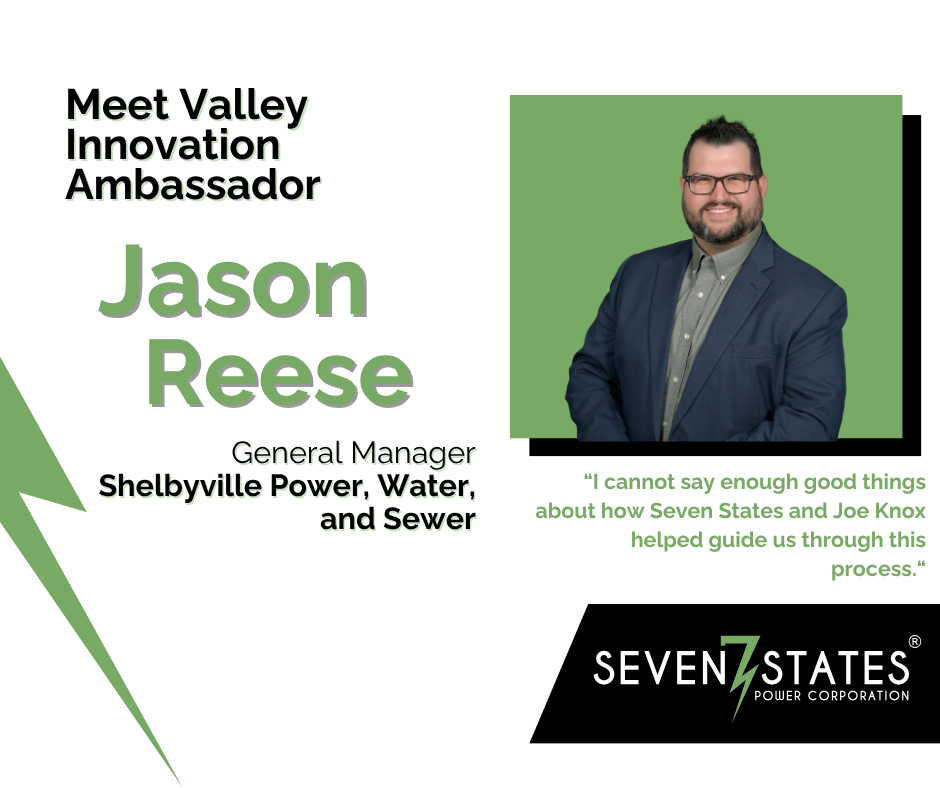
Jason Reese, General Manager of Shelbyville Power, Water, and Sewer System, leads his LPC with a focus on the evolving technology that strengthens reliability, improves efficiency, and enhances service for his customers. He took a moment to highlight some of the innovation that is truly making a difference across his community. AMI technology has had the greatest impact on Shelbyville Power, Water, and Sewer Systems and our community. Our system converted to AMI meters nearly 14 years ago, and this technology has enabled us to streamline many manual utility processes and improve operational efficiency in our electric and water systems. AMI electric meters with remote disconnect capabilities have enabled us to remotely disconnect and reconnect customers on the collections list, reducing truck rolls, improving operational efficiency, and enhancing employee safety. AMI water meters allow us to identify water leaks much sooner than was previously possible, benefiting both our customers and our efforts to reduce water loss. Our team is also very proud of our recent pilot distribution automation project installed on three circuits, each served by a different substation, which provide power to Shelbyville's two main corridors. Implementing distribution automation on these circuits helps minimize the number of customers affected during outages or the loss of a power source, improving service reliability for the community. Building on its success, our long-term goal is to expand distribution automation across all eighteen circuits and all three substations to further enhance system reliability, resiliency, and service to our customers. As the Valley continues to evolve and change, Jason knows firsthand that Seven States is a trusted industry resource and a valuable partner in helping LPCs navigate the process of implementing new technology projects. In June 2026, we completed our first EV charger project as part of the TN Fast Charge Network, and I cannot say enough good things about how Seven States and Joe Knox helped guide us through that process. These chargers have already been a hit with our community and have also brought in travelers from out of town to our downtown square. Everything from start to finish went as smoothly as it possibly could, and that is due to Seven States. While technology continues to transform the utility industry every day, Jason believes some aspects of the system will always depend on the knowledgeable workers who keep everything running behind the scenes. Hands-on infrastructure maintenance is one traditional utility practice that I believe will never completely disappear, regardless of how much technology advances. No matter how sophisticated our systems become, maintaining physical infrastructure will always require skilled workers to perform inspections, repairs, and upgrades in the field. Just as the utility industry is built on connections that span across communities, music has a way of bringing people together, even across generations. When asked which celebrity he would most like to meet for dinner, his choice was a musician who has stood the test of time. It would have to be Elvis Presley. As someone who has a love for all genres of music, to be able to sit down and talk with him about his career and experiences from gospel to rock-n-roll would be an absolute thrill!
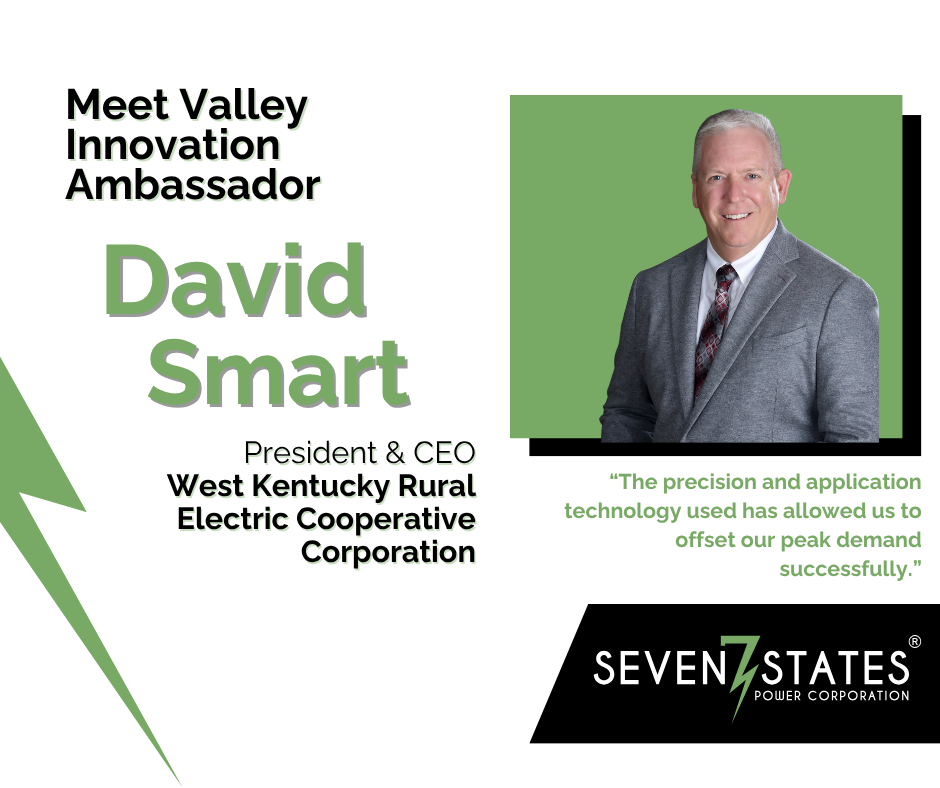
As utilities continue evolving to meet changing member expectations, David Smart, President and CEO of West Kentucky Rural Electric Cooperative Corporation (WKRECC), has focused on blending convenience with programs that directly improve quality of life. Smart points to both digital modernization and energy efficiency initiatives as areas where WKRECC has made meaningful strides for its members. One modernization effort that’s impacted our community has been the implementation of a mobile app and other digitized forms that make it easier for members to do business with their cooperative, including drive-thru registration and tablet voting at our annual meeting. Another would be Home Uplift initiatives, home energy audits, cold climate heat pump conversions and other programs we have implemented to improve the standard of living, comfort, and efficiency in our members’ homes. Innovation at WKRECC has also extended into advanced energy management and distributed energy resources. Smart elaborated on one of the cooperative’s proudest accomplishments involving internally managing demand and system performance. Our team is especially proud of our PowerShift Program, which utilizes our members’ whole home generators and batteries for demand response. The precision and application technology used has allowed us to offset our peak demand successfully. We have built our own DER gateway allowing us to meter, control, and interrogate home generators and inverters, and our own DERMS platform that incorporates an operational load forecast. Even as utilities embrace new technologies and digital tools, Smart believes some longstanding member habits will remain an important part of cooperative culture. Despite all of the technological advances in the utility world, I think many cooperative members will continue to pay their bill in person at one of our offices. Personal interaction and in-office service continue to matter for our members. In an industry focused on infrastructure and technology, Smart recognizes the value of strong communicators and trusted voices who help bring people and communities together. When asked a lighter question about who he’d like to have dinner with, he pointed to a well-known Kentucky figure who brings folks together. If I could have dinner with anyone, I would love to have dinner with the legendary voice of the Wildcats, Cawood Ledford. I think the stories he could tell would be enlightening and fascinating.
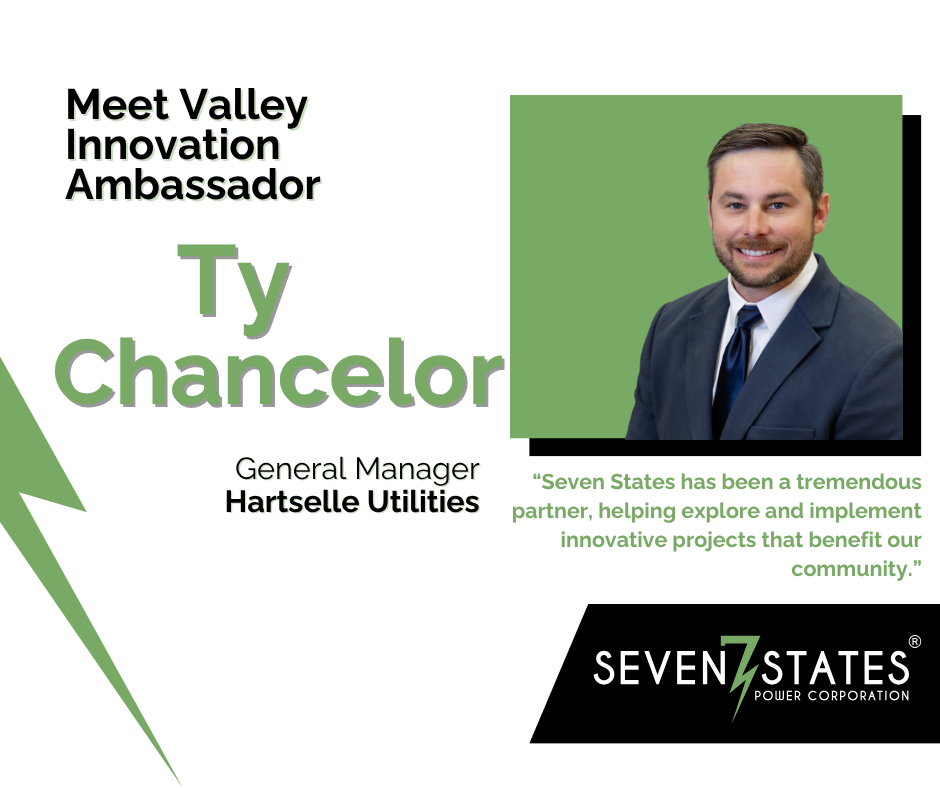
Leading Hartselle Utilities as General Manager, Ty Chancelor has focused on innovative efforts that improve reliability, efficiency, and customer service. We asked him to elaborate on the specific technology and modernization that has changed his LPC footprint, in addition to describing some of his team’s wins for their community. The modernization effort that has likely had the biggest impact on our community in recent years has been Hartselle Utilities’ transition to Advanced Metering Infrastructure (AMI). We began with the conversion of our electric and natural gas systems and ultimately plan to expand AMI capabilities to our water system as well. It’s significantly improved the reliability and efficiency of our operations while also enhancing customer service. For a growing community like Hartselle, investing in modernization projects like AMI helps position us to serve our customers more efficiently while preparing for future technology needs. One specific project our team is especially proud of is our peak shaving initiative. The installation and implementation of the project was spearheaded by our previous General Manager, Bob Sittason, with engineering support from Lance Junkin and Stewart Engineering. Bob strongly believed in making strategic investments that would create long-term value for our customers, and this project is a great example of that vision. Peak shaving has allowed Hartselle Utilities to reduce wholesale power demand costs during periods of highest usage, creating substantial savings for our system and ultimately for our customers. The project also positioned Hartselle Utilities to be more proactive and data-driven in managing system demand and power costs. In March 2022, the Board also approved a voltage reduction proposal as part of our continued efforts to improve system efficiency and maximize savings opportunities. Beyond the financial impact, this project represents the forward-thinking leadership and long-term planning that continues to shape our organization today. Ty also credits Seven States as being a valuable partner for Hartselle Utilities as the needs of his community have continued to evolve. Seven States has been a tremendous partner in helping Hartselle Utilities explore and implement innovative projects that benefit our community. One of the best examples is the installation of our downtown EV fast charging station. With financial support and guidance from Seven States, Hartselle Utilities was able to bring fast-charging infrastructure to our downtown area, helping support economic development, tourism, and the growing demand for electric vehicle accessibility. The project aligned well with our goal of preparing our community for the future while also encouraging visitors to spend time in our downtown district. Since the ribbon cutting in July 2024, the charging station has seen strong community and traveler usage. Projects like this demonstrate how partnerships with organizations like Seven States help local power companies take practical steps toward innovation while still focusing on community needs. Despite the rapidly changing technology in the Valley, the utility business remains rooted in personal relationships and customer service. Chancelor believes that will always remain important in communities like Hartselle. No matter how much technology evolves, I don’t think in-person customer interaction will ever completely disappear in the utility industry. Utilities are still very relationship-driven, especially in communities like Hartselle where customers know our employees personally and expect a level of service that goes beyond an app or automated system. Technology absolutely improves efficiency and communication, but there are still times when customers simply want to talk to a real person face-to-face — whether it’s discussing a billing issue, setting up new service, or navigating a difficult situation after a storm or outage. At the end of the day, utility service is still about serving people, and I think that personal connection will always matter. When asked a lighter question outside the utility world about who he’d most like to sit down with over dinner, his answer came without hesitation. Without question, it would be Dak Prescott. Now realistically, Dak would probably spend dinner wondering why a utility manager from Alabama is staring at him like he’s meeting a superhero, while I’d spend the entire evening trying not to ask too many Cowboys questions in the first five minutes. I’d like to say we’d have deep conversations about leadership, overcoming adversity, and performing under pressure — and hopefully we would — but there’s a strong chance I’d also ask him to explain at least three questionable fourth-quarter decisions from recent seasons. As a Cowboys fan, hope springs eternal. Every season starts with “this could be the year,” and honestly, that kind of optimism probably translates pretty well to the utility business too.
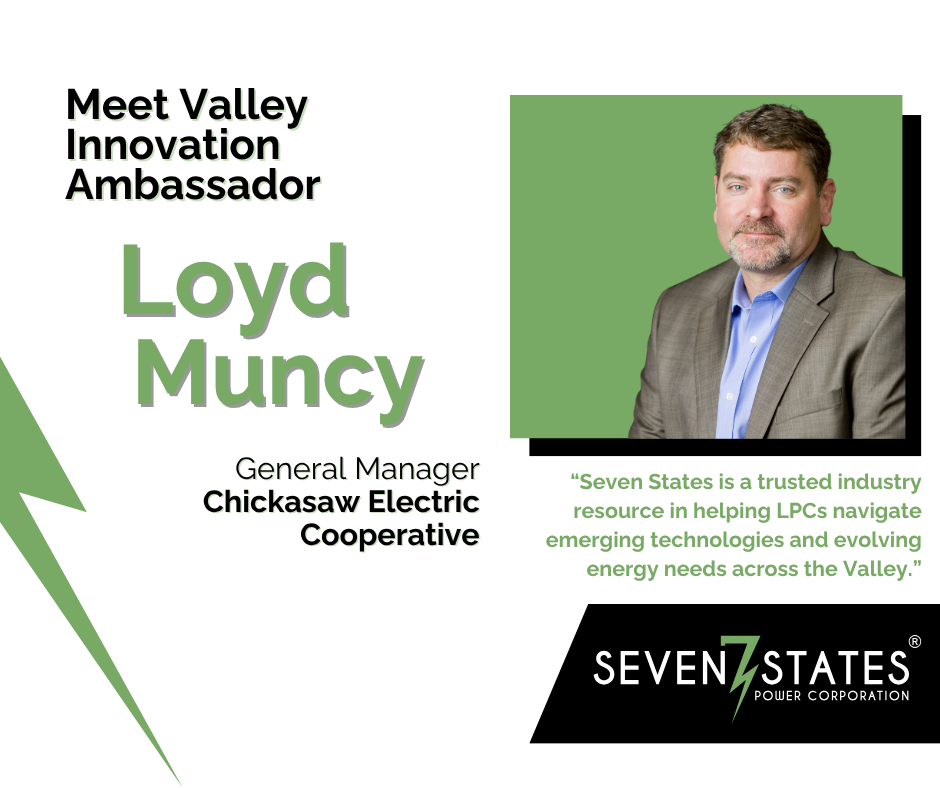
Chickasaw Electric Cooperative General Manager Loyd Muncy has prioritized technology and modernization efforts that strengthen reliability, improve efficiency, and enhance service for his cooperative members. We asked him to share more about the innovations making an impact across Chickasaw Electric Cooperative’s service territory, along with a few projects he is especially proud to see implemented in the community. The Advanced Metering Infrastructure (AMI) has already provided valuable insight into the electric system and will continue to enhance operations as more data is collected and analyzed. AMI has also enabled our team to respond more quickly and accurately to member questions regarding energy usage and outage information. In addition, remote meter reading and remote connect/disconnect capabilities have streamlined operations and reduced field workload. We’re really proud of the way the integrations between our systems have significantly streamlined daily operations and improved service to our members. By integrating our Outage Management System (OMS) with AMI, we receive real-time outage information and can proactively notify members via text message to let them know we are aware of the outage and are responding. Integration with our Geographic Information System (GIS) also allows us to pinpoint fault locations and accurately map where outages or momentary “blinks” occur. In addition, all field crews are equipped with iPads, giving them mobile access to OMS, AMI, and GIS directly from their trucks. This immediate access to system data improves communication, speeds restoration efforts, and enhances overall operational efficiency. Loyd views Seven States as a trusted industry resource and a valuable partner in helping LPCs navigate emerging technologies and evolving energy needs across the Valley. As Chickasaw Electric Cooperative continues exploring new opportunities, he sees collaboration and shared expertise playing an important role in future innovation efforts. As we move forward with storage and DER, we expect to tap into Seven States resources and expertise as we evaluate opportunities, learn from industry experience and continue planning for the future needs of our system and members. While technology continues to transform the utility industry, Muncy believes some aspects of the cooperative model will always depend on personal relationships and direct communication with members. Good old-fashioned troubleshooting and knowledge of the electric system will never completely disappear in the world of technological advancement, and while those skills will always matter, technology and AI are quickly advancing to provide much of that information in real time. What technology cannot replace, however, is the value of face-to-face interaction with our members. Building trust and letting our members know we understand and remain committed to the mission of reliability and affordability will continue to be one of the most important parts of what we do.
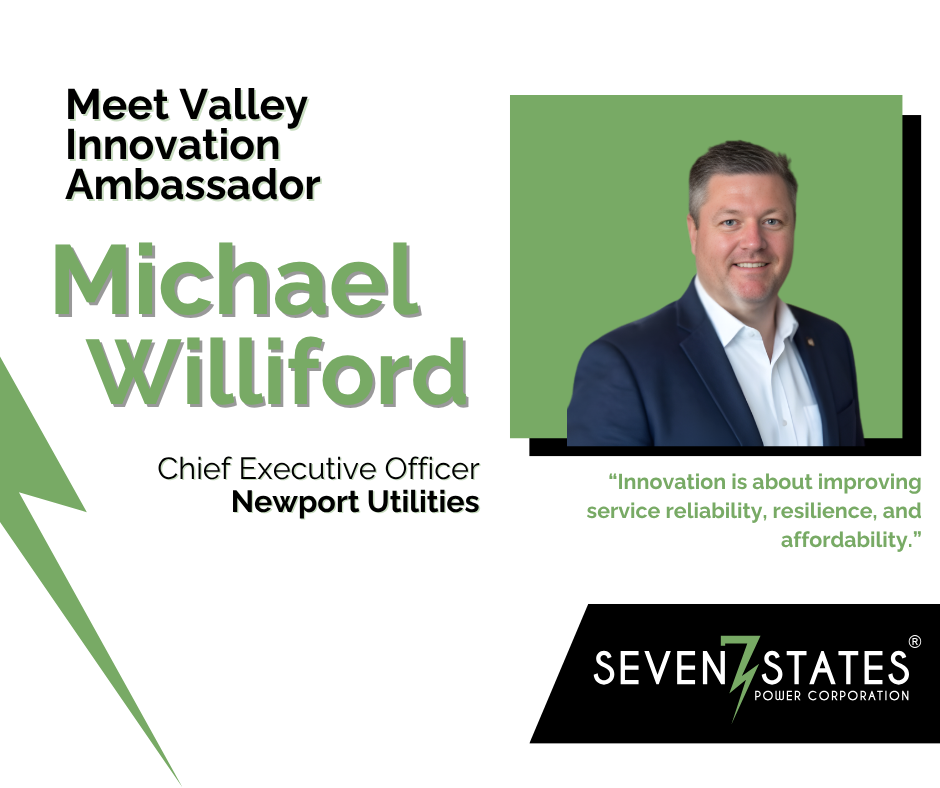
Since taking the helm as CEO, Michael has been instrumental in delivering innovative processes and technologies that are ensuring a reliable energy future for the more than 25,000 consumers served by Newport Utilities. Throughout his career, Michael has looked for opportunities to solve the most pressing needs within the energy sector. When asked about the most pressing needs for Newport Utilities, Michael stresses the need for reliability, visibility, and scalability. Solving for these needs translated into investments in grid hardening and automation, advanced metering infrastructure, SCADA modernization, and broadband expansion. Equally important was improving data integration across electric, water, wastewater, and broadband operations so they could move from reactive operations to predictive and preventative decision-making. Cybersecurity and resiliency—particularly for extreme weather events—were also critical priorities. While Seven States has not been directly engaged with Newport Utilities’ innovation initiatives, Michael recognizes that entities like Seven States are valuable when they can demonstrate the ability to align innovation with operational reliability, affordability, and long-term community value. When asked about what he would like for his customers to know about Newport Utilities’ role in bringing innovation forward he had this to say, “Innovation at Newport Utilities is not about technology for its own sake—it is about improving service reliability, resilience, and affordability while positioning the community for long-term economic growth. Our role is to be a careful steward of customer dollars while making forward-looking investments that reduce outages, improve response times, enhance transparency, and support businesses, schools, and public safety. When done correctly, most of this innovation is invisible to customers—but they experience it through fewer disruptions and better service.” Michael is excited about what the next five years holds for Newport Utilities. He is looking forward to expanded grid automation, advanced analytics driven by AMI and operational data, and deeper integration between electric, water, and broadband systems. Additionally, he believes battery storage, small-scale local energy production, and demand reduction programs will play an increasingly important role in enhancing reliability, lowering costs, and giving customers more control over their energy use. Ensure these technologies are deployed securely, cost-effectively, and in a way that maximizes community benefit while supporting economic development and long-term resilience is a priority. As for advice Michael would give to a new GM or CEO? Start with the problem, not the technology. Innovation should be tied directly to reliability, resilience, customer experience, or cost control. Build strong fundamentals first—governance, data quality, cybersecurity, and staff capability—before pursuing advanced solutions. Engage employees early, communicate clearly with customers and stakeholders, and be disciplined in measuring outcomes. Sustainable innovation is incremental, intentional, and aligned with the community’s long-term needs, not short-term trends.
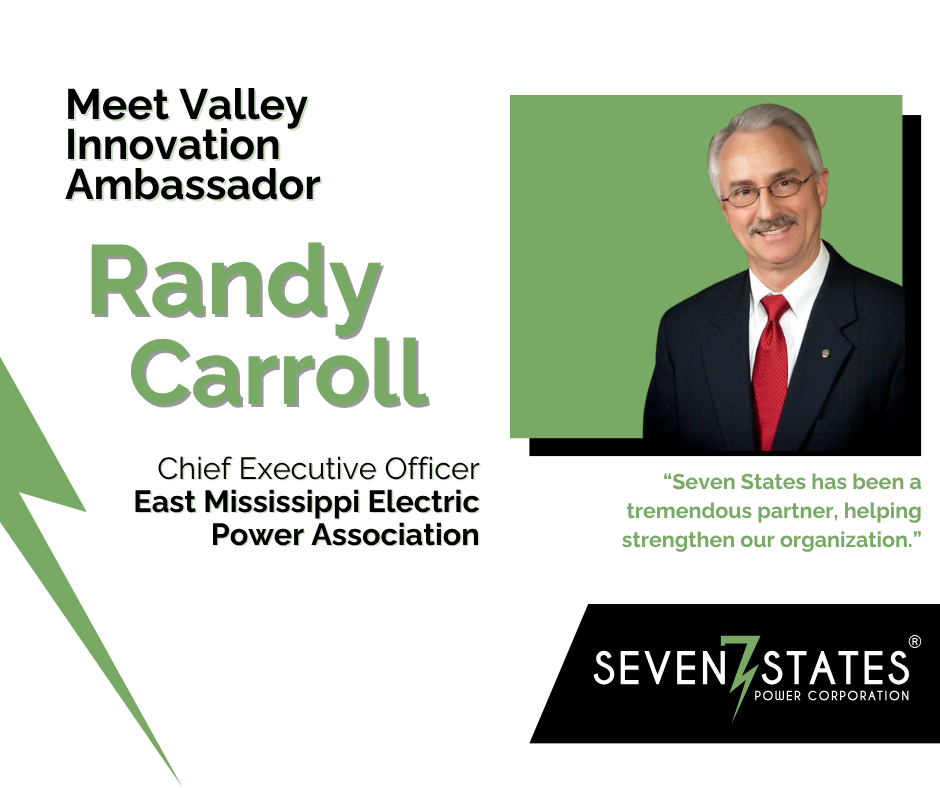
As Chief Executive Officer of East Mississippi Electric Power Association (EMEPA), Randy leads by embracing technology with a focus on how it enhances the lives of the members served by EMEPA. Over his 48 year career, Randy has moved teams through manual processes to personal computers, then to tablets, cell phones, and automated meter reading; each step significantly improving operational efficiency and service reliability. Randy has been an integral leader in completing 3,850 miles of fiber to serve nearly 17,000 subscribers. Moreover, EMEPA also helped facilitate the installation of full backup generation at NAS Meridian and assisted in deploying solar generation paired with microgrid technology at the base. These efforts strengthened energy security and resilience for critical infrastructure in our community. When asked about how Seven States has specifically helped support innovation in the EMEPA footprint Randy said, “Seven States has been a tremendous partner by providing the technical knowledge, strategic guidance, and support necessary to bring these complex projects to life. Their expertise helped us evaluate opportunities, mitigate risk, and execute effectively, particularly in areas such as broadband expansion, backup generation, and microgrid deployment. Innovation requires both vision and competence, and Seven States has helped strengthen both within our organization.” In a time of rapid introduction and adoption of innovation, Randy explains how EMEPA approaching ongoing implementation. “I want our members to understand that implementing new technology is never done simply for the sake of technology. Every advancement we pursue is focused on making their service more reliable, sustainable, and resilient. Whether it is automated metering, fiber broadband, or microgrid support for critical facilities, our goal is always to improve the lives of the people we serve.” As EMEPA looks ahead, they will explore how artificial intelligence enhances their operations and all the ways it will be used over the next five years to increase productivity, develop innovative solutions, and communicate more efficiently with their members. As for advice Randy would give to a new GM or CEO? “You often cannot fully understand the usefulness of a technology until you implement it and allow good employees to work with it. Innovation requires trust in your people and trust in the process. If you hire capable, mission-driven employees and give them the tools and freedom to explore new solutions, they will often exceed your expectations.”
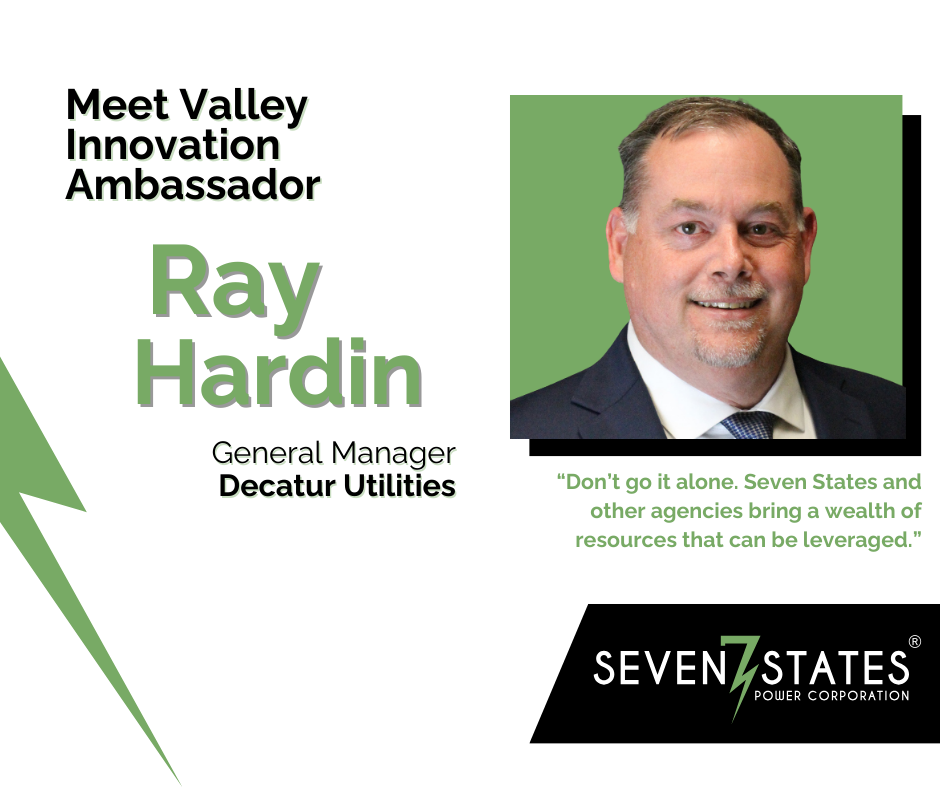
Leading Decatur Utilities as General Manager, Ray Hardin strives to ensure their system is prepared for the future with innovative solutions. We asked him to share some of the ways he’s implemented technology in his LPC’s footprint. “Advanced Metering Infrastructure (AMI) has helped us improve efficiency, maintenance, and long-term planning, while providing customers with usage data through the customer portal that enables them to look for ways to reduce their energy consumption and their cost. AMI has also integrated with the Outage Management and GIS Systems to improve outage tracking and reduce system downtime. We’ve also leveraged Demand Voltage Reduction technology to reduce the wholesale cost of electricity to keep customer rates as low as possible. And over several years, we have implemented LED streetlights throughout the City of Decatur, replacing less efficient lighting and saving the city on lighting costs.” Ray knows his LPC is responsible for the present and future of his community’s needs, and he wants his community to know that he strategically evaluates new technology with a long-term vision. “I want our customer to know that through our implementation of AMI, improved communications, Demand Voltage Reduction and other programs, we continue to look for ways to keep our system safe and reliable and provide the best service to our community at the lowest possible rates.” With so much technological advancement in the Valley, Ray encourages fellow leaders to lean on strategic partnerships to help bring about community change and benefits using cost-efficient solutions. “Don't go it alone! Seven States, TVA and other agencies bring a wealth of resources that can be leveraged to bring innovation to a local community without breaking budgets. For example, Decatur Utilities was able to install two Level 3 Rapid EV Chargers in our community through a partnership with the City of Decatur, TVA, Seven States, and ADECA. It would have been difficult for us to justify the cost of such a project on our own - but through this partnership, the cost was shared while the benefit to our customers and communities is enormous. Seek out those opportunities for shared funding that will benefit your local area and lean on others who have already researched or implement innovative technologies to get their ideas and advice.”
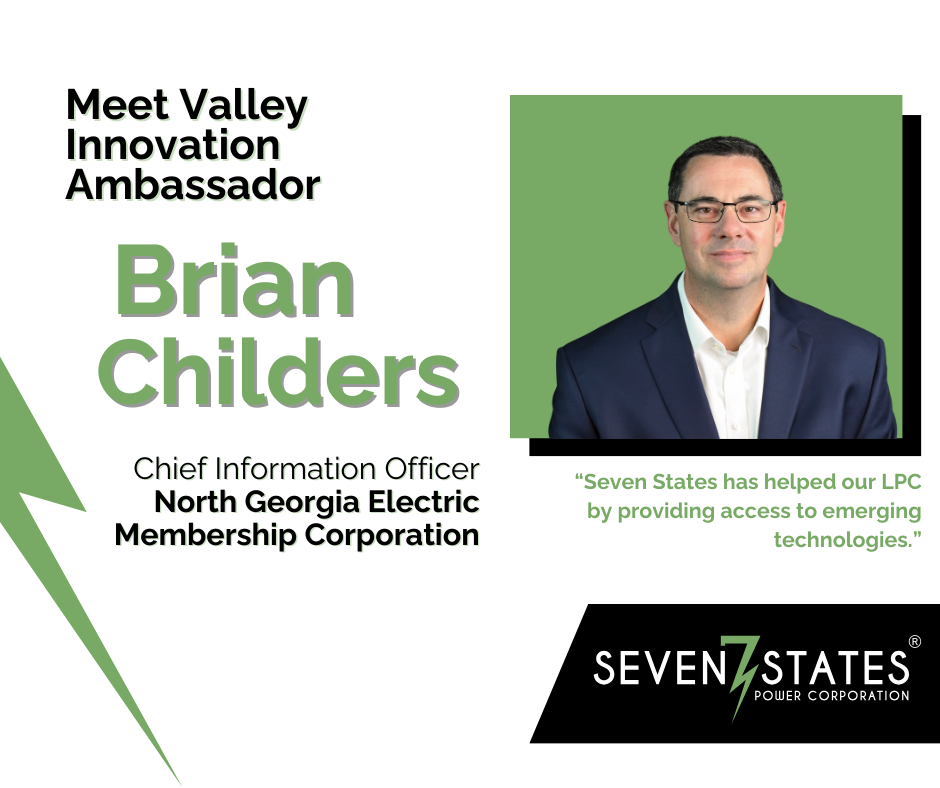
As Chief Information Officer for North Georgia Electric Membership Corporation (NGEMC), Brian Childers knows how crucial innovative partnerships and technology are in preparing for the grid of the future. Brian’s extensive experience has given him a deep understanding of technological diversity and strategic partnerships. We asked him to share some of the ways their team brought innovation to the North Georgia EMC membership, as well as his experience with Seven States as a trusted partner. “The most needed technology developments in our footprint focused on improving reliability, security, and member service. Upgrades to SCADA systems enhanced grid monitoring and automation, allowing faster outage detection and restoration. Cybersecurity improvements were critical to safeguarding member data and ensuring uninterrupted service. Mobile workforce tools streamlined field operations, enabling quicker response times to outages and service requests. Additionally, the installation of distribution system sectionalizing equipment, supported by fiber expansion, improved fault isolation and communication across the network, significantly reducing outage durations and strengthening overall system reliability for our members. Seven States has helped our LPC support innovation by providing access to emerging technologies and collaborative opportunities. They also share best practices that keep us aligned with industry advancements and prepared for future member needs.” Brian always considers how their members view NGEMC’s investments in innovation. “I want our members to know that our role in innovation is centered on improving their quality of life and ensuring reliable, secure, and efficient service. We invest in technologies like advanced grid automation, fiber-supported communication systems, and modern outage management tools to deliver faster restoration, better reliability, and enhanced security. Every innovation we pursue is designed to strengthen our community—whether by reducing outage times, enabling smarter energy solutions, or supporting future connectivity needs. Our commitment is to keep members at the heart of every technology decision we make.” Brian has learned that being plugged into your community and knowing their needs is fundamental to being an innovative leader. He offered this advice to others who might have questions about how to start bringing innovation to their LPC. “NGEMC’s territory includes communities served by multiple power providers, which limits large-scale community investments. Because of this, innovation should focus on projects that deliver clear, measurable benefits to members. Prioritize technologies that improve reliability while helping keep rates affordable. Stay informed on emerging trends like energy storage and flexible rate options while communicating openly with members to encourage adoption. Above all, maintain a long-term vision that balances innovation with financial responsibility, ensuring every investment strengthens member trust and delivers lasting value.”
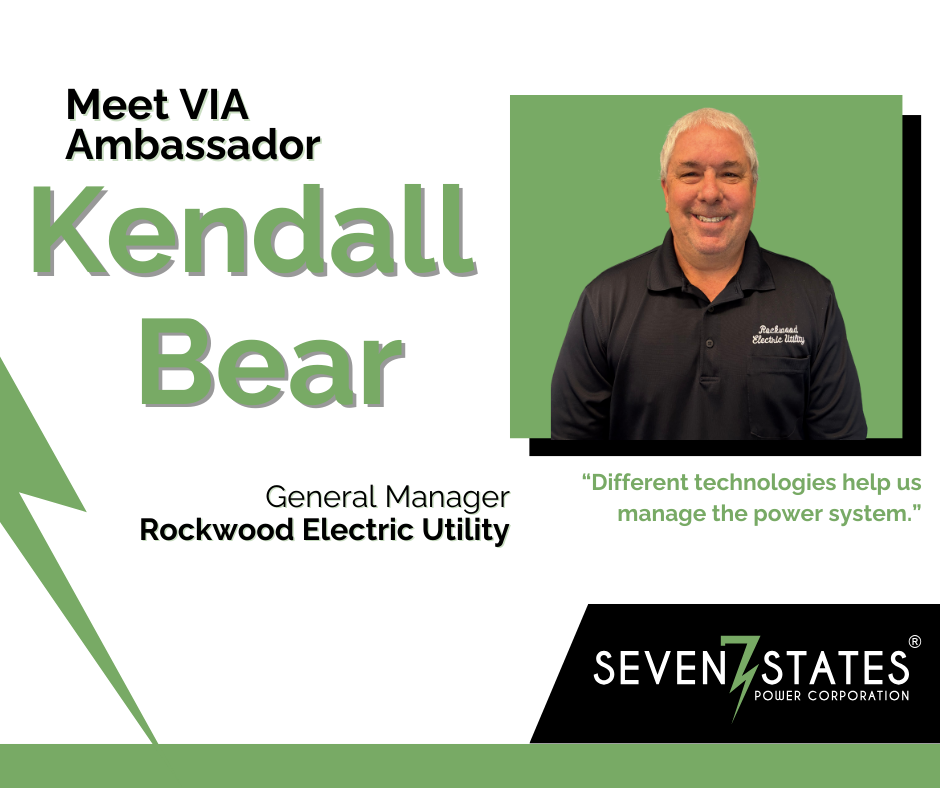
With his extensive experience in the industry, Kendall Bear’s leadership as General Manager of Rockwood Electric Utility has given him the opportunity to ensure his community is prepared for the future. “Although we’ve had many of the following systems implemented for a few years now, looking back, I would say that building a fiber network between our main office and our substations has been beneficial in a variety of ways for Rockwood Electric. This opened the door for additional technology developments such as AMI, SCADA, distribution automation, Dispatchable Voltage Regulation, a 900 Mhz radio system, and a Meter Data Management System. Implementing a GIS system was extremely valuable as well, as we are now able to export that information to other systems such as Outage Management. We have a business and customer portal from CSA that is used extensively by our employees and customers—everyone really benefits from it.” Kendall knows his LPC is responsible for both the present and future of his community’s needs, and he wants his community to know that he is always looking for ways to better their lives. “We are working very hard to provide a reliable power supply to all our customers and using these different technologies helps us manage the power system. We want to be able to provide real-time information to our customers; something they would not normally have access to without these technologies. I would also want our community to know that we are their ‘trusted energy advisor’ and every employee at Rockwood Electric is committed to helping them make good decisions about the power they use.” With so much technological advancement in the Valley, Kendall encourages fellow leaders to make a strategic plan and collaborate with their peers. “The possibilities for innovation are almost endless, and there are a variety of products that are offered by many vendors. It is more than a little overwhelming! I would encourage a new GM to develop a strategic plan if the utility doesn’t already have one that is up-to-date. This may involve getting input from the many stakeholders in the community. After prioritizing your goals, get to work. Finally, I would tell a new GM to talk to his or her peers and colleagues a LOT. They will tell you what they have done that has been a colossal flop so you’ll know to avoid it, or they will tell you what they have been successful with. I guarantee every manager will share their story if you ask.”
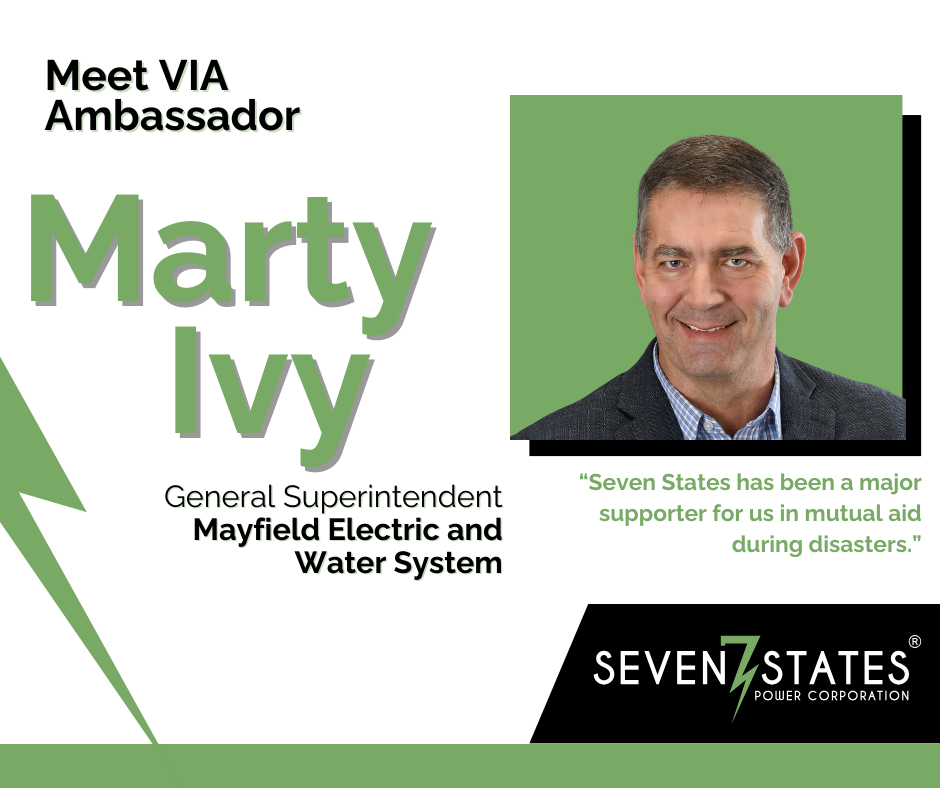
Marty Ivy knows that when it comes to the energy industry, innovative partnerships and technology help prepare everyone for the unexpected. Leading Mayfield Electric and Water System as General Superintendent, Marty has overcome his community’s fair share of devastating weather events. His experienced leadership has allowed him to place an emphasis on technological diversity and preparedness. We asked him to share his experience with various projects with Seven States: “Most recently, Seven States helped us develop an RFP and select a 1.3-megawatt solar installation that we’re preparing to deploy. Projects like this take time, but once it’s in place, it will serve as our generation to help offset TVA’s requirement. Seven States has also been a major supporter for us in mutual aid during disasters. We’ve had three FEMA events — the remnants of Hurricane Ike in 2008, the ice storm in 2009, and the tornadoes in 2021. So, between disaster recovery and now helping us with solar, Seven States has really been there for us. That’s what makes partnership so valuable — you all make things easier, and we see you not just as partners but as friends who help keep our communities strong. We’re grateful for that support and excited about the projects still to come.” To Marty, the most important thing he wants his members to know is that every decision is made with their needs in mind. “Mayfield Electric and Water System strives to be an efficient and innovative utility while managing both reliability and rates. That’s really what it comes down to — being reliable and keeping costs low for our customers. We’ve already seen how innovation can transform our operations. For example, our customer service representatives have been amazed at how much new technology has improved our outage management system. It’s made responding to customers easier, faster, and far more efficient, especially during storms. There’s so much potential we haven’t even discovered yet in the Valley.” With 34 years of industry experience, Marty knows that change is inevitable. He offered this advice to general managers who might be wondering where to start when it comes to bringing innovation to their LPC. “The best advice I can give anyone is this: you can’t effectively manage what you don’t know. That’s why technology is so important — it puts knowledge of your system right at your fingertips. My advice is, don’t be afraid of change. I’ve been with Mayfield Electric and Water System for 34 years, serving as manager since 2001. Over that time, I’ve seen the industry cycle and evolve about every five years. The one constant is that change always comes, and if you’re afraid of it, you’ll get left behind. So, for future managers and anyone in this industry, my advice is to dive in, get your feet wet, and embrace the changes that move us forward.”
Jason Reese, General Manager of Shelbyville Power, Water, and Sewer System, leads his LPC with a focus on the evolving technology that strengthens reliability, improves efficiency, and enhances service for his customers. He took a moment to highlight some of the innovation that is truly making a difference across his community. AMI technology has had the greatest impact on Shelbyville Power, Water, and Sewer Systems and our community. Our system converted to AMI meters nearly 14 years ago, and this technology has enabled us to streamline many manual utility processes and improve operational efficiency in our electric and water systems. AMI electric meters with remote disconnect capabilities have enabled us to remotely disconnect and reconnect customers on the collections list, reducing truck rolls, improving operational efficiency, and enhancing employee safety. AMI water meters allow us to identify water leaks much sooner than was previously possible, benefiting both our customers and our efforts to reduce water loss. Our team is also very proud of our recent pilot distribution automation project installed on three circuits, each served by a different substation, which provide power to Shelbyville's two main corridors. Implementing distribution automation on these circuits helps minimize the number of customers affected during outages or the loss of a power source, improving service reliability for the community. Building on its success, our long-term goal is to expand distribution automation across all eighteen circuits and all three substations to further enhance system reliability, resiliency, and service to our customers. As the Valley continues to evolve and change, Jason knows firsthand that Seven States is a trusted industry resource and a valuable partner in helping LPCs navigate the process of implementing new technology projects. In June 2026, we completed our first EV charger project as part of the TN Fast Charge Network, and I cannot say enough good things about how Seven States and Joe Knox helped guide us through that process. These chargers have already been a hit with our community and have also brought in travelers from out of town to our downtown square. Everything from start to finish went as smoothly as it possibly could, and that is due to Seven States. While technology continues to transform the utility industry every day, Jason believes some aspects of the system will always depend on the knowledgeable workers who keep everything running behind the scenes. Hands-on infrastructure maintenance is one traditional utility practice that I believe will never completely disappear, regardless of how much technology advances. No matter how sophisticated our systems become, maintaining physical infrastructure will always require skilled workers to perform inspections, repairs, and upgrades in the field. Just as the utility industry is built on connections that span across communities, music has a way of bringing people together, even across generations. When asked which celebrity he would most like to meet for dinner, his choice was a musician who has stood the test of time. It would have to be Elvis Presley. As someone who has a love for all genres of music, to be able to sit down and talk with him about his career and experiences from gospel to rock-n-roll would be an absolute thrill!
As utilities continue evolving to meet changing member expectations, David Smart, President and CEO of West Kentucky Rural Electric Cooperative Corporation (WKRECC), has focused on blending convenience with programs that directly improve quality of life. Smart points to both digital modernization and energy efficiency initiatives as areas where WKRECC has made meaningful strides for its members. One modernization effort that’s impacted our community has been the implementation of a mobile app and other digitized forms that make it easier for members to do business with their cooperative, including drive-thru registration and tablet voting at our annual meeting. Another would be Home Uplift initiatives, home energy audits, cold climate heat pump conversions and other programs we have implemented to improve the standard of living, comfort, and efficiency in our members’ homes. Innovation at WKRECC has also extended into advanced energy management and distributed energy resources. Smart elaborated on one of the cooperative’s proudest accomplishments involving internally managing demand and system performance. Our team is especially proud of our PowerShift Program, which utilizes our members’ whole home generators and batteries for demand response. The precision and application technology used has allowed us to offset our peak demand successfully. We have built our own DER gateway allowing us to meter, control, and interrogate home generators and inverters, and our own DERMS platform that incorporates an operational load forecast. Even as utilities embrace new technologies and digital tools, Smart believes some longstanding member habits will remain an important part of cooperative culture. Despite all of the technological advances in the utility world, I think many cooperative members will continue to pay their bill in person at one of our offices. Personal interaction and in-office service continue to matter for our members. In an industry focused on infrastructure and technology, Smart recognizes the value of strong communicators and trusted voices who help bring people and communities together. When asked a lighter question about who he’d like to have dinner with, he pointed to a well-known Kentucky figure who brings folks together. If I could have dinner with anyone, I would love to have dinner with the legendary voice of the Wildcats, Cawood Ledford. I think the stories he could tell would be enlightening and fascinating.
Leading Hartselle Utilities as General Manager, Ty Chancelor has focused on innovative efforts that improve reliability, efficiency, and customer service. We asked him to elaborate on the specific technology and modernization that has changed his LPC footprint, in addition to describing some of his team’s wins for their community. The modernization effort that has likely had the biggest impact on our community in recent years has been Hartselle Utilities’ transition to Advanced Metering Infrastructure (AMI). We began with the conversion of our electric and natural gas systems and ultimately plan to expand AMI capabilities to our water system as well. It’s significantly improved the reliability and efficiency of our operations while also enhancing customer service. For a growing community like Hartselle, investing in modernization projects like AMI helps position us to serve our customers more efficiently while preparing for future technology needs. One specific project our team is especially proud of is our peak shaving initiative. The installation and implementation of the project was spearheaded by our previous General Manager, Bob Sittason, with engineering support from Lance Junkin and Stewart Engineering. Bob strongly believed in making strategic investments that would create long-term value for our customers, and this project is a great example of that vision. Peak shaving has allowed Hartselle Utilities to reduce wholesale power demand costs during periods of highest usage, creating substantial savings for our system and ultimately for our customers. The project also positioned Hartselle Utilities to be more proactive and data-driven in managing system demand and power costs. In March 2022, the Board also approved a voltage reduction proposal as part of our continued efforts to improve system efficiency and maximize savings opportunities. Beyond the financial impact, this project represents the forward-thinking leadership and long-term planning that continues to shape our organization today. Ty also credits Seven States as being a valuable partner for Hartselle Utilities as the needs of his community have continued to evolve. Seven States has been a tremendous partner in helping Hartselle Utilities explore and implement innovative projects that benefit our community. One of the best examples is the installation of our downtown EV fast charging station. With financial support and guidance from Seven States, Hartselle Utilities was able to bring fast-charging infrastructure to our downtown area, helping support economic development, tourism, and the growing demand for electric vehicle accessibility. The project aligned well with our goal of preparing our community for the future while also encouraging visitors to spend time in our downtown district. Since the ribbon cutting in July 2024, the charging station has seen strong community and traveler usage. Projects like this demonstrate how partnerships with organizations like Seven States help local power companies take practical steps toward innovation while still focusing on community needs. Despite the rapidly changing technology in the Valley, the utility business remains rooted in personal relationships and customer service. Chancelor believes that will always remain important in communities like Hartselle. No matter how much technology evolves, I don’t think in-person customer interaction will ever completely disappear in the utility industry. Utilities are still very relationship-driven, especially in communities like Hartselle where customers know our employees personally and expect a level of service that goes beyond an app or automated system. Technology absolutely improves efficiency and communication, but there are still times when customers simply want to talk to a real person face-to-face — whether it’s discussing a billing issue, setting up new service, or navigating a difficult situation after a storm or outage. At the end of the day, utility service is still about serving people, and I think that personal connection will always matter. When asked a lighter question outside the utility world about who he’d most like to sit down with over dinner, his answer came without hesitation. Without question, it would be Dak Prescott. Now realistically, Dak would probably spend dinner wondering why a utility manager from Alabama is staring at him like he’s meeting a superhero, while I’d spend the entire evening trying not to ask too many Cowboys questions in the first five minutes. I’d like to say we’d have deep conversations about leadership, overcoming adversity, and performing under pressure — and hopefully we would — but there’s a strong chance I’d also ask him to explain at least three questionable fourth-quarter decisions from recent seasons. As a Cowboys fan, hope springs eternal. Every season starts with “this could be the year,” and honestly, that kind of optimism probably translates pretty well to the utility business too.
Chickasaw Electric Cooperative General Manager Loyd Muncy has prioritized technology and modernization efforts that strengthen reliability, improve efficiency, and enhance service for his cooperative members. We asked him to share more about the innovations making an impact across Chickasaw Electric Cooperative’s service territory, along with a few projects he is especially proud to see implemented in the community. The Advanced Metering Infrastructure (AMI) has already provided valuable insight into the electric system and will continue to enhance operations as more data is collected and analyzed. AMI has also enabled our team to respond more quickly and accurately to member questions regarding energy usage and outage information. In addition, remote meter reading and remote connect/disconnect capabilities have streamlined operations and reduced field workload. We’re really proud of the way the integrations between our systems have significantly streamlined daily operations and improved service to our members. By integrating our Outage Management System (OMS) with AMI, we receive real-time outage information and can proactively notify members via text message to let them know we are aware of the outage and are responding. Integration with our Geographic Information System (GIS) also allows us to pinpoint fault locations and accurately map where outages or momentary “blinks” occur. In addition, all field crews are equipped with iPads, giving them mobile access to OMS, AMI, and GIS directly from their trucks. This immediate access to system data improves communication, speeds restoration efforts, and enhances overall operational efficiency. Loyd views Seven States as a trusted industry resource and a valuable partner in helping LPCs navigate emerging technologies and evolving energy needs across the Valley. As Chickasaw Electric Cooperative continues exploring new opportunities, he sees collaboration and shared expertise playing an important role in future innovation efforts. As we move forward with storage and DER, we expect to tap into Seven States resources and expertise as we evaluate opportunities, learn from industry experience and continue planning for the future needs of our system and members. While technology continues to transform the utility industry, Muncy believes some aspects of the cooperative model will always depend on personal relationships and direct communication with members. Good old-fashioned troubleshooting and knowledge of the electric system will never completely disappear in the world of technological advancement, and while those skills will always matter, technology and AI are quickly advancing to provide much of that information in real time. What technology cannot replace, however, is the value of face-to-face interaction with our members. Building trust and letting our members know we understand and remain committed to the mission of reliability and affordability will continue to be one of the most important parts of what we do.
Since taking the helm as CEO, Michael has been instrumental in delivering innovative processes and technologies that are ensuring a reliable energy future for the more than 25,000 consumers served by Newport Utilities. Throughout his career, Michael has looked for opportunities to solve the most pressing needs within the energy sector. When asked about the most pressing needs for Newport Utilities, Michael stresses the need for reliability, visibility, and scalability. Solving for these needs translated into investments in grid hardening and automation, advanced metering infrastructure, SCADA modernization, and broadband expansion. Equally important was improving data integration across electric, water, wastewater, and broadband operations so they could move from reactive operations to predictive and preventative decision-making. Cybersecurity and resiliency—particularly for extreme weather events—were also critical priorities. While Seven States has not been directly engaged with Newport Utilities’ innovation initiatives, Michael recognizes that entities like Seven States are valuable when they can demonstrate the ability to align innovation with operational reliability, affordability, and long-term community value. When asked about what he would like for his customers to know about Newport Utilities’ role in bringing innovation forward he had this to say, “Innovation at Newport Utilities is not about technology for its own sake—it is about improving service reliability, resilience, and affordability while positioning the community for long-term economic growth. Our role is to be a careful steward of customer dollars while making forward-looking investments that reduce outages, improve response times, enhance transparency, and support businesses, schools, and public safety. When done correctly, most of this innovation is invisible to customers—but they experience it through fewer disruptions and better service.” Michael is excited about what the next five years holds for Newport Utilities. He is looking forward to expanded grid automation, advanced analytics driven by AMI and operational data, and deeper integration between electric, water, and broadband systems. Additionally, he believes battery storage, small-scale local energy production, and demand reduction programs will play an increasingly important role in enhancing reliability, lowering costs, and giving customers more control over their energy use. Ensure these technologies are deployed securely, cost-effectively, and in a way that maximizes community benefit while supporting economic development and long-term resilience is a priority. As for advice Michael would give to a new GM or CEO? Start with the problem, not the technology. Innovation should be tied directly to reliability, resilience, customer experience, or cost control. Build strong fundamentals first—governance, data quality, cybersecurity, and staff capability—before pursuing advanced solutions. Engage employees early, communicate clearly with customers and stakeholders, and be disciplined in measuring outcomes. Sustainable innovation is incremental, intentional, and aligned with the community’s long-term needs, not short-term trends.
As Chief Executive Officer of East Mississippi Electric Power Association (EMEPA), Randy leads by embracing technology with a focus on how it enhances the lives of the members served by EMEPA. Over his 48 year career, Randy has moved teams through manual processes to personal computers, then to tablets, cell phones, and automated meter reading; each step significantly improving operational efficiency and service reliability. Randy has been an integral leader in completing 3,850 miles of fiber to serve nearly 17,000 subscribers. Moreover, EMEPA also helped facilitate the installation of full backup generation at NAS Meridian and assisted in deploying solar generation paired with microgrid technology at the base. These efforts strengthened energy security and resilience for critical infrastructure in our community. When asked about how Seven States has specifically helped support innovation in the EMEPA footprint Randy said, “Seven States has been a tremendous partner by providing the technical knowledge, strategic guidance, and support necessary to bring these complex projects to life. Their expertise helped us evaluate opportunities, mitigate risk, and execute effectively, particularly in areas such as broadband expansion, backup generation, and microgrid deployment. Innovation requires both vision and competence, and Seven States has helped strengthen both within our organization.” In a time of rapid introduction and adoption of innovation, Randy explains how EMEPA approaching ongoing implementation. “I want our members to understand that implementing new technology is never done simply for the sake of technology. Every advancement we pursue is focused on making their service more reliable, sustainable, and resilient. Whether it is automated metering, fiber broadband, or microgrid support for critical facilities, our goal is always to improve the lives of the people we serve.” As EMEPA looks ahead, they will explore how artificial intelligence enhances their operations and all the ways it will be used over the next five years to increase productivity, develop innovative solutions, and communicate more efficiently with their members. As for advice Randy would give to a new GM or CEO? “You often cannot fully understand the usefulness of a technology until you implement it and allow good employees to work with it. Innovation requires trust in your people and trust in the process. If you hire capable, mission-driven employees and give them the tools and freedom to explore new solutions, they will often exceed your expectations.”
Leading Decatur Utilities as General Manager, Ray Hardin strives to ensure their system is prepared for the future with innovative solutions. We asked him to share some of the ways he’s implemented technology in his LPC’s footprint. “Advanced Metering Infrastructure (AMI) has helped us improve efficiency, maintenance, and long-term planning, while providing customers with usage data through the customer portal that enables them to look for ways to reduce their energy consumption and their cost. AMI has also integrated with the Outage Management and GIS Systems to improve outage tracking and reduce system downtime. We’ve also leveraged Demand Voltage Reduction technology to reduce the wholesale cost of electricity to keep customer rates as low as possible. And over several years, we have implemented LED streetlights throughout the City of Decatur, replacing less efficient lighting and saving the city on lighting costs.” Ray knows his LPC is responsible for the present and future of his community’s needs, and he wants his community to know that he strategically evaluates new technology with a long-term vision. “I want our customer to know that through our implementation of AMI, improved communications, Demand Voltage Reduction and other programs, we continue to look for ways to keep our system safe and reliable and provide the best service to our community at the lowest possible rates.” With so much technological advancement in the Valley, Ray encourages fellow leaders to lean on strategic partnerships to help bring about community change and benefits using cost-efficient solutions. “Don't go it alone! Seven States, TVA and other agencies bring a wealth of resources that can be leveraged to bring innovation to a local community without breaking budgets. For example, Decatur Utilities was able to install two Level 3 Rapid EV Chargers in our community through a partnership with the City of Decatur, TVA, Seven States, and ADECA. It would have been difficult for us to justify the cost of such a project on our own - but through this partnership, the cost was shared while the benefit to our customers and communities is enormous. Seek out those opportunities for shared funding that will benefit your local area and lean on others who have already researched or implement innovative technologies to get their ideas and advice.”
As Chief Information Officer for North Georgia Electric Membership Corporation (NGEMC), Brian Childers knows how crucial innovative partnerships and technology are in preparing for the grid of the future. Brian’s extensive experience has given him a deep understanding of technological diversity and strategic partnerships. We asked him to share some of the ways their team brought innovation to the North Georgia EMC membership, as well as his experience with Seven States as a trusted partner. “The most needed technology developments in our footprint focused on improving reliability, security, and member service. Upgrades to SCADA systems enhanced grid monitoring and automation, allowing faster outage detection and restoration. Cybersecurity improvements were critical to safeguarding member data and ensuring uninterrupted service. Mobile workforce tools streamlined field operations, enabling quicker response times to outages and service requests. Additionally, the installation of distribution system sectionalizing equipment, supported by fiber expansion, improved fault isolation and communication across the network, significantly reducing outage durations and strengthening overall system reliability for our members. Seven States has helped our LPC support innovation by providing access to emerging technologies and collaborative opportunities. They also share best practices that keep us aligned with industry advancements and prepared for future member needs.” Brian always considers how their members view NGEMC’s investments in innovation. “I want our members to know that our role in innovation is centered on improving their quality of life and ensuring reliable, secure, and efficient service. We invest in technologies like advanced grid automation, fiber-supported communication systems, and modern outage management tools to deliver faster restoration, better reliability, and enhanced security. Every innovation we pursue is designed to strengthen our community—whether by reducing outage times, enabling smarter energy solutions, or supporting future connectivity needs. Our commitment is to keep members at the heart of every technology decision we make.” Brian has learned that being plugged into your community and knowing their needs is fundamental to being an innovative leader. He offered this advice to others who might have questions about how to start bringing innovation to their LPC. “NGEMC’s territory includes communities served by multiple power providers, which limits large-scale community investments. Because of this, innovation should focus on projects that deliver clear, measurable benefits to members. Prioritize technologies that improve reliability while helping keep rates affordable. Stay informed on emerging trends like energy storage and flexible rate options while communicating openly with members to encourage adoption. Above all, maintain a long-term vision that balances innovation with financial responsibility, ensuring every investment strengthens member trust and delivers lasting value.”
With his extensive experience in the industry, Kendall Bear’s leadership as General Manager of Rockwood Electric Utility has given him the opportunity to ensure his community is prepared for the future. “Although we’ve had many of the following systems implemented for a few years now, looking back, I would say that building a fiber network between our main office and our substations has been beneficial in a variety of ways for Rockwood Electric. This opened the door for additional technology developments such as AMI, SCADA, distribution automation, Dispatchable Voltage Regulation, a 900 Mhz radio system, and a Meter Data Management System. Implementing a GIS system was extremely valuable as well, as we are now able to export that information to other systems such as Outage Management. We have a business and customer portal from CSA that is used extensively by our employees and customers—everyone really benefits from it.” Kendall knows his LPC is responsible for both the present and future of his community’s needs, and he wants his community to know that he is always looking for ways to better their lives. “We are working very hard to provide a reliable power supply to all our customers and using these different technologies helps us manage the power system. We want to be able to provide real-time information to our customers; something they would not normally have access to without these technologies. I would also want our community to know that we are their ‘trusted energy advisor’ and every employee at Rockwood Electric is committed to helping them make good decisions about the power they use.” With so much technological advancement in the Valley, Kendall encourages fellow leaders to make a strategic plan and collaborate with their peers. “The possibilities for innovation are almost endless, and there are a variety of products that are offered by many vendors. It is more than a little overwhelming! I would encourage a new GM to develop a strategic plan if the utility doesn’t already have one that is up-to-date. This may involve getting input from the many stakeholders in the community. After prioritizing your goals, get to work. Finally, I would tell a new GM to talk to his or her peers and colleagues a LOT. They will tell you what they have done that has been a colossal flop so you’ll know to avoid it, or they will tell you what they have been successful with. I guarantee every manager will share their story if you ask.”
Marty Ivy knows that when it comes to the energy industry, innovative partnerships and technology help prepare everyone for the unexpected. Leading Mayfield Electric and Water System as General Superintendent, Marty has overcome his community’s fair share of devastating weather events. His experienced leadership has allowed him to place an emphasis on technological diversity and preparedness. We asked him to share his experience with various projects with Seven States: “Most recently, Seven States helped us develop an RFP and select a 1.3-megawatt solar installation that we’re preparing to deploy. Projects like this take time, but once it’s in place, it will serve as our generation to help offset TVA’s requirement. Seven States has also been a major supporter for us in mutual aid during disasters. We’ve had three FEMA events — the remnants of Hurricane Ike in 2008, the ice storm in 2009, and the tornadoes in 2021. So, between disaster recovery and now helping us with solar, Seven States has really been there for us. That’s what makes partnership so valuable — you all make things easier, and we see you not just as partners but as friends who help keep our communities strong. We’re grateful for that support and excited about the projects still to come.” To Marty, the most important thing he wants his members to know is that every decision is made with their needs in mind. “Mayfield Electric and Water System strives to be an efficient and innovative utility while managing both reliability and rates. That’s really what it comes down to — being reliable and keeping costs low for our customers. We’ve already seen how innovation can transform our operations. For example, our customer service representatives have been amazed at how much new technology has improved our outage management system. It’s made responding to customers easier, faster, and far more efficient, especially during storms. There’s so much potential we haven’t even discovered yet in the Valley.” With 34 years of industry experience, Marty knows that change is inevitable. He offered this advice to general managers who might be wondering where to start when it comes to bringing innovation to their LPC. “The best advice I can give anyone is this: you can’t effectively manage what you don’t know. That’s why technology is so important — it puts knowledge of your system right at your fingertips. My advice is, don’t be afraid of change. I’ve been with Mayfield Electric and Water System for 34 years, serving as manager since 2001. Over that time, I’ve seen the industry cycle and evolve about every five years. The one constant is that change always comes, and if you’re afraid of it, you’ll get left behind. So, for future managers and anyone in this industry, my advice is to dive in, get your feet wet, and embrace the changes that move us forward.”
Jason Reese, General Manager of Shelbyville Power, Water, and Sewer System, leads his LPC with a focus on the evolving technology that strengthens reliability, improves efficiency, and enhances service for his customers. He took a moment to highlight some of the innovation that is truly making a difference across his community. AMI technology has had the greatest impact on Shelbyville Power, Water, and Sewer Systems and our community. Our system converted to AMI meters nearly 14 years ago, and this technology has enabled us to streamline many manual utility processes and improve operational efficiency in our electric and water systems. AMI electric meters with remote disconnect capabilities have enabled us to remotely disconnect and reconnect customers on the collections list, reducing truck rolls, improving operational efficiency, and enhancing employee safety. AMI water meters allow us to identify water leaks much sooner than was previously possible, benefiting both our customers and our efforts to reduce water loss. Our team is also very proud of our recent pilot distribution automation project installed on three circuits, each served by a different substation, which provide power to Shelbyville's two main corridors. Implementing distribution automation on these circuits helps minimize the number of customers affected during outages or the loss of a power source, improving service reliability for the community. Building on its success, our long-term goal is to expand distribution automation across all eighteen circuits and all three substations to further enhance system reliability, resiliency, and service to our customers. As the Valley continues to evolve and change, Jason knows firsthand that Seven States is a trusted industry resource and a valuable partner in helping LPCs navigate the process of implementing new technology projects. In June 2026, we completed our first EV charger project as part of the TN Fast Charge Network, and I cannot say enough good things about how Seven States and Joe Knox helped guide us through that process. These chargers have already been a hit with our community and have also brought in travelers from out of town to our downtown square. Everything from start to finish went as smoothly as it possibly could, and that is due to Seven States. While technology continues to transform the utility industry every day, Jason believes some aspects of the system will always depend on the knowledgeable workers who keep everything running behind the scenes. Hands-on infrastructure maintenance is one traditional utility practice that I believe will never completely disappear, regardless of how much technology advances. No matter how sophisticated our systems become, maintaining physical infrastructure will always require skilled workers to perform inspections, repairs, and upgrades in the field. Just as the utility industry is built on connections that span across communities, music has a way of bringing people together, even across generations. When asked which celebrity he would most like to meet for dinner, his choice was a musician who has stood the test of time. It would have to be Elvis Presley. As someone who has a love for all genres of music, to be able to sit down and talk with him about his career and experiences from gospel to rock-n-roll would be an absolute thrill!
As utilities continue evolving to meet changing member expectations, David Smart, President and CEO of West Kentucky Rural Electric Cooperative Corporation (WKRECC), has focused on blending convenience with programs that directly improve quality of life. Smart points to both digital modernization and energy efficiency initiatives as areas where WKRECC has made meaningful strides for its members. One modernization effort that’s impacted our community has been the implementation of a mobile app and other digitized forms that make it easier for members to do business with their cooperative, including drive-thru registration and tablet voting at our annual meeting. Another would be Home Uplift initiatives, home energy audits, cold climate heat pump conversions and other programs we have implemented to improve the standard of living, comfort, and efficiency in our members’ homes. Innovation at WKRECC has also extended into advanced energy management and distributed energy resources. Smart elaborated on one of the cooperative’s proudest accomplishments involving internally managing demand and system performance. Our team is especially proud of our PowerShift Program, which utilizes our members’ whole home generators and batteries for demand response. The precision and application technology used has allowed us to offset our peak demand successfully. We have built our own DER gateway allowing us to meter, control, and interrogate home generators and inverters, and our own DERMS platform that incorporates an operational load forecast. Even as utilities embrace new technologies and digital tools, Smart believes some longstanding member habits will remain an important part of cooperative culture. Despite all of the technological advances in the utility world, I think many cooperative members will continue to pay their bill in person at one of our offices. Personal interaction and in-office service continue to matter for our members. In an industry focused on infrastructure and technology, Smart recognizes the value of strong communicators and trusted voices who help bring people and communities together. When asked a lighter question about who he’d like to have dinner with, he pointed to a well-known Kentucky figure who brings folks together. If I could have dinner with anyone, I would love to have dinner with the legendary voice of the Wildcats, Cawood Ledford. I think the stories he could tell would be enlightening and fascinating.
Leading Hartselle Utilities as General Manager, Ty Chancelor has focused on innovative efforts that improve reliability, efficiency, and customer service. We asked him to elaborate on the specific technology and modernization that has changed his LPC footprint, in addition to describing some of his team’s wins for their community. The modernization effort that has likely had the biggest impact on our community in recent years has been Hartselle Utilities’ transition to Advanced Metering Infrastructure (AMI). We began with the conversion of our electric and natural gas systems and ultimately plan to expand AMI capabilities to our water system as well. It’s significantly improved the reliability and efficiency of our operations while also enhancing customer service. For a growing community like Hartselle, investing in modernization projects like AMI helps position us to serve our customers more efficiently while preparing for future technology needs. One specific project our team is especially proud of is our peak shaving initiative. The installation and implementation of the project was spearheaded by our previous General Manager, Bob Sittason, with engineering support from Lance Junkin and Stewart Engineering. Bob strongly believed in making strategic investments that would create long-term value for our customers, and this project is a great example of that vision. Peak shaving has allowed Hartselle Utilities to reduce wholesale power demand costs during periods of highest usage, creating substantial savings for our system and ultimately for our customers. The project also positioned Hartselle Utilities to be more proactive and data-driven in managing system demand and power costs. In March 2022, the Board also approved a voltage reduction proposal as part of our continued efforts to improve system efficiency and maximize savings opportunities. Beyond the financial impact, this project represents the forward-thinking leadership and long-term planning that continues to shape our organization today. Ty also credits Seven States as being a valuable partner for Hartselle Utilities as the needs of his community have continued to evolve. Seven States has been a tremendous partner in helping Hartselle Utilities explore and implement innovative projects that benefit our community. One of the best examples is the installation of our downtown EV fast charging station. With financial support and guidance from Seven States, Hartselle Utilities was able to bring fast-charging infrastructure to our downtown area, helping support economic development, tourism, and the growing demand for electric vehicle accessibility. The project aligned well with our goal of preparing our community for the future while also encouraging visitors to spend time in our downtown district. Since the ribbon cutting in July 2024, the charging station has seen strong community and traveler usage. Projects like this demonstrate how partnerships with organizations like Seven States help local power companies take practical steps toward innovation while still focusing on community needs. Despite the rapidly changing technology in the Valley, the utility business remains rooted in personal relationships and customer service. Chancelor believes that will always remain important in communities like Hartselle. No matter how much technology evolves, I don’t think in-person customer interaction will ever completely disappear in the utility industry. Utilities are still very relationship-driven, especially in communities like Hartselle where customers know our employees personally and expect a level of service that goes beyond an app or automated system. Technology absolutely improves efficiency and communication, but there are still times when customers simply want to talk to a real person face-to-face — whether it’s discussing a billing issue, setting up new service, or navigating a difficult situation after a storm or outage. At the end of the day, utility service is still about serving people, and I think that personal connection will always matter. When asked a lighter question outside the utility world about who he’d most like to sit down with over dinner, his answer came without hesitation. Without question, it would be Dak Prescott. Now realistically, Dak would probably spend dinner wondering why a utility manager from Alabama is staring at him like he’s meeting a superhero, while I’d spend the entire evening trying not to ask too many Cowboys questions in the first five minutes. I’d like to say we’d have deep conversations about leadership, overcoming adversity, and performing under pressure — and hopefully we would — but there’s a strong chance I’d also ask him to explain at least three questionable fourth-quarter decisions from recent seasons. As a Cowboys fan, hope springs eternal. Every season starts with “this could be the year,” and honestly, that kind of optimism probably translates pretty well to the utility business too.
Chickasaw Electric Cooperative General Manager Loyd Muncy has prioritized technology and modernization efforts that strengthen reliability, improve efficiency, and enhance service for his cooperative members. We asked him to share more about the innovations making an impact across Chickasaw Electric Cooperative’s service territory, along with a few projects he is especially proud to see implemented in the community. The Advanced Metering Infrastructure (AMI) has already provided valuable insight into the electric system and will continue to enhance operations as more data is collected and analyzed. AMI has also enabled our team to respond more quickly and accurately to member questions regarding energy usage and outage information. In addition, remote meter reading and remote connect/disconnect capabilities have streamlined operations and reduced field workload. We’re really proud of the way the integrations between our systems have significantly streamlined daily operations and improved service to our members. By integrating our Outage Management System (OMS) with AMI, we receive real-time outage information and can proactively notify members via text message to let them know we are aware of the outage and are responding. Integration with our Geographic Information System (GIS) also allows us to pinpoint fault locations and accurately map where outages or momentary “blinks” occur. In addition, all field crews are equipped with iPads, giving them mobile access to OMS, AMI, and GIS directly from their trucks. This immediate access to system data improves communication, speeds restoration efforts, and enhances overall operational efficiency. Loyd views Seven States as a trusted industry resource and a valuable partner in helping LPCs navigate emerging technologies and evolving energy needs across the Valley. As Chickasaw Electric Cooperative continues exploring new opportunities, he sees collaboration and shared expertise playing an important role in future innovation efforts. As we move forward with storage and DER, we expect to tap into Seven States resources and expertise as we evaluate opportunities, learn from industry experience and continue planning for the future needs of our system and members. While technology continues to transform the utility industry, Muncy believes some aspects of the cooperative model will always depend on personal relationships and direct communication with members. Good old-fashioned troubleshooting and knowledge of the electric system will never completely disappear in the world of technological advancement, and while those skills will always matter, technology and AI are quickly advancing to provide much of that information in real time. What technology cannot replace, however, is the value of face-to-face interaction with our members. Building trust and letting our members know we understand and remain committed to the mission of reliability and affordability will continue to be one of the most important parts of what we do.
Since taking the helm as CEO, Michael has been instrumental in delivering innovative processes and technologies that are ensuring a reliable energy future for the more than 25,000 consumers served by Newport Utilities. Throughout his career, Michael has looked for opportunities to solve the most pressing needs within the energy sector. When asked about the most pressing needs for Newport Utilities, Michael stresses the need for reliability, visibility, and scalability. Solving for these needs translated into investments in grid hardening and automation, advanced metering infrastructure, SCADA modernization, and broadband expansion. Equally important was improving data integration across electric, water, wastewater, and broadband operations so they could move from reactive operations to predictive and preventative decision-making. Cybersecurity and resiliency—particularly for extreme weather events—were also critical priorities. While Seven States has not been directly engaged with Newport Utilities’ innovation initiatives, Michael recognizes that entities like Seven States are valuable when they can demonstrate the ability to align innovation with operational reliability, affordability, and long-term community value. When asked about what he would like for his customers to know about Newport Utilities’ role in bringing innovation forward he had this to say, “Innovation at Newport Utilities is not about technology for its own sake—it is about improving service reliability, resilience, and affordability while positioning the community for long-term economic growth. Our role is to be a careful steward of customer dollars while making forward-looking investments that reduce outages, improve response times, enhance transparency, and support businesses, schools, and public safety. When done correctly, most of this innovation is invisible to customers—but they experience it through fewer disruptions and better service.” Michael is excited about what the next five years holds for Newport Utilities. He is looking forward to expanded grid automation, advanced analytics driven by AMI and operational data, and deeper integration between electric, water, and broadband systems. Additionally, he believes battery storage, small-scale local energy production, and demand reduction programs will play an increasingly important role in enhancing reliability, lowering costs, and giving customers more control over their energy use. Ensure these technologies are deployed securely, cost-effectively, and in a way that maximizes community benefit while supporting economic development and long-term resilience is a priority. As for advice Michael would give to a new GM or CEO? Start with the problem, not the technology. Innovation should be tied directly to reliability, resilience, customer experience, or cost control. Build strong fundamentals first—governance, data quality, cybersecurity, and staff capability—before pursuing advanced solutions. Engage employees early, communicate clearly with customers and stakeholders, and be disciplined in measuring outcomes. Sustainable innovation is incremental, intentional, and aligned with the community’s long-term needs, not short-term trends.
As Chief Executive Officer of East Mississippi Electric Power Association (EMEPA), Randy leads by embracing technology with a focus on how it enhances the lives of the members served by EMEPA. Over his 48 year career, Randy has moved teams through manual processes to personal computers, then to tablets, cell phones, and automated meter reading; each step significantly improving operational efficiency and service reliability. Randy has been an integral leader in completing 3,850 miles of fiber to serve nearly 17,000 subscribers. Moreover, EMEPA also helped facilitate the installation of full backup generation at NAS Meridian and assisted in deploying solar generation paired with microgrid technology at the base. These efforts strengthened energy security and resilience for critical infrastructure in our community. When asked about how Seven States has specifically helped support innovation in the EMEPA footprint Randy said, “Seven States has been a tremendous partner by providing the technical knowledge, strategic guidance, and support necessary to bring these complex projects to life. Their expertise helped us evaluate opportunities, mitigate risk, and execute effectively, particularly in areas such as broadband expansion, backup generation, and microgrid deployment. Innovation requires both vision and competence, and Seven States has helped strengthen both within our organization.” In a time of rapid introduction and adoption of innovation, Randy explains how EMEPA approaching ongoing implementation. “I want our members to understand that implementing new technology is never done simply for the sake of technology. Every advancement we pursue is focused on making their service more reliable, sustainable, and resilient. Whether it is automated metering, fiber broadband, or microgrid support for critical facilities, our goal is always to improve the lives of the people we serve.” As EMEPA looks ahead, they will explore how artificial intelligence enhances their operations and all the ways it will be used over the next five years to increase productivity, develop innovative solutions, and communicate more efficiently with their members. As for advice Randy would give to a new GM or CEO? “You often cannot fully understand the usefulness of a technology until you implement it and allow good employees to work with it. Innovation requires trust in your people and trust in the process. If you hire capable, mission-driven employees and give them the tools and freedom to explore new solutions, they will often exceed your expectations.”
Leading Decatur Utilities as General Manager, Ray Hardin strives to ensure their system is prepared for the future with innovative solutions. We asked him to share some of the ways he’s implemented technology in his LPC’s footprint. “Advanced Metering Infrastructure (AMI) has helped us improve efficiency, maintenance, and long-term planning, while providing customers with usage data through the customer portal that enables them to look for ways to reduce their energy consumption and their cost. AMI has also integrated with the Outage Management and GIS Systems to improve outage tracking and reduce system downtime. We’ve also leveraged Demand Voltage Reduction technology to reduce the wholesale cost of electricity to keep customer rates as low as possible. And over several years, we have implemented LED streetlights throughout the City of Decatur, replacing less efficient lighting and saving the city on lighting costs.” Ray knows his LPC is responsible for the present and future of his community’s needs, and he wants his community to know that he strategically evaluates new technology with a long-term vision. “I want our customer to know that through our implementation of AMI, improved communications, Demand Voltage Reduction and other programs, we continue to look for ways to keep our system safe and reliable and provide the best service to our community at the lowest possible rates.” With so much technological advancement in the Valley, Ray encourages fellow leaders to lean on strategic partnerships to help bring about community change and benefits using cost-efficient solutions. “Don't go it alone! Seven States, TVA and other agencies bring a wealth of resources that can be leveraged to bring innovation to a local community without breaking budgets. For example, Decatur Utilities was able to install two Level 3 Rapid EV Chargers in our community through a partnership with the City of Decatur, TVA, Seven States, and ADECA. It would have been difficult for us to justify the cost of such a project on our own - but through this partnership, the cost was shared while the benefit to our customers and communities is enormous. Seek out those opportunities for shared funding that will benefit your local area and lean on others who have already researched or implement innovative technologies to get their ideas and advice.”
As Chief Information Officer for North Georgia Electric Membership Corporation (NGEMC), Brian Childers knows how crucial innovative partnerships and technology are in preparing for the grid of the future. Brian’s extensive experience has given him a deep understanding of technological diversity and strategic partnerships. We asked him to share some of the ways their team brought innovation to the North Georgia EMC membership, as well as his experience with Seven States as a trusted partner. “The most needed technology developments in our footprint focused on improving reliability, security, and member service. Upgrades to SCADA systems enhanced grid monitoring and automation, allowing faster outage detection and restoration. Cybersecurity improvements were critical to safeguarding member data and ensuring uninterrupted service. Mobile workforce tools streamlined field operations, enabling quicker response times to outages and service requests. Additionally, the installation of distribution system sectionalizing equipment, supported by fiber expansion, improved fault isolation and communication across the network, significantly reducing outage durations and strengthening overall system reliability for our members. Seven States has helped our LPC support innovation by providing access to emerging technologies and collaborative opportunities. They also share best practices that keep us aligned with industry advancements and prepared for future member needs.” Brian always considers how their members view NGEMC’s investments in innovation. “I want our members to know that our role in innovation is centered on improving their quality of life and ensuring reliable, secure, and efficient service. We invest in technologies like advanced grid automation, fiber-supported communication systems, and modern outage management tools to deliver faster restoration, better reliability, and enhanced security. Every innovation we pursue is designed to strengthen our community—whether by reducing outage times, enabling smarter energy solutions, or supporting future connectivity needs. Our commitment is to keep members at the heart of every technology decision we make.” Brian has learned that being plugged into your community and knowing their needs is fundamental to being an innovative leader. He offered this advice to others who might have questions about how to start bringing innovation to their LPC. “NGEMC’s territory includes communities served by multiple power providers, which limits large-scale community investments. Because of this, innovation should focus on projects that deliver clear, measurable benefits to members. Prioritize technologies that improve reliability while helping keep rates affordable. Stay informed on emerging trends like energy storage and flexible rate options while communicating openly with members to encourage adoption. Above all, maintain a long-term vision that balances innovation with financial responsibility, ensuring every investment strengthens member trust and delivers lasting value.”
With his extensive experience in the industry, Kendall Bear’s leadership as General Manager of Rockwood Electric Utility has given him the opportunity to ensure his community is prepared for the future. “Although we’ve had many of the following systems implemented for a few years now, looking back, I would say that building a fiber network between our main office and our substations has been beneficial in a variety of ways for Rockwood Electric. This opened the door for additional technology developments such as AMI, SCADA, distribution automation, Dispatchable Voltage Regulation, a 900 Mhz radio system, and a Meter Data Management System. Implementing a GIS system was extremely valuable as well, as we are now able to export that information to other systems such as Outage Management. We have a business and customer portal from CSA that is used extensively by our employees and customers—everyone really benefits from it.” Kendall knows his LPC is responsible for both the present and future of his community’s needs, and he wants his community to know that he is always looking for ways to better their lives. “We are working very hard to provide a reliable power supply to all our customers and using these different technologies helps us manage the power system. We want to be able to provide real-time information to our customers; something they would not normally have access to without these technologies. I would also want our community to know that we are their ‘trusted energy advisor’ and every employee at Rockwood Electric is committed to helping them make good decisions about the power they use.” With so much technological advancement in the Valley, Kendall encourages fellow leaders to make a strategic plan and collaborate with their peers. “The possibilities for innovation are almost endless, and there are a variety of products that are offered by many vendors. It is more than a little overwhelming! I would encourage a new GM to develop a strategic plan if the utility doesn’t already have one that is up-to-date. This may involve getting input from the many stakeholders in the community. After prioritizing your goals, get to work. Finally, I would tell a new GM to talk to his or her peers and colleagues a LOT. They will tell you what they have done that has been a colossal flop so you’ll know to avoid it, or they will tell you what they have been successful with. I guarantee every manager will share their story if you ask.”
Marty Ivy knows that when it comes to the energy industry, innovative partnerships and technology help prepare everyone for the unexpected. Leading Mayfield Electric and Water System as General Superintendent, Marty has overcome his community’s fair share of devastating weather events. His experienced leadership has allowed him to place an emphasis on technological diversity and preparedness. We asked him to share his experience with various projects with Seven States: “Most recently, Seven States helped us develop an RFP and select a 1.3-megawatt solar installation that we’re preparing to deploy. Projects like this take time, but once it’s in place, it will serve as our generation to help offset TVA’s requirement. Seven States has also been a major supporter for us in mutual aid during disasters. We’ve had three FEMA events — the remnants of Hurricane Ike in 2008, the ice storm in 2009, and the tornadoes in 2021. So, between disaster recovery and now helping us with solar, Seven States has really been there for us. That’s what makes partnership so valuable — you all make things easier, and we see you not just as partners but as friends who help keep our communities strong. We’re grateful for that support and excited about the projects still to come.” To Marty, the most important thing he wants his members to know is that every decision is made with their needs in mind. “Mayfield Electric and Water System strives to be an efficient and innovative utility while managing both reliability and rates. That’s really what it comes down to — being reliable and keeping costs low for our customers. We’ve already seen how innovation can transform our operations. For example, our customer service representatives have been amazed at how much new technology has improved our outage management system. It’s made responding to customers easier, faster, and far more efficient, especially during storms. There’s so much potential we haven’t even discovered yet in the Valley.” With 34 years of industry experience, Marty knows that change is inevitable. He offered this advice to general managers who might be wondering where to start when it comes to bringing innovation to their LPC. “The best advice I can give anyone is this: you can’t effectively manage what you don’t know. That’s why technology is so important — it puts knowledge of your system right at your fingertips. My advice is, don’t be afraid of change. I’ve been with Mayfield Electric and Water System for 34 years, serving as manager since 2001. Over that time, I’ve seen the industry cycle and evolve about every five years. The one constant is that change always comes, and if you’re afraid of it, you’ll get left behind. So, for future managers and anyone in this industry, my advice is to dive in, get your feet wet, and embrace the changes that move us forward.”