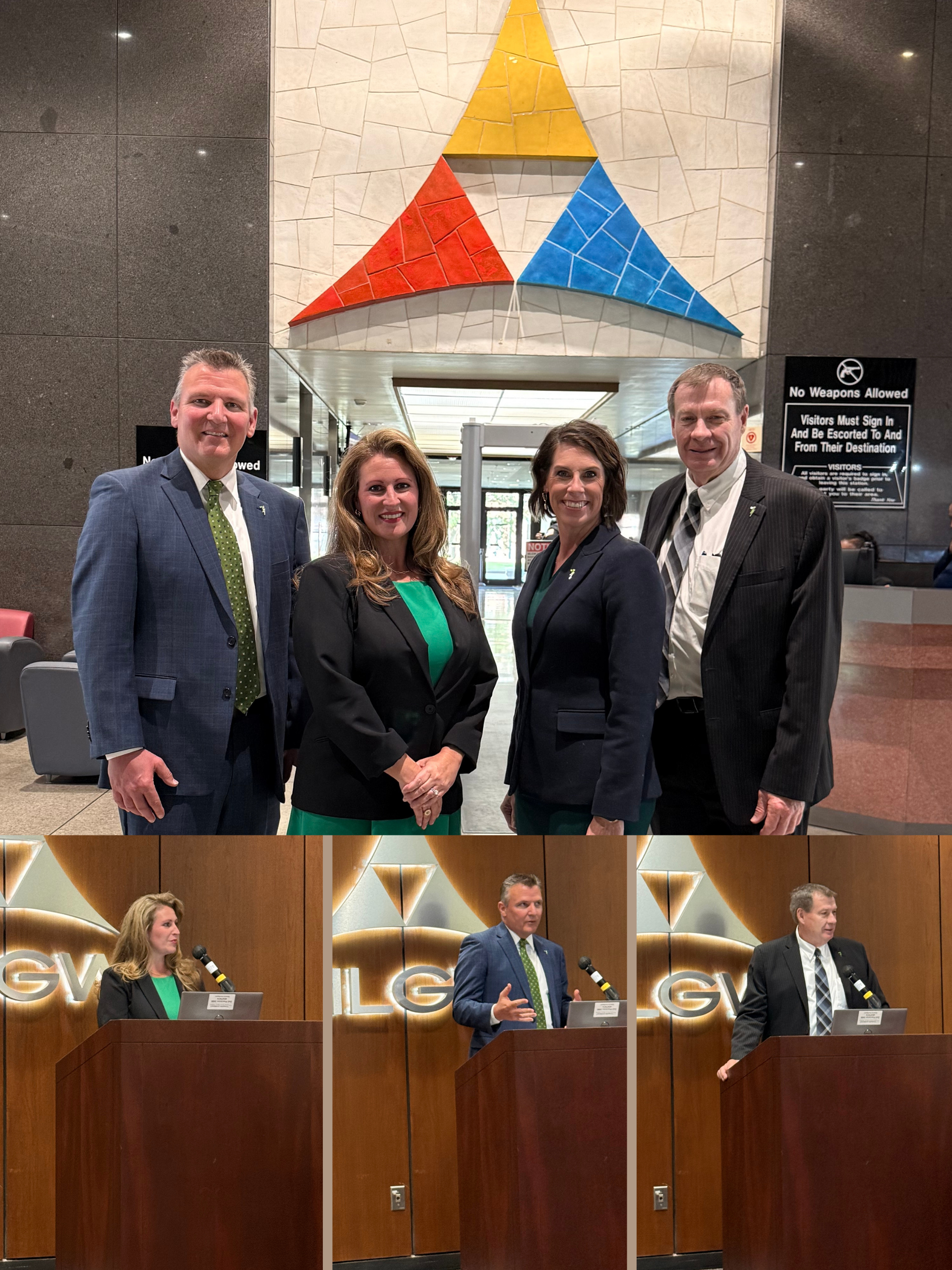
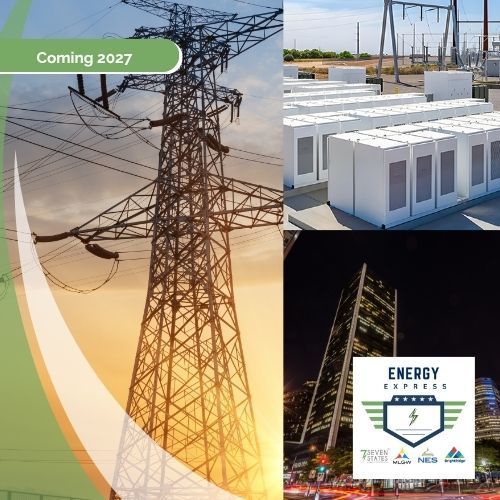
CHATTANOOGA, Tenn. — September 02, 2026 — Seven States Power Corporation has issued a Request for Proposals (RFP) seeking a qualified provider to supply battery energy storage systems and a 20-year long-term service agreement for the Energy Express Project, a 220-megawatt battery storage initiative being developed in partnership with Memphis Light, Gas and Water (MLGW), Nashville Electric Service (NES), and BrightRidge. The competitive procurement represents another major milestone as Seven States advances one of the Tennessee Valley’s most significant investments in distribution-connected battery storage. The Energy Express Project will deploy battery energy storage across multiple locations in west, middle, and east Tennessee, including 100MW in partnership with MLGW, 100MW with NES, and 20MW with BrightRidge. Seven States will own and operate the assets, which will be interconnected with the local utilities’ distribution systems and designed to charge during lower-demand periods and discharge when demand is highest. The systems will provide the utility partners with greater operational flexibility while helping manage peak demand, strengthen reliability, and make more efficient use of existing grid infrastructure. “Moving into procurement marks an important step toward delivering these assets for our local power company partners and the communities they serve,” said Betsey Kirk McCall, President and CEO of Seven States Power Corporation. “Through Energy Express, we are combining federal financing, local partnerships and innovative energy technology to make a long-term investment in the Tennessee Valley’s electric infrastructure. This RFP will help us identify a partner capable not only of delivering the technology, but of supporting its performance and reliability throughout the life of the project.” The Energy Express Project is backed by Seven States’ $439 million award through the U.S. Department of Agriculture’s Rural Utilities Service New Empowering Rural America (New ERA) program. Construction is expected to begin in 2027, with the battery assets targeted for commissioning in late 2028. Interested respondents can access the RFP and additional procurement information at https://www.sevenstatespower.com/rfp-inquiry.
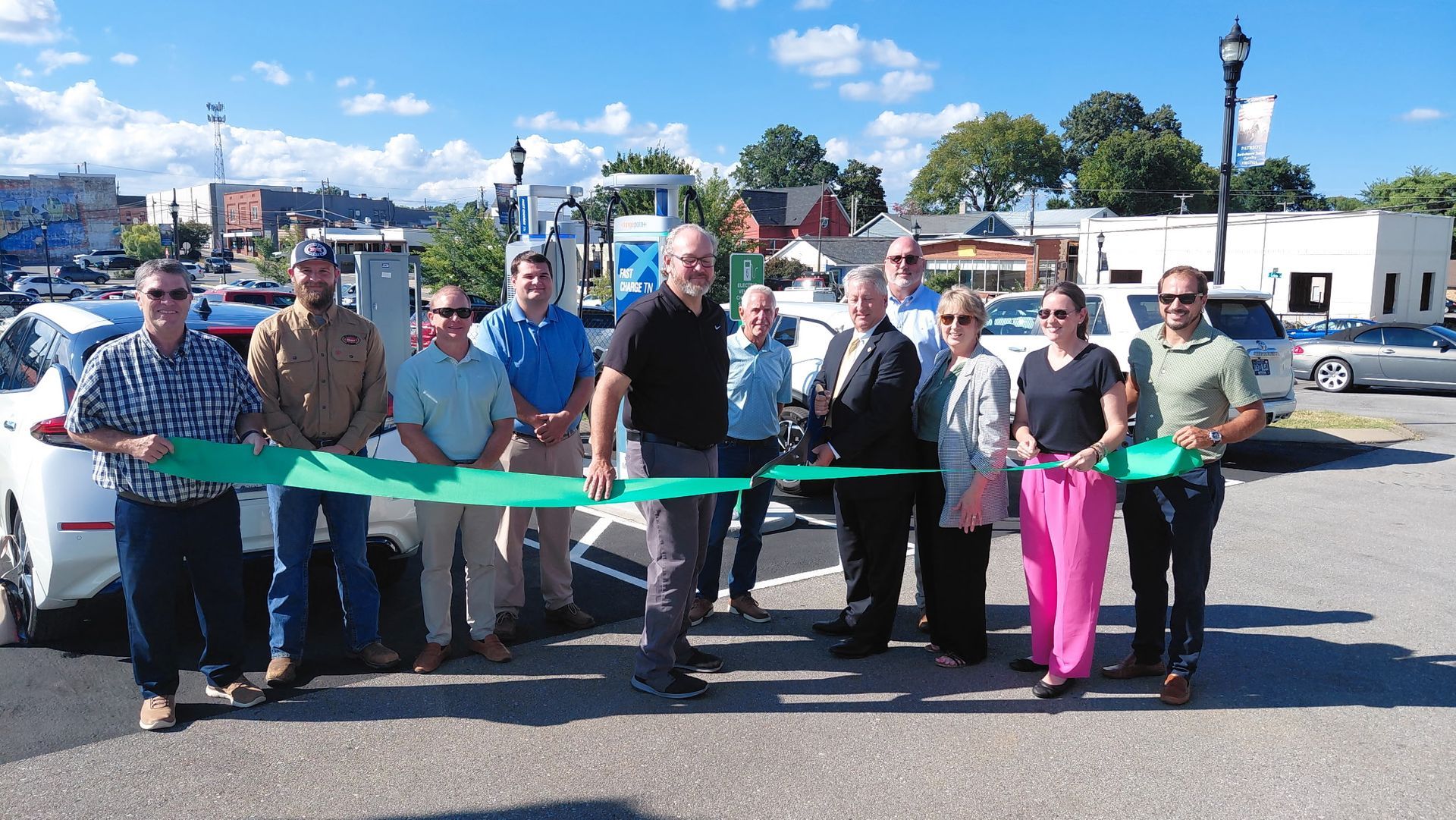
DICKSON, Tenn. — August 4, 2026 — Dickson Electric System, in partnership with Seven States Power Corporation (Seven States), on Tuesday celebrated the official opening of 2 new DC Fast Charge electric vehicle (EV) charging ports that will expand charging access for residents and travelers while supporting continued economic growth throughout the region. Community leaders, elected officials, utility representatives, and project partners gathered for a ribbon-cutting ceremony to commemorate the investment. The new DC Fast Charge EV charging ports mark another exciting step forward in advancing regional transportation infrastructure that will expand convenient charging options for residents and visitors throughout the community. “This project represents our commitment to providing reliable, forward-looking infrastructure that serves our customers both today and in the future,” said Darrell Gillespie, General Manager of Dickson Electric System. “As electric vehicle adoption continues to grow, investments like these help ensure our communities remain connected and ready for what’s next.” The charging ports are part of broader efforts to expand EV infrastructure throughout the Tennessee Valley, providing drivers with increased confidence and accessibility as electric transportation continues to grow. The project was made possible through funds supplied through the TN Fast Charge Network which is a statewide EV charging initiative developed by the Tennessee Department of Environment and Conservation (TDEC) and Tennessee Valley Authority (TVA) to place chargers every 50 miles along major highways. “Seven States is proud to partner with Dickson Electric to bring this project to life,” said Betsey Kirk McCall, President & CEO of Seven States. “Together, we’re helping local utilities meet evolving energy needs while creating lasting value for the communities they serve.” The charging stations will be available for use beginning August 4, 2026. They are located at 210 East College Street, Dickson, TN.
Source: Chattanooga Times Free Press | 2 August 2026 | BY DANIEL DASSOW Nearly 20 years ago, the Tennessee Valley Authority and its main customers -- local electric utilities -- formed a new power company with a specific and unprecedented goal. Seven States Power Corp. , a cooperative owned by the region's local utilities, like EPB in Chattanooga , would co-own power plants with TVA. The cooperative would put ownership of power plants in local hands rather than with the U.S. government, which owns TVA and its assets. Seven States would help the federal agency stay below its $30 billion legal debt limit. From 2008 to 2013, Chattanooga-based Seven States owned a 90% stake in TVA's Southaven gas plant in Mississippi. After TVA lowered its debt and bought Seven States out of the plant, the cooperative pivoted to being a development partner for local utilities as they installed solar panels, electric vehicle charging stations and grid-level batteries. Now, Seven States leadership and members say the group is ready to return to its full founding mission of owning a stake in TVA power plants as the federal utility faces many of the same challenges from two decades ago. (READ MORE: Trump budget does not propose privatizing TVA as utility's debt rises) In a video interview, several managers of utilities in the region said Seven States had an opportunity to help TVA stay under its debt limit and meet higher power demand while keeping assets in local hands. "That original intent has never gone away," said Jeff Dykes, CEO of Johnson City-based utility BrightRidge and chair of the Seven States board. "Even though not a lot of action has happened over the years, it's always come back to that hope and desire and intent. We want TVA to be successful at the end of the day. We need TVA to be successful." Seven States is a generation and transmission cooperative , a model in which utilities band together to form a group that can own power plants. While the model is common in other parts of the U.S., TVA's central authority over its seven-state domain is its own model. "TVA is unique in that it owns the generation, it owns the transmission, it's self-regulating and it regulates its own customers," Wes Kelley, CEO at Huntsville Utilities, said in a video interview. "There's nothing else in the country that fits that paradigm." TVA customers have benefited from the model for more than 90 years, Kelley said, though there is room to integrate best practices from other parts of the country. TVA's debt is expected to rise from $23.8 billion at the beginning of 2026 to $27.3 billion by the end of 2027, according to a recent White House budget. The utility has found ways to offload some of the debt, including by entering lease-purchase agreements. The deals allow TVA to receive payment from a third party in exchange for a master lease on a power plant. TVA continues to own the plant while making payments back to the third party, similar to a mortgage. TVA entered a $2 billion lease agreement in May for its Cumberland gas plant in Middle Tennessee, scheduled for completion by the end of the year. The value of the deals is even greater if Seven States is the third party, said Doug McGowen, CEO of Memphis Light, Gas and Water, TVA's largest customer. Because Seven States is owned by the end customers of the product, its interest in maintaining low power costs is the same as residents of the region. "If Seven States was to take ownership of some of the assets through alternative financing, now you have the customers of TVA who are de facto owners of the assets that are generating the electricity that they are ultimately buying," McGowen said. "For us, that means there is a built-in hedge of protection or inherent checks and balances." Seven States is prepared to finance deals on the magnitude of the Cumberland deal, said Betsey Kirk McCall, CEO of the cooperative. The U.S. Department of Agriculture awarded Seven States $439 million in loans and grants last year, which the cooperative is using to build battery systems for its members. The award made Seven States eligible for greater financing, potentially up to the billions of dollars needed to take stake in a major gas plant, McCall said. Funding agencies include the USDA and the U.S. Department of Energy, she said. "None of them have shied away from numbers and volume of plants that we've put in front of the organizations we've been interacting with," McCall said. Seven States is a "force multiplier" for TVA that acts as an extension of its local power customers for the purpose of increasing power supply, McCall said in a later email. She told the TVA board of directors in May that Seven States had completed 222 projects with 80 utilities and received $475 million in state and federal funds since its founding. At its founding in 2007, the cooperative was designed to issue bonds backed by long-term contracts to purchase power. TVA was building gas plants at the time to meet power demand. The TVA board of directors, the members of which are nominated by the president and confirmed by the Senate, approved negotiations with Seven States in 2008. The move was meant to provide stability in ownership if TVA assets were ever sold by the U.S. government. (READ MORE: Climate groups, senators criticize TVA for fossil gas expansion plans) In the process, Seven States would empower local distributors that operate in a power system where one entity has historically owned and operated all the power plants and transmission lines. "(TVA was) up against the same challenges we're up against today," said Edward Kemp, general manager of Starkville Utilities in Mississippi. "At that time, as well as today, all the local power companies really want to be a part of the solution. We want to help. We're not just depending upon TVA to do everything for us." In 2020, TVA granted its local power companies the ability to generate or buy up to 5% of their electricity. Seven States found a niche in helping local utilities develop their own generating sources, work it continues to do. But as TVA's power demand is rising again after a period in the 2010s marked by flat demand growth, Seven States sees a chance to go big again. The cooperative could once again become a major finance partner to TVA, said Chris Jones, president of the Middle Tennessee Electric Membership Corp. The move would only enhance the public power model that's characterized the region since Congress created TVA during the Great Depression. "It can be even better whenever local power companies are given more priority as a practical partner," Jones said. "I think we're seeing that day come, and Seven States is going to be part of it."