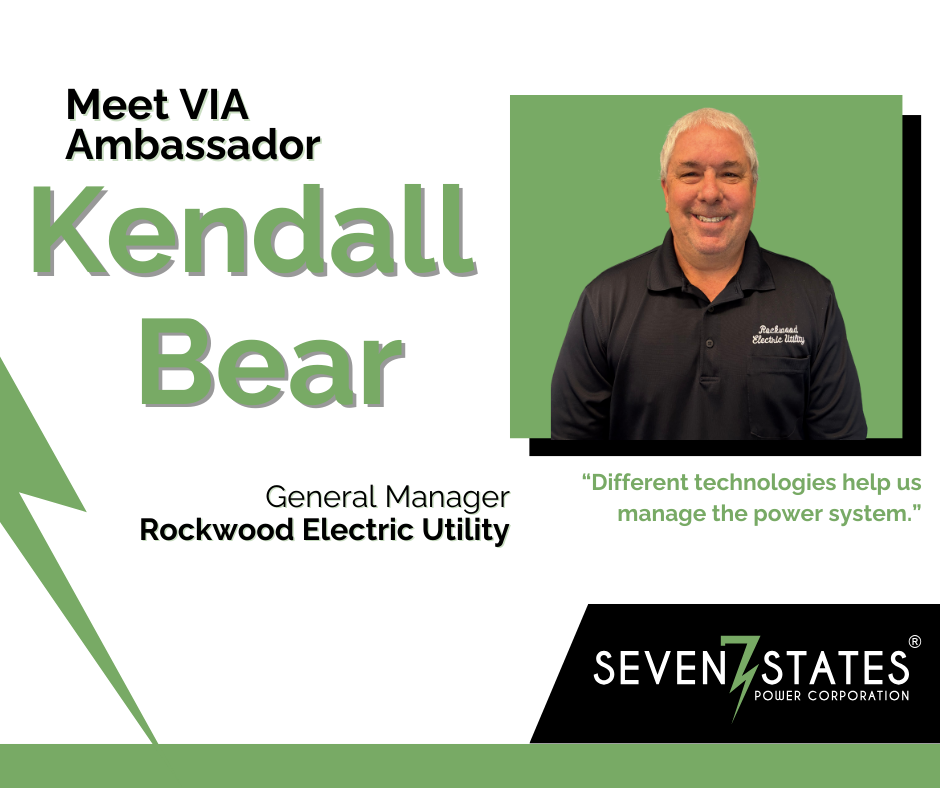
With his extensive experience in the industry, Kendall Bear’s leadership as General Manager of Rockwood Electric Utility has given him the opportunity to ensure his community is prepared for the future. “Although we’ve had many of the following systems implemented for a few years now, looking back, I would say that building a fiber network between our main office and our substations has been beneficial in a variety of ways for Rockwood Electric. This opened the door for additional technology developments such as AMI, SCADA, distribution automation, Dispatchable Voltage Regulation, a 900 Mhz radio system, and a Meter Data Management System. Implementing a GIS system was extremely valuable as well, as we are now able to export that information to other systems such as Outage Management. We have a business and customer portal from CSA that is used extensively by our employees and customers—everyone really benefits from it.” Kendall knows his LPC is responsible for both the present and future of his community’s needs, and he wants his community to know that he is always looking for ways to better their lives. “We are working very hard to provide a reliable power supply to all our customers and using these different technologies helps us manage the power system. We want to be able to provide real-time information to our customers; something they would not normally have access to without these technologies. I would also want our community to know that we are their ‘trusted energy advisor’ and every employee at Rockwood Electric is committed to helping them make good decisions about the power they use.” With so much technological advancement in the Valley, Kendall encourages fellow leaders to make a strategic plan and collaborate with their peers. “The possibilities for innovation are almost endless, and there are a variety of products that are offered by many vendors. It is more than a little overwhelming! I would encourage a new GM to develop a strategic plan if the utility doesn’t already have one that is up-to-date. This may involve getting input from the many stakeholders in the community. After prioritizing your goals, get to work. Finally, I would tell a new GM to talk to his or her peers and colleagues a LOT. They will tell you what they have done that has been a colossal flop so you’ll know to avoid it, or they will tell you what they have been successful with. I guarantee every manager will share their story if you ask.”
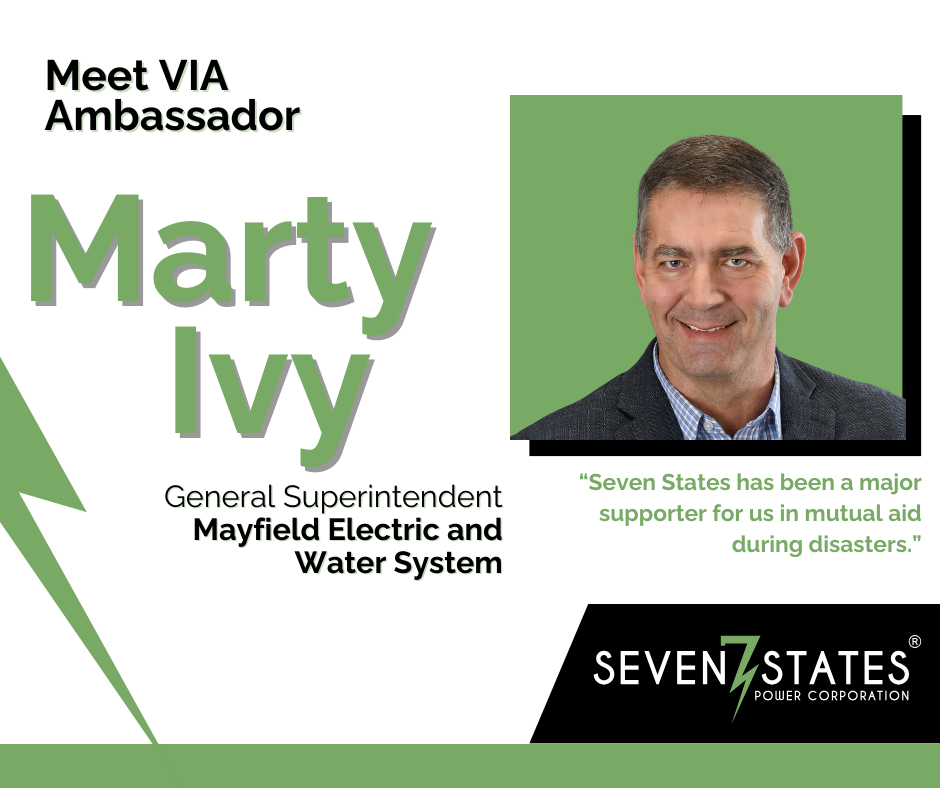
Marty Ivy knows that when it comes to the energy industry, innovative partnerships and technology help prepare everyone for the unexpected. Leading Mayfield Electric and Water System as General Superintendent, Marty has overcome his community’s fair share of devastating weather events. His experienced leadership has allowed him to place an emphasis on technological diversity and preparedness. We asked him to share his experience with various projects with Seven States: “Most recently, Seven States helped us develop an RFP and select a 1.3-megawatt solar installation that we’re preparing to deploy. Projects like this take time, but once it’s in place, it will serve as our generation to help offset TVA’s requirement. Seven States has also been a major supporter for us in mutual aid during disasters. We’ve had three FEMA events — the remnants of Hurricane Ike in 2008, the ice storm in 2009, and the tornadoes in 2021. So, between disaster recovery and now helping us with solar, Seven States has really been there for us. That’s what makes partnership so valuable — you all make things easier, and we see you not just as partners but as friends who help keep our communities strong. We’re grateful for that support and excited about the projects still to come.” To Marty, the most important thing he wants his members to know is that every decision is made with their needs in mind. “Mayfield Electric and Water System strives to be an efficient and innovative utility while managing both reliability and rates. That’s really what it comes down to — being reliable and keeping costs low for our customers. We’ve already seen how innovation can transform our operations. For example, our customer service representatives have been amazed at how much new technology has improved our outage management system. It’s made responding to customers easier, faster, and far more efficient, especially during storms. There’s so much potential we haven’t even discovered yet in the Valley.” With 34 years of industry experience, Marty knows that change is inevitable. He offered this advice to general managers who might be wondering where to start when it comes to bringing innovation to their LPC. “The best advice I can give anyone is this: you can’t effectively manage what you don’t know. That’s why technology is so important — it puts knowledge of your system right at your fingertips. My advice is, don’t be afraid of change. I’ve been with Mayfield Electric and Water System for 34 years, serving as manager since 2001. Over that time, I’ve seen the industry cycle and evolve about every five years. The one constant is that change always comes, and if you’re afraid of it, you’ll get left behind. So, for future managers and anyone in this industry, my advice is to dive in, get your feet wet, and embrace the changes that move us forward.”
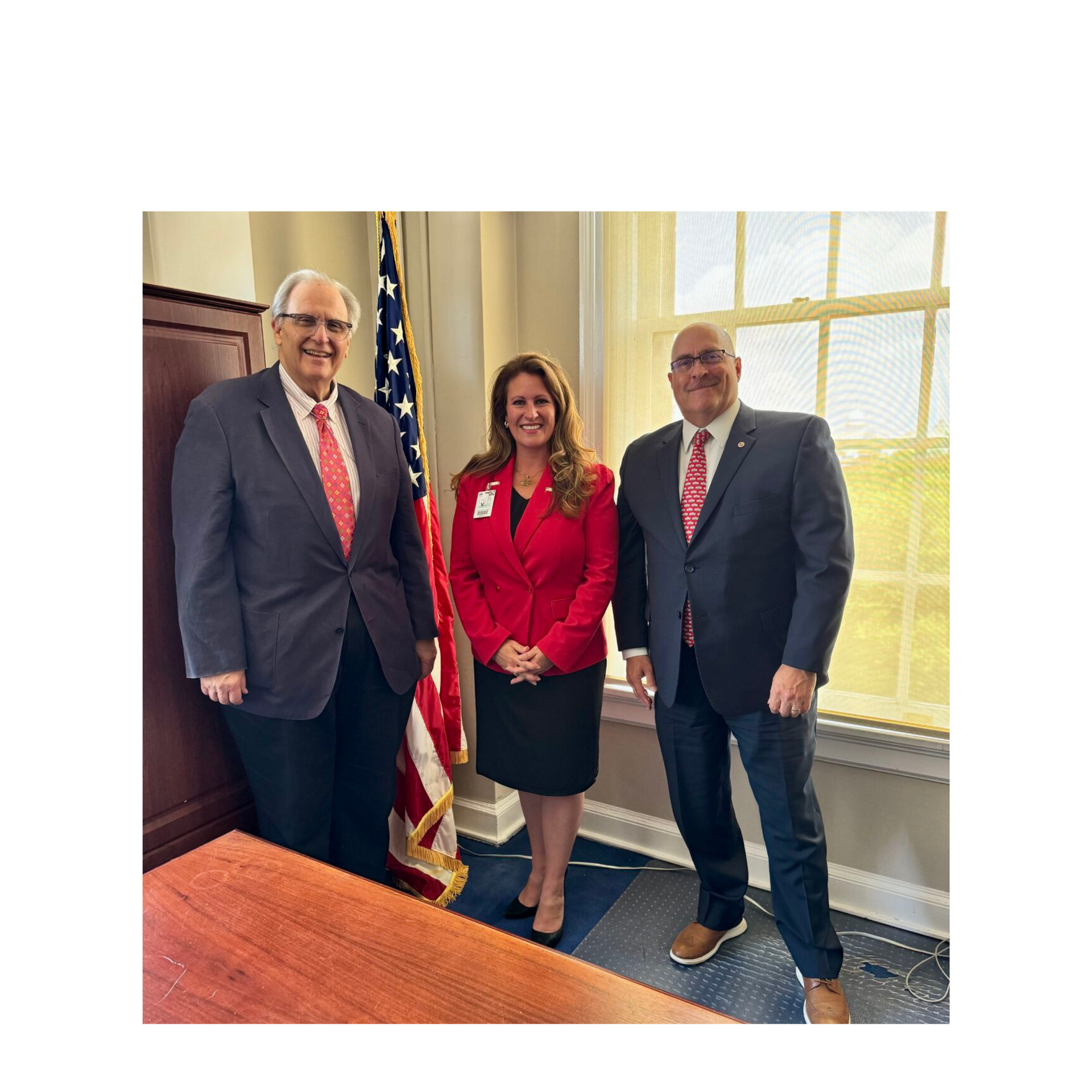
Seven States Power Corporation’s Board Chairman, Jeff Dykes, and President & CEO, Betsey Kirk McCall, met with Congressional leaders earlier this summer as part of a strategic initiative to advance funding to install technologies that make power more efficient, reliable, and abundant. Dykes and McCall sought to amplify the need for greater federal support to Tennessee Valley LPCs for increasing America’s energy infrastructure during a time where creative options are needed against the backdrop of unprecedented growth. A primary objective of the trip was to listen to legislators’ areas of focus and educate the leaders on how Seven States supports the Valley through times of transition. Many LPCs have voiced concerns over the volume of requests they are receiving to supply energy to data centers. Dykes and McCall emphasized the opportunities Investment Tax Credits (ITC) and alternative financing provide for accelerating large-scale projects that can supply this growing demand for energy. To date, more than 1200 data centers are in development across the U.S. that will consume an estimated 149.6 -239.3 TWH annually. That represents the equivalent of 15-25 large nuclear plants running continuously to supply the need. Dykes and McCall stressed how cooperatives like Seven States can leverage funding models that alleviate the capital outlays for and accelerate construction of projects that can accommodate the expected growth in the Valley over the next decade from these data centers. “It will take LPCs, TVA, communities, companies, and developers working together on such projects to meet the need and keep the lights on,” said Dykes. “We understand that these data centers represent an opportunity for investment in the region. These dollars will improve communities and attract high quality economic development prospects. We want to ensure our member LPCs and TVA are supported and prepared to deliver this opportunity to the Valley,” said McCall. Dykes and McCall also underscored that Seven States was created by LPCs, in partnership with TVA, as a strategic solution to TVA’s debt ceiling limitations—without amending the TVA Act. From 2007 to 2013, Seven States became the first —and remains the only— LPC-led organization to successfully negotiate a sale/leaseback agreement with TVA to co-own a utility-scale generation asset: the Southaven 800MW Combined Cycle Gas Plant. This makes Seven States uniquely qualified as an in-Valley solution to finance and co-own generation assets with TVA. “Seven States was created for moments like this. We often serve as the designer or developer, deploying capital and project management expertise to build reliable or advanced energy infrastructure on behalf of LPCs. This allows LPCs to avoid the burden of raising capital or navigating complex regulatory issues,” said McCall. Another key focus of the trip was to share project updates on the $439 million in funding secured earlier this year through the U.S. Department of Agriculture’s New ERA program. Dykes and McCall outlined how this investment will be used to deliver 250MWs of additional power—aligning with national priorities on energy dominance and security. While in Washington, the team also met directly with USDA officials to provide a progress report on the project. “We are at a pivotal moment where federal partnerships can accelerate the progress our members are already making,” McCall said. “Our goal is to ensure their contributions—and their challenges—are clearly understood as Congress shapes the future of energy policy.” More recently, McCall was also in the area conducting meetings during President Trump’s One Big Beautiful Bill event where Zach Stewart of Sequachee Valley Electric Cooperative was among those recognized for their service to the nation in the energy industry. McCall was on site as the new Rural Utilities Services Administrator at USDA, Karl Elmshaeuser, was announced. McCall met with Christopher McClean, former Acting RUS Administrator as part of a series of meetings to further map project details related to the $439 million awarded to Seven States by USDA. By engaging directly with lawmakers and federal agencies, Dykes and McCall are working to ensure that regulatory frameworks reflect on-the-ground realities. These Washington outreach efforts reinforce Seven States’ commitment to building an energy system that is affordable, reliable, and future-focused. Dykes and McCall expect continued conversations throughout the year as the Valley’s energy future takes shape.
Seven States recently had the privilege of partnering with the Chattanooga Area Food Bank to provide consulting support for energy efficiency upgrades at their main distribution facility. Serving 20 counties across Southeast Tennessee and Northwest Georgia, the Food Bank distributed over 15 million pounds of food last year—equivalent to more than 12 million meals for families in need. With such a vital and energy-intensive operation, improving energy performance means more resources can go directly toward feeding the region. Our team conducted a comprehensive energy assessment, identifying key opportunities to reduce utility costs through more efficient lighting, refrigeration, and HVAC systems. These recommendations are expected to cut energy use by up to 25%, translating into substantial cost savings over time. By optimizing energy performance, the Chattanooga Area Food Bank can reinvest those savings into expanding food access, enhancing logistics, and continuing their mission to eliminate hunger and promote healthier communities. This collaboration not only underscores the connection between energy efficiency and social good, but also highlights how thoughtful upgrades can deliver lasting value for mission-driven organizations. We're proud to support the Food Bank’s critical work and look forward to seeing the positive ripple effects of this project across the communities they serve.
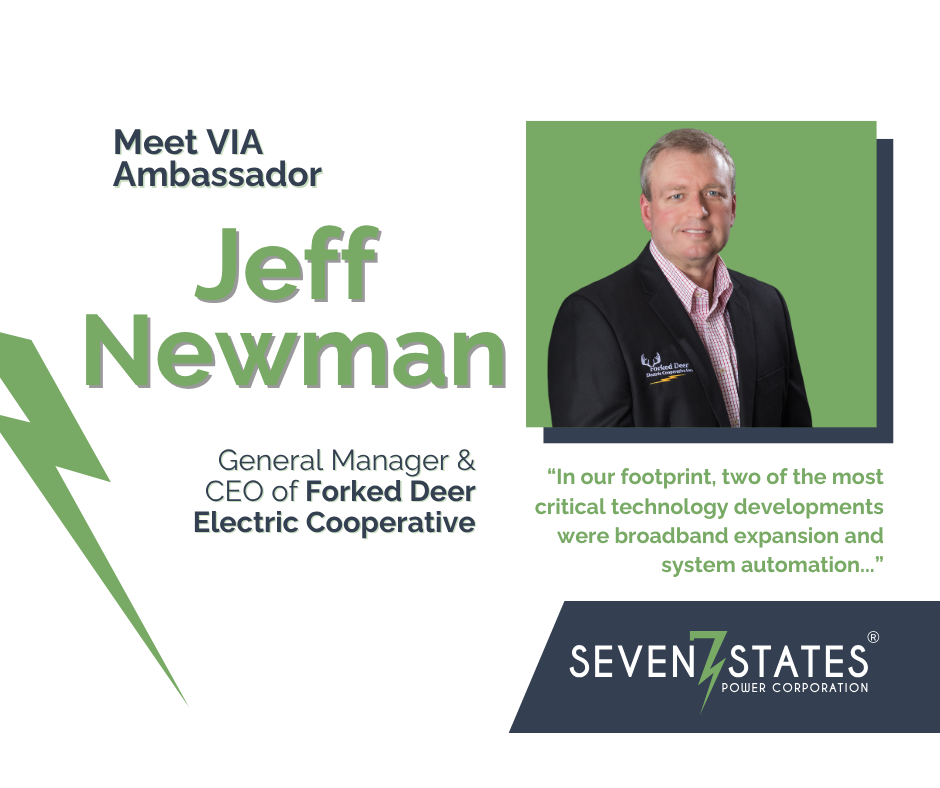
Leading Forked Deer Electric Cooperative as General Manager & CEO, Jeff Newman has firsthand knowledge of how vital technology is to the Valley and what a difference it has made in his community. “In our footprint, two of the most critical technology developments were broadband expansion and system automation. Bringing our system up-to-date has been a top priority, and that started with implementing SCADA across the network—a process that’s still ongoing. SCADA has already made a significant difference by improving our ability to detect and respond to outages quickly, which greatly reduces downtime for our members. On the broadband side, we now serve over 6,800 folks, which represents a substantial portion of our total meters. In a rural area like ours, access to high-speed internet isn’t just a convenience, it’s a necessity. It’s been a game changer, and the revenue from broadband has helped stabilize our electric rates by offsetting the need for larger increases. So, these technology developments haven’t just modernized our infrastructure—they’ve directly improved quality of life and economic resilience for the people we serve.” As the Valley continues to evolve and technology changes, Jeff views Seven States as a trusted partner that can help LPCs find the best fit for their community. “The biggest thing for us, as a rural utility, was having someone to help us get connected with the right people—whether that’s suppliers, vendors, or experts. We really leaned on Seven States for that support because, honestly, we didn’t even know where to begin. Every utility is different, and there’s no one-size-fits-all solution. You have to do what makes sense for your system and your community. A cookie-cutter approach just doesn’t work in this industry, and Seven States knows how to tailor a project or service to fit your exact needs.” Jeff’s advice to GMs who want to bring innovation to their communities is to stay open to progress by listening, learning, and ensuring new ideas truly serve the needs of the ratepayers. “I don’t take credit for the changes we’ve made, but progress happens when you don’t stand in its way. It’s important to evaluate new ideas carefully, make sure they align with your system’s needs, and support what makes sense. The key is to always consider what’s best for your LPC or co-op—and not become an obstacle to improvement.” ###
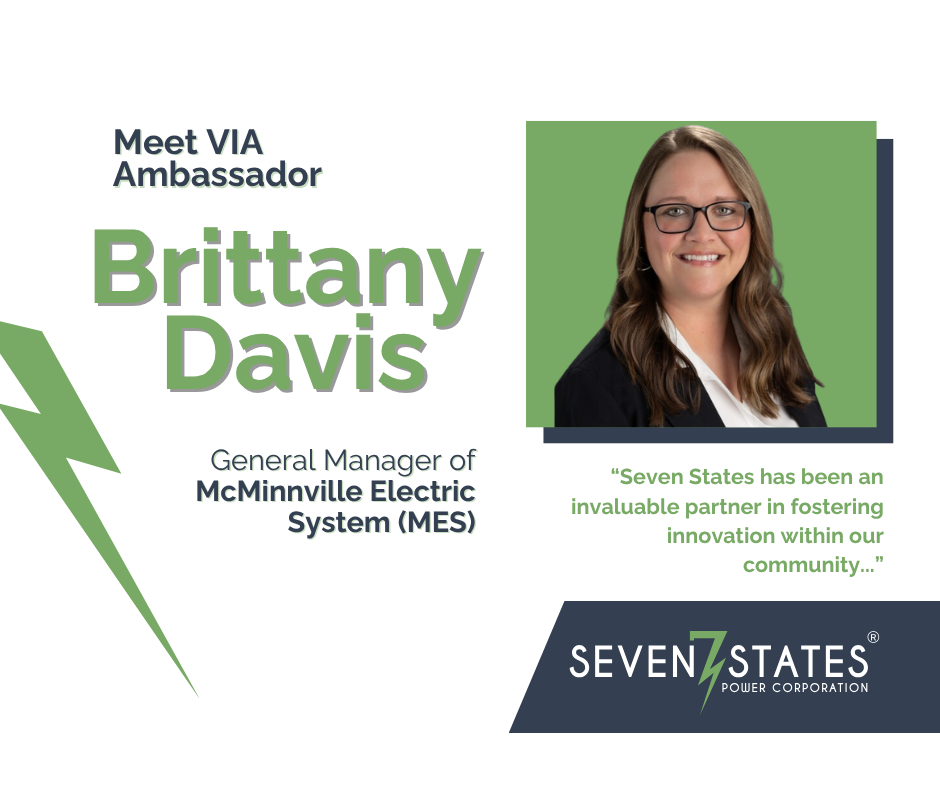
Serving McMinnville Electric System (MES) as General Manager, Brittany Davis leads her team with an eye on the grid of the future, and her expertise has given her an opportunity to set her community’s infrastructure up for long-term, sustainable success. “We are prioritizing critical infrastructure enhancements, including the reconstruction of two existing substations and the addition of a third to support increasing load demands. The new substation is designed not only to absorb future growth but also to provide contingency support, enhancing system reliability during both planned and unplanned maintenance events. Systemwide voltage regulation upgrades are also essential to improve operational efficiency and grid stability. Additionally, the completion of our distribution automation project—featuring the deployment of S&C IntelliRupters—will significantly bolster system reliability and support our transition toward a more modern, resilient grid.” With all the changes taking place in her LPC footprint, Brittany wants her community to know that their comfort and security are at the forefront of every decision she makes. “When I came on board at MES, it was clear our infrastructure needed attention. I helped develop a strategic plan to address those needs, and we’ve just received board approval to move forward. The plan focuses on modernizing our substations, upgrading relaying technology, and improving system reliability. While we’re still early in the implementation phase, I’m proud to drive efforts that will bring meaningful, long-term benefits to our community through innovation and smarter infrastructure.” Brittany credits Seven States as being a valuable partner for MES as the needs of her community have continued to evolve. “Seven States has been an invaluable partner in fostering innovation within our community. Their active involvement in the car charging project at Ascension St. Thomas – River Park Hospital was instrumental in expanding EV accessibility within Warren County. Additionally, their support in helping us with the install of the latest car charger project in collaboration with Tennessee Tech University has brought advanced technology to our region, further enhancing sustainability efforts and modernizing existing infrastructure.” As technology continues to advance across the Valley, Brittany’s advice to future managers who want to lead well is to lean into new and innovative opportunities with optimism and determination. “Embrace change. Technology and innovation evolve rapidly, and while past methods may have worked, that doesn't mean they remain the best solution. Assess your community’s needs, make informed financial decisions, and take decisive steps toward progress. Most importantly, never let a rejection deter you—persistence often leads to new opportunities. If the answer is no today, ask again tomorrow.” ###
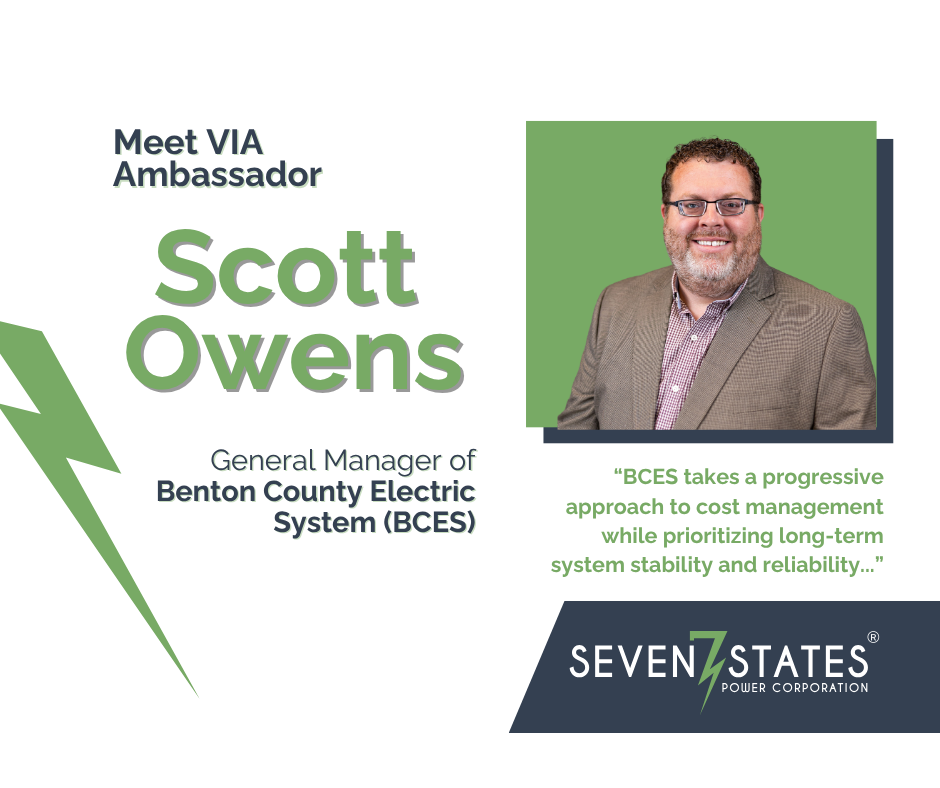
It’s no secret that innovation drives progress, and Scott Owens is committed to thoughtful initiatives that move his community forward. As General Manager of Benton County Electric System (BCES), Scott leads with an eye on sustainable technology and long-term reliability for the community he serves. “BCES takes a progressive approach to cost management while prioritizing long-term system stability and reliability. As we work to keep power costs low, fair, and equitable, we actively seek to implement technologies that make financial sense for our ratepayers. At the same time, we recognize and assign value to intangible benefits, such as reliability and resiliency. Innovation begins with an idea—one that is pursued with thoughtful diligence and supported by experience, collaboration, and strategic funding to ensure maximum value for those we serve.” In a time of rapid digital transformation, Scott explains how BCES is leveraging technology in a variety of ways to enhance their customers’ experience. “BCES is evolving our customer experience to meet changing expectations. Today, many of our customers prefer to sign up, pay bills, and manage their accounts online or through their phones rather than visiting the office. They expect a seamless, self-service experience with real-time access to information. This shift presents challenges for smaller utilities, particularly during outages, when customers want timely updates to foster understanding and patience. To meet these demands, we have implemented HometownGrid and are working closely with CSA to transition to their new payment and user portal platforms. Operationally, BCES has entered a maintenance phase after completing a 12-year construction cycle. This period is giving us the opportunity to reevaluate and develop our next strategic 10-year capital plan. Our customers expect fast restoration and minimal disruption. The question we are now focused on is: How can we continue to deliver on those expectations through the smart application of technology and systems improvements?” When asked about advice he’d give to new managers who want to bring innovation to their own LPCs, Scott underscores the importance of taking an intentional, community-driven approach to change. “Start by listening. Innovation should be guided by the real needs of your community, your employees, and your system—not just by what's new or trendy. Build trust internally first by engaging your team and making them part of the process. Then focus on partnerships—with your board, vendors, peer utilities, and key stakeholders. Don’t try to innovate in a vacuum. Next, do your homework. Innovation is not just about ideas; it’s about disciplined planning, strong execution, and understanding the financial and operational impacts. Evaluate the long-term value, not just the upfront cost. Sometimes the intangible benefits—like improved customer satisfaction, reliability, or system resiliency—are just as important as the return on investment. Finally, be patient but persistent. Change takes time, especially in a utility environment where change touches 85 years of generational programming. Celebrate small wins with your community and keep your focus on serving your customers better every day.” ###
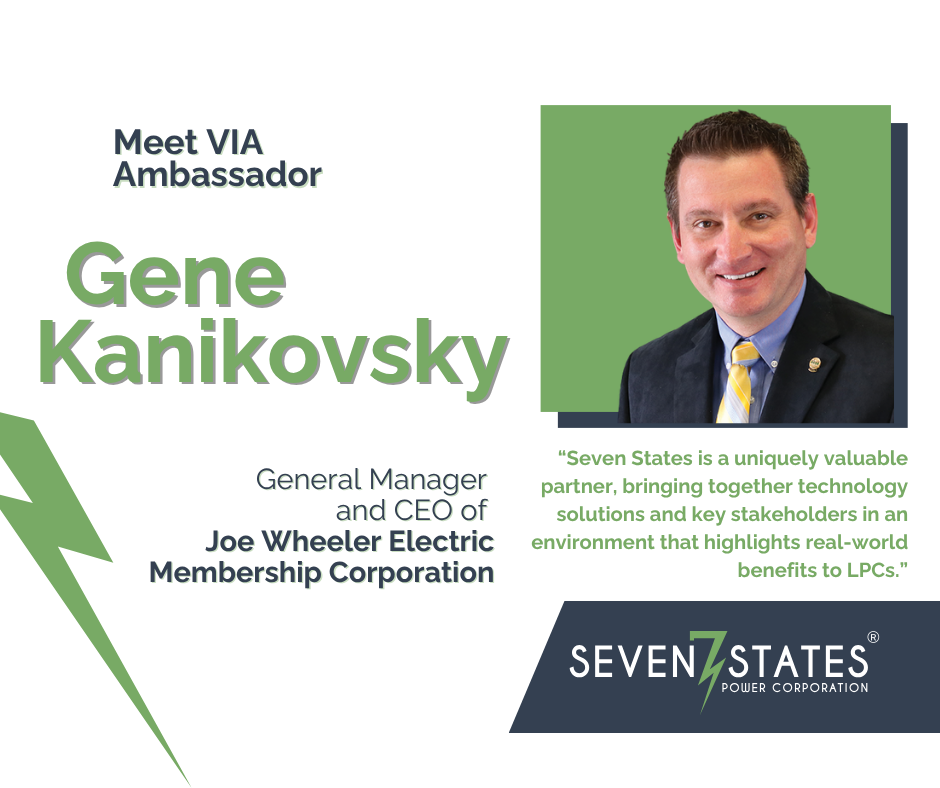
Gene Kanikovsky knows that innovative partnerships and groundbreaking technology are essential to preparing the grid for the future. Serving as General Manager & CEO of Joe Wheeler Electric Membership Corporation, Gene has a proven track record of implementing innovative, sustainable technology that benefits his community. “Joe Wheeler EMC has recently implemented a drone inspection program, including the deployment of our first thermal drone. We are also developing a digital surface model (DSM) to enhance our GIS capabilities by analyzing the proximity of vegetation to power poles and lines using the latest LiDAR data. Additionally, we’ve undertaken a systematic conversion of outdated lighting systems to high-efficiency LED. One of our proudest achievements is the commissioning of our new 1MW solar farm, which marks a significant step forward in our sustainability and technology portfolio. Every innovation we pursue is rooted in a commitment to either improve service quality or reduce costs for our members. Our core mission is to ensure reliable service at the lowest possible rates, and innovation is one of the most effective tools we have to achieve that goal.” Gene also recognizes and values the critical role that Seven States plays in building trust and accelerating innovation across the Valley. “Seven States is a uniquely valuable partner, bringing together technology solutions and key stakeholders in an environment that highlights real-world benefits to LPCs. This collaborative setting fosters dialogue that reduces the risk of project adoption by allowing LPCs to observe successful integrations of new technologies. The trust that LPCs place in Seven States significantly accelerates the development and deployment of innovative projects by lowering barriers to entry and providing trusted guidance.” When asked about what advice he’d give to new utility managers who want to bring innovative solutions to their communities, Gene shared that effective innovation starts with the right understanding and guidance. “First, start with a clear assessment by understanding the current technologies in use within your community—what exists, how it’s being utilized, and how effective it is. Next, prioritize impact by focusing on innovations that deliver the greatest financial and social benefits to your members. Lastly, choose partners carefully—the market is saturated with vendors seeking attention and investment. Select partners who are committed to long-term support and who will stand behind their products.” ###
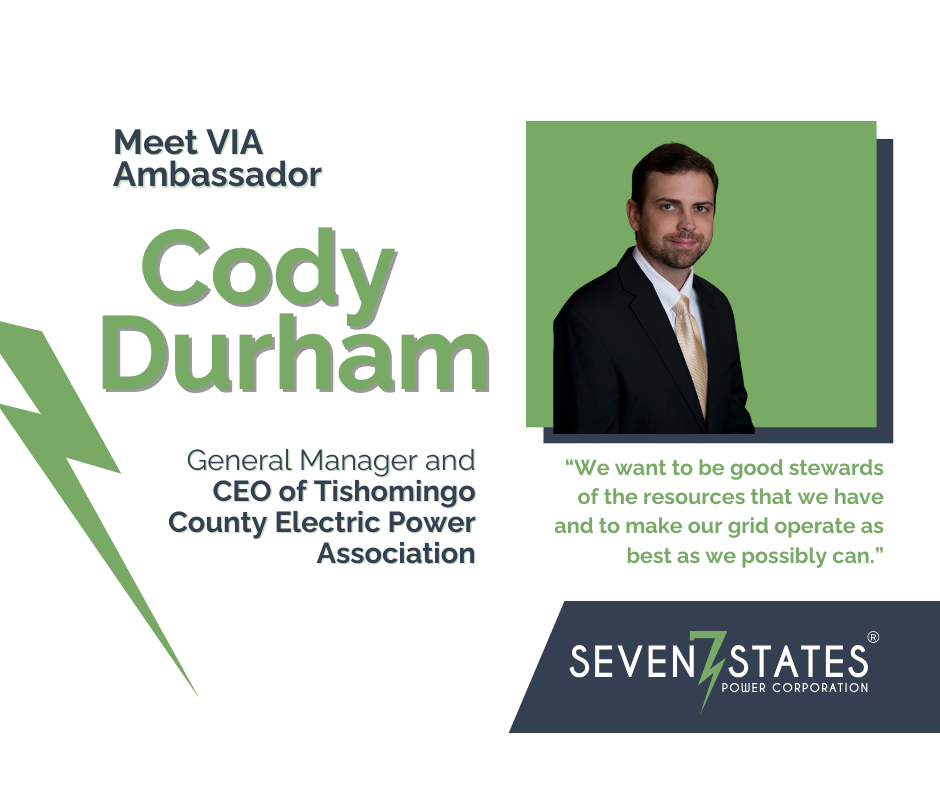
Cody Durham knows the world of technology has evolved over the years. As the General Manager and CEO of Tishomingo County Electric Power Association, he’s been able to channel that...
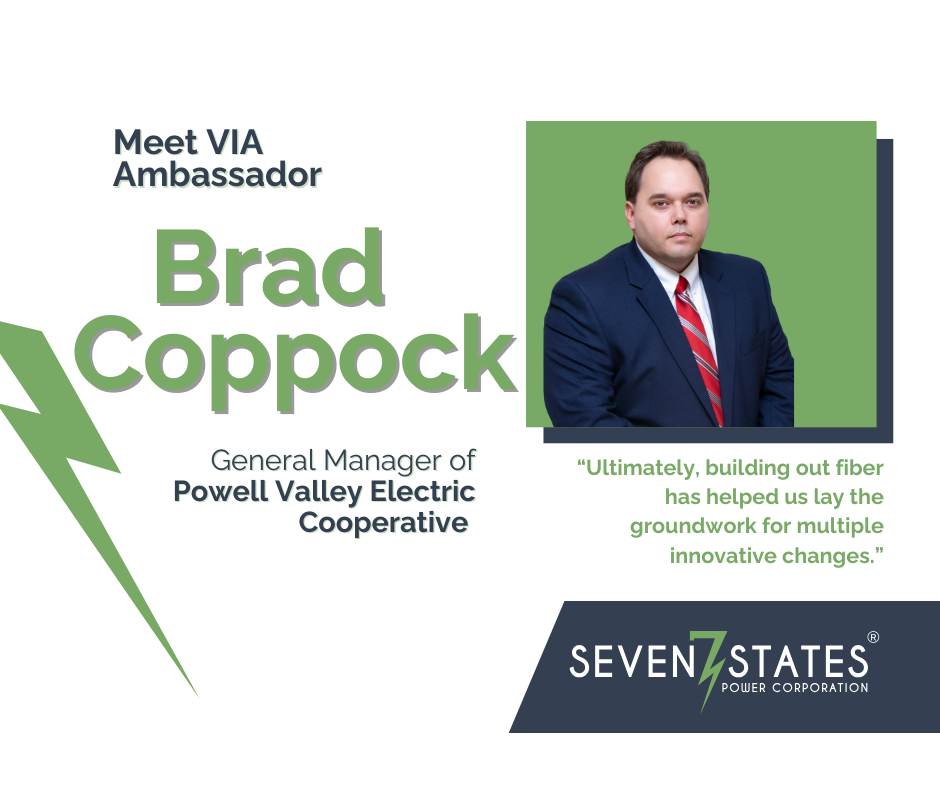
With over 20 years of experience in the industry, Brad Coppock has witnessed firsthand the evolution of technology and its impact on the Valley. As General Manager of Powell Valley...
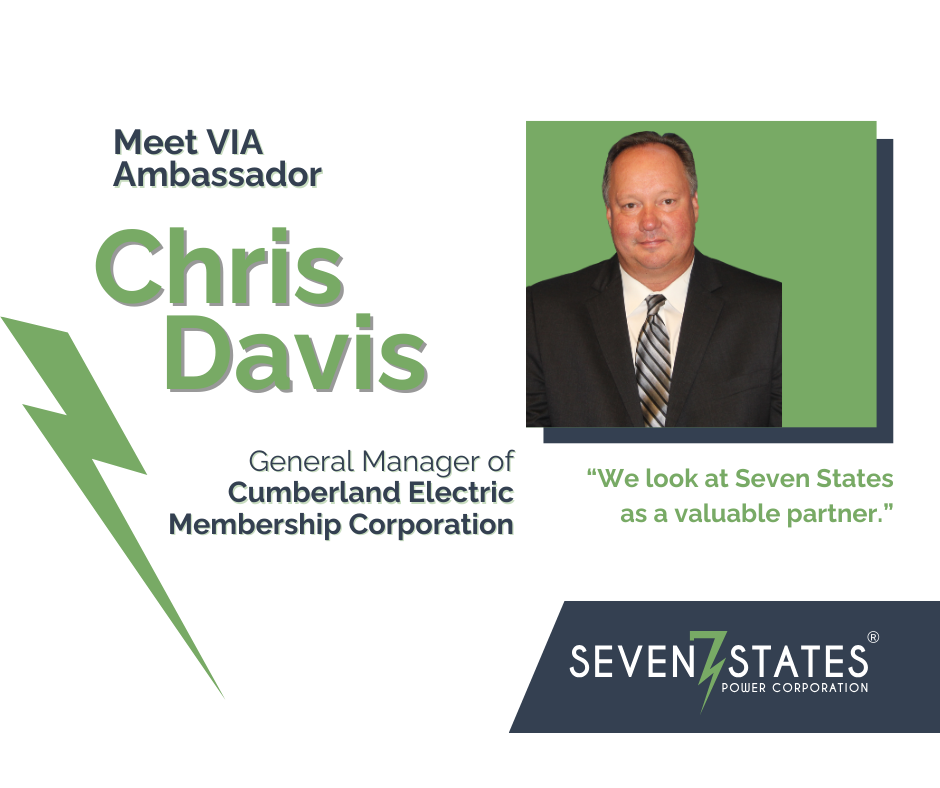
Chris Davis knows how crucial innovative partnerships and technology are in preparing for the grid of the future. Chris has led Cumberland Electric Membership Corporation (CEMC) as general manager for six years with a deep understanding of technological diversity and strategic partnerships. We asked him to share some of the ways he has brought innovation to his LPC footprint, as well as his experience with Seven States as a trusted partner. “We’ve taken steps to boost innovation in our territory, but taking advantage of voltage reduction measures have worked especially well for us and elevated our demand-side management to the next level. We have previously worked with Seven States on exploring solar, but currently, we're looking at battery storage and are partnering with them to progress in that journey. Seven States has been wonderful in helping us with information and a world of questions that we have had, both technical and philosophical— really ensuring that we find the technology that’s right for our LPC. We’re new at this, and the Seven States team has come through with some great answers to walk us through everything.” Chris always considers how his members view CEMC’s investments in innovation. “I want our members to know that we are constantly looking at ways to improve reliability with innovation. We want to make sure that new ideas and technologies are a good fit for the membership and the community. You always have to find the right mix, but we strive to keep the door open to opportunity and exploring what can help improve the life of our folks. That will always be our goal.” With his 41 years of industry experience, Chris has learned that being plugged into your community and knowing their needs is fundamental to being an innovative leader. He offered this advice to general managers who might have questions about how to start bringing innovation to their LPC. “My advice is to always evaluate the needs of the LPC and what works and what doesn't. What we found to be helpful is surveying the membership and asking about their interests. We ask questions that lead us in the direction of finding out what they need, and then deciding how we can accomplish that. And hopefully for both of those, the answer is the same: what's good for the LPC’s needs is also good for the membership.”
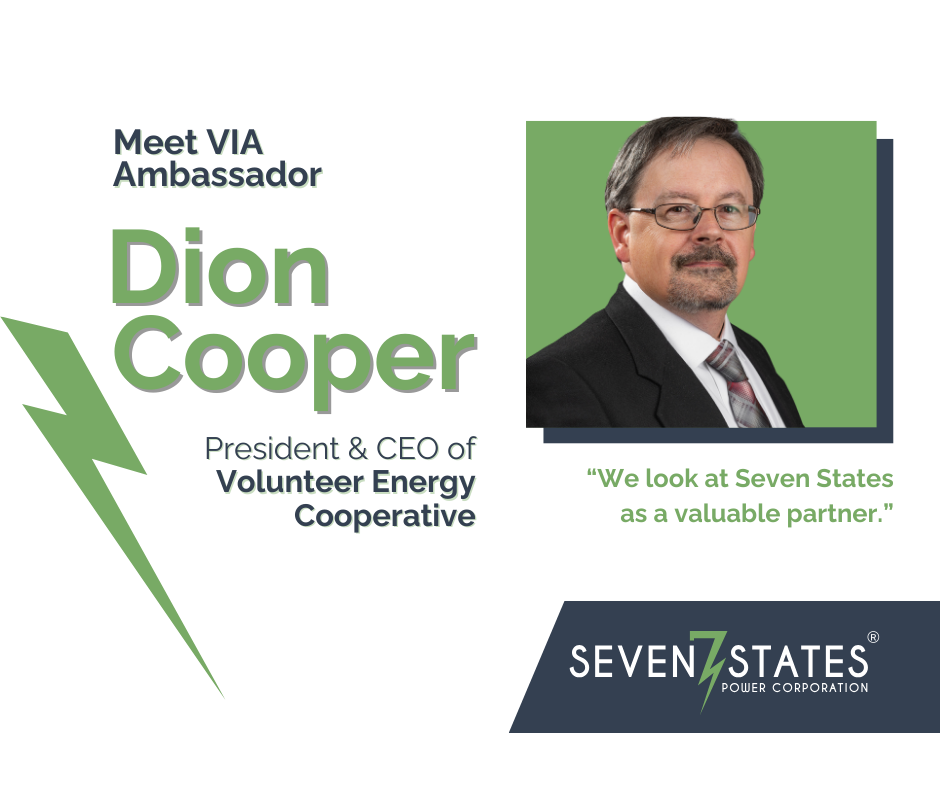
With over 30 years of industry experience, Dion Cooper’s transition to President & CEO of Volunteer Energy Cooperative (VEC) in 2022 was an opportunity to ensure their system was prepared for the future with innovative solutions. “One area that we’ve worked to improve is to get more downline controls. We’ve got fiber to our substations and are actively working to implement more smart grid technologies. VEC has been awarded a DOE grant through the MG CARED program, as well as an additional battery grant from the Appalachian Regional Commission (ARC). We partnered with North Georgia EMC and Blue Ridge Mountain EMC for a multi-state award, which was the first of its kind. In total, the three cooperatives will receive $10M to go toward the installation of additional battery storage systems in our service areas, and VEC plans to install an additional 4MW of batteries in Meigs County with our portion of the award. That battery piece is probably the biggest thing that we’re chasing right now—that will help improve our reliability even more.” Dion knows his LPC is responsible for the present and future of his community’s needs, and he wants his members to know that he strategically evaluates new technology with a long-term vision. “I want our members to know that we always look for opportunities that are going to benefit them in terms of reliability, cost, and anything we can do to improve their service level. We don’t pursue technology for technology’s sake—and as a former IT guy, I love technology—but there has to be a value to the cooperative in order to implement innovation.” Dion knows that Seven States is a helpful resource as his community’s needs continue to evolve and diversify. “We look at Seven States as a valuable partner, not only from a standpoint of doing projects together, but for expertise also—we can reach out to their team and lean on them. With our interest in battery storage and Seven States’ experience in that arena, we are confident that we’ll be able to work together in the future as we continue to explore what can best benefit our community.” With so much technological advancement in the Valley, Dion encourages fellow leaders to find what works best for their LPC and to not be afraid to bring about community change and benefits. “Don’t be afraid to implement new technologies just because it hasn’t been done; don’t let that be a deterrent. You don’t have to live on the cutting edge, but it’s okay to be first sometimes, especially if it has a tremendous value to the organization and to your members. Getting buy-in from your team, board, and community is vital, and if you have a technology that is going to bring real, tangible value to your community, and you keep that at the forefront of everything you do, everything else will fall into place.”
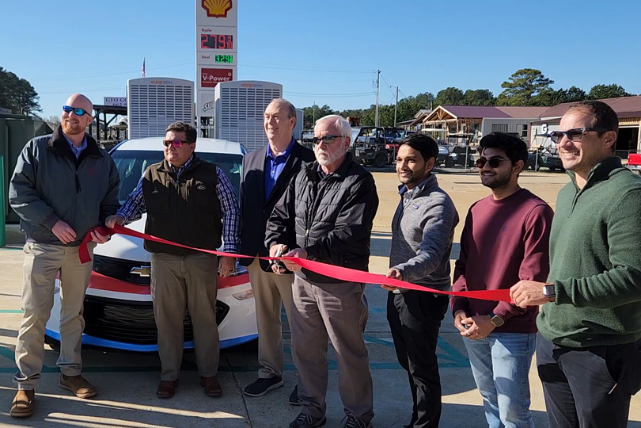
MATHISTON, Miss. (WCBI) – Travelers along Highway 82 and The Natchez Trace Parkway will now have a new refueling option. 4 County Electric Power Association has teamed up with the Tennessee Valley Authority and S and S Shell in Mathison to install the utility’s first Electric Vehicle Charging Station. TVA is trying to reduce “range anxiety” for EV owners across its service area by working with partners to reduce the distance between charging stations. The junction of 2 well-travelled highways made Mathiston a good location for 4 County to get into the charging market. “So, TVA came to us a couple of years ago and said, ‘Hey look, we want to fix range anxiety for electric vehicle across the Tennessee Valley’, and they offered us some grant money. We partnered with them to build this fast charger. What you see here is the most powerful fast charger in the Tennessee Valley footprint as of today, here in 4 County Electric Power Association and Mathiston, Mississippi,” said Brian Clark, CEO of 4 County EPA. The S and S site in Mathiston has 4 chargers available.
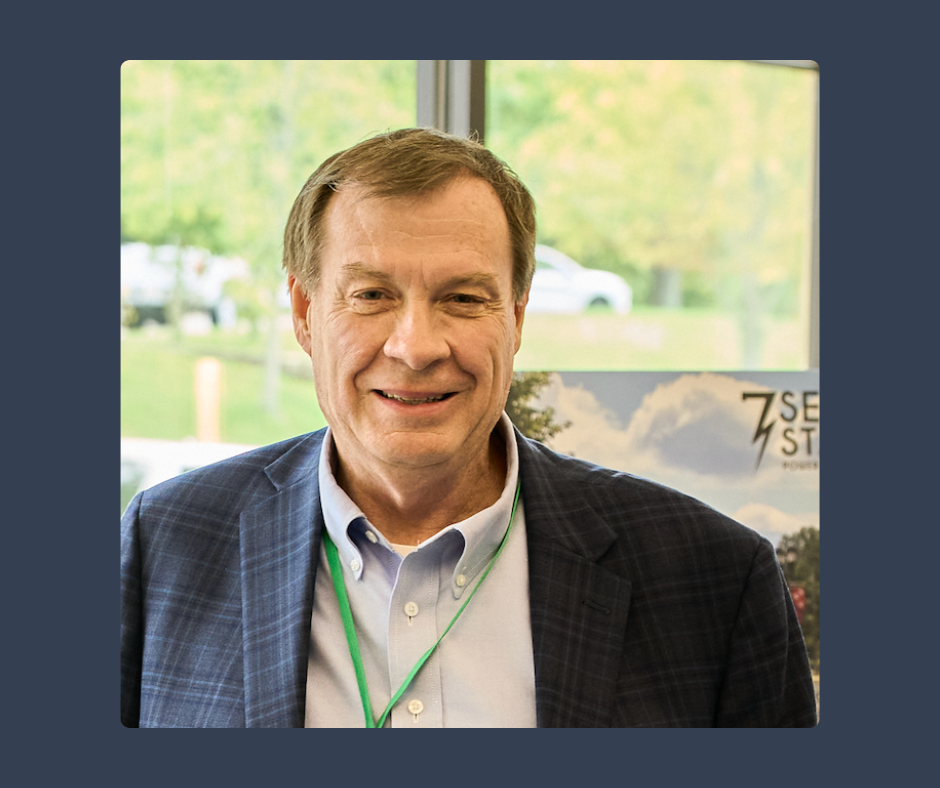
Seven States is excited to announce the addition of Dana Jeanes to the team as Senior Vice President of Financial Planning & Product Design. In this role, Jeanes will drive our commitment to deploying innovative technology in the Valley and working collaboratively with our trusted partners to connect to the grid of the future. Having earned his Bachelor of Science in Electrical Engineering from Christian Brothers University in 1979, and an MBA with an emphasis in Finance and Accounting from the University of Memphis in 1994, Jeanes went on to acquire his license as a Professional Engineer in Tennessee as well as becoming a Certified Public Accountant and Certified Municipal Finance Officer. This background prepared Jeanes for an impressive and extensive career with Memphis Light, Gas, and Water beginning in 1987. He has held numerous positions during his tenure there including the roles of Energy Engineer, Rates Engineer, Supervisor of Rates and Regulatory Affairs, Manager of Budget, Plant and Rates, Director of Analysis, and Strategy and Performance Controller, and Vice President and Chief Financial Officer. In 2018, he assumed his current role as Senior Vice President, Chief Financial Officer, and Chief Administrative Officer (Secretary-Treasurer). His retirement from MLGW is planned for the end of the calendar year and he intends to begin working with Seven States on January 6, 2025. His years of both academic and professional experience will be a valuable asset to advancing the mission of Seven States to empower LPC members to meet consumer demand for technology and innovation in an evolving utility marketplace. As a former Board member of Seven States, Jeanes steps into the role of SVP full time having also served as a Past President of Tennessee Municipal Electric Power Association. He also served on the Tennessee Valley Public Power Association Government Relations Committee and Rates and Pricing Committee lending his insight and guidance on issues impacting the Valley. “This combination of expertise and collaborative experiences makes Jeanes a fantastic addition to our team and we are greatly looking forward to the work we will do together in the new year,” said Betsey Kirk McCall, Seven States President & CEO. To stay up to date on Seven States projects, announcements, and news, subscribe to our newsletter .
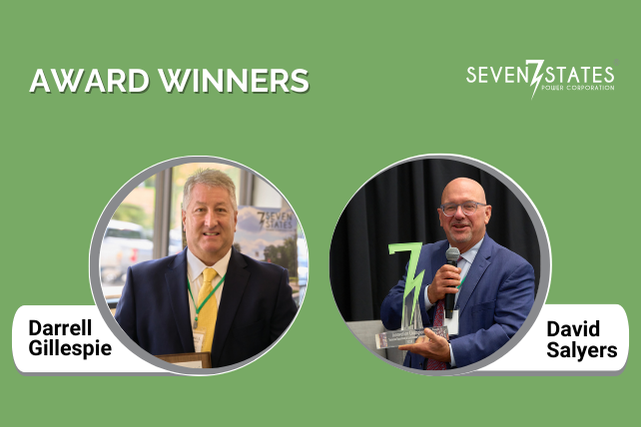
Innovation Champion and SPARK Awardees Announced at Seven States 2024 Annual Meeting Seven States is proud to recognize valuable contributions to innovation through honoring essential leaders working to keep up with evolving consumer demand. Two important leaders were recognized at this year’s Annual Meeting. These leaders’ dedication, vision, and commitment have made a lasting impact on the Valley. Innovation Champion Award Every year, the Innovation Champion Award is presented to an organization that exemplifies the spirit of innovation in their operations. This year we presented this award to the Tennessee Department of Environment & Conservation (TDEC) for their instrumental work in bringing innovation to so many of our LPCs including their ongoing work with the EV Fast Charge Network. These 66 Valley-wide EV charger installations span from Fort Payne, AL to Warren, KY, and Tombigbee, MS, to Bean Station, TN, and Blue Ridge, GA. Commissioner David Salyers accepted the award on behalf of his team. Commissioner Salyers was appointed by Governor Bill Lee in January 2019. As Commissioner, Salyers oversees the state’s efforts to protect and enhance Tennessee’s natural resources, including air, water, and land, while balancing economic growth and environmental stewardship. Salyers is known for his collaborative approach to environmental policy, working with local communities, industry leaders, and government agencies to promote sustainability and resilience across the state. The Seven States 2024 Annual Meeting was hosted at one of 59 State Parks under Commissioner Salyers’ oversight. We were excited to partner with Montgomery Bell State Park in the design, development, and deployment of a battery storage unit and solar charging stations at each of the six trail heads inside the park. SPARK Award This year marks the fourth presentation of the Seven States Spark Award, which went to Darrell Gillespie, General Manager of Dickson Electric System. We were proud to partner with Dickson Electric to design, develop, and deploy a battery storage solution that will provide peak shaving solutions to the utility. We are grateful for Gillespie’s leadership across the Valley and his invaluable service to Seven States as both a partner and Board Member. In his role, Gillespie leads the utility’s operations, overseeing the provision of reliable electric service to the local community. With a strong focus on customer service, infrastructure modernization, and energy efficiency, he ensures that the system meets the growing demands of both residential and commercial customers. Under Gillespie’s leadership, Dickson Electric System has continued to prioritize grid reliability, sustainability initiatives, and community engagement, contributing to the region’s development and energy resilience. Congratulations to Commissioner David Salyers and TDEC as well as Darrell Gillespie and Dickson Electric System for earning these outstanding awards!
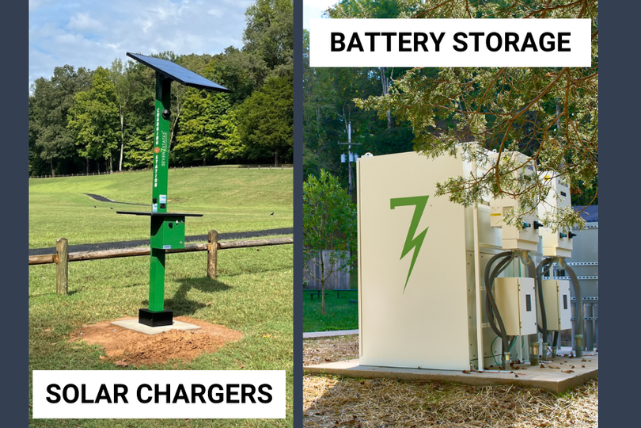
In order for communities to connect to the grid of the future, we must first build it. Through trusted partnerships, we have furthered this objective with our latest project deployments inside Montgomery Bell State Park in Burns, TN. Now visitors can connect to solar power through six solar charging stations placed throughout the park. This is not only a benefit to the public, but also showcases the need for such technology and innovation to support the energy grid. We also partnered with Dickson Electric System and Tennessee Department of Environment and Conservation (TDEC) to deploy a 150kW – 2hr battery storage unit constructed in the park, which stores energy and releases it back onto Dickson’s electric system. This takes the power grid one step closer to sustainability, a huge step in the right direction for our member LPCs. A key goal of this installation is to accelerate the creation and adoption of sustainable power solutions that ultimately benefit end-users. At Seven States, we believe it is important that we not only talk about innovation, but we also deploy it. These projects demonstrate how Seven States can empower LPCs to meet consumer demand for technology and innovation in an evolving utility marketplace. The battery storage project in particular is part of Seven States’ commitment to deploy 300MW of storage capacity across the Tennessee Valley. The solar charging stations are an excellent example of how innovation is being used to deliver solutions that not only make life more convenient for consumers but also advance the power grid forward. These projects represent another step in the right direction for building and energizing the grid of the future. To learn more about where Seven States have deployed our projects, visit https://sevenstatespower.com/where-we-work/
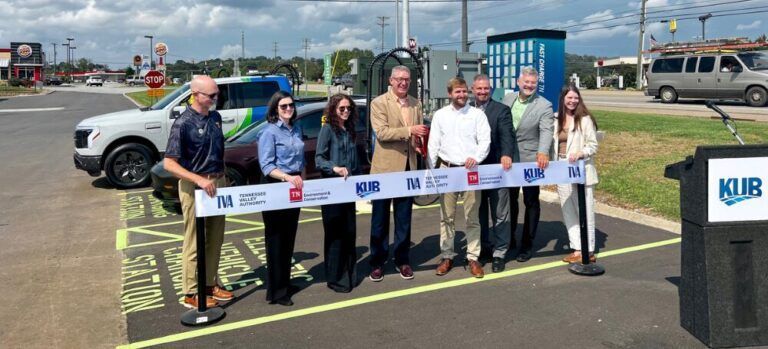
East Tennessee drivers and those passing through now have more electric vehicle (EV) charging options. KUB installed two public EV fast charging stations – one in Downtown Knoxville and one in Seymour. These locations fill key alternative fuel corridor gaps on I-75 and Route 441.
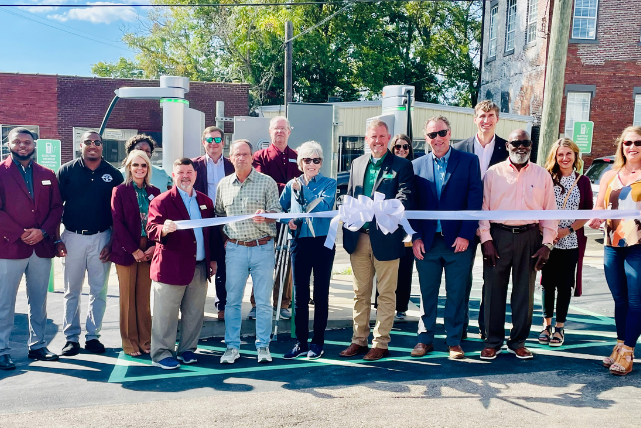
STARKVILLE, Miss. (WCBI) – Like many local people, you may fill up your car at the gas pump.But some visitors to Starkville and surrounding towns are rolling in with an EV, an electric vehicle.This is the future of the pit stop. Pull in and plug in. Starkville Utilities General Manager, Edward Kemp said it’s a privilege to have these new fast-chargers for motorists who want to charge and go. “A new technology. The new advanced features as opposed to some of the older chargers. We have some of those here, but we wanted to provide more options for more people to charge their electric vehicles,” said Kemp. Starkville Utilities received a grant from Tennessee Valley Authority to help fund the two EV chargers through their Fast Charge Network program. Josh Wooten, the Customer Relations Manager for TVA in Starkville, agrees this will give residents and visitors more options on how and where they can charge their electric cars. “Just providing that optionality here in Starkville, allows those that have EV charged vehicles to come in. They’re able to do business, they’re able to have fun here in Stark Vegas,” said Wooten. One of TVA’s goals for these fast-charging stations is to be near convenience stores, restaurants, and restrooms, so that the driver can enjoy the town as they wait for their vehicle to be charged. Along with Seven States Power Corporation, TVA supports other towns in Northeast Mississippi to also gain access to these new chargers. “We’re targeting a charger like this every 50 miles along major interstates and highways,” said Wooten. Kemp sees this new addition in Starkville as a step towards a more progressive future. “It’s also just trying to be a part of and build the grid of the future. We know that electric vehicles are becoming more and more common placed in our community certainly but also in our entire economic atmosphere,” said Kemp. The fast-chargers are available 24/7 on Lampkin Street. West Point, Tupelo, and other towns in the area will also be getting new fast charging stations for electric vehicles through TVA.
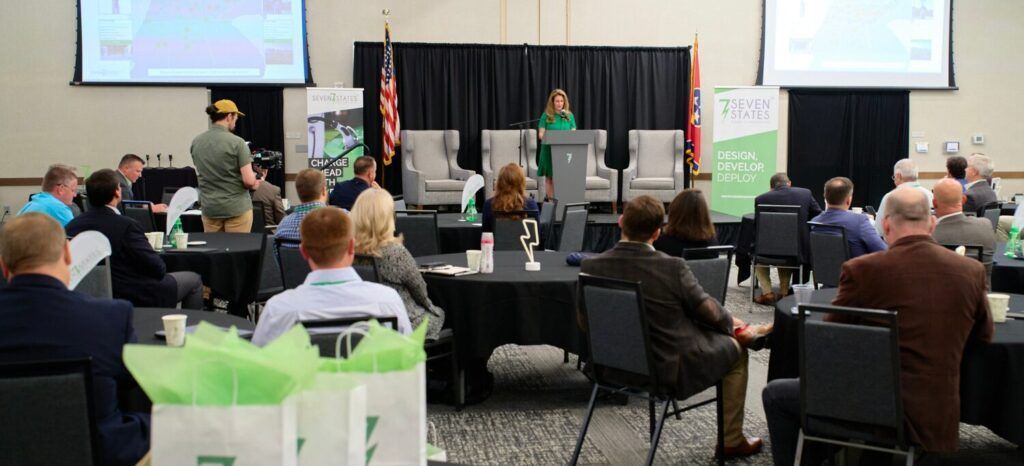
The body content of your post goes here. To edit this text, click on it and delete this default text and start typing your own or paste your own from a different source.
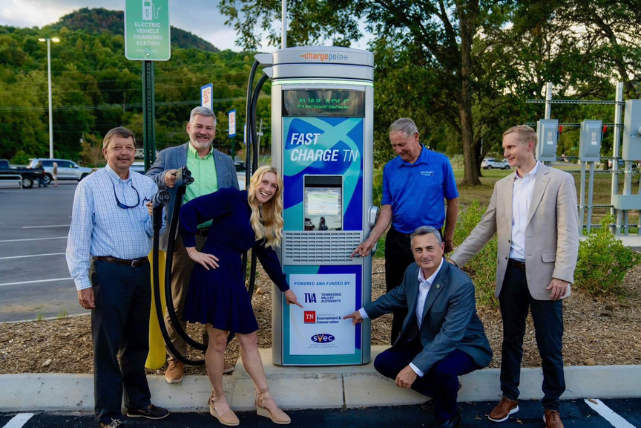
Sequachee Valley Electric Cooperative connects Marion County to Fast Charge TN and regional Fast Charge Network Kimball, TN. – As automakers retool their factories to build electric vehicles (EVs), many more EVs will be on the roadways in the next decade. Sequachee Valley Electric Cooperative (SVEC) is helping to make sure that Tennessee is ready with charging infrastructure. On September 19, SVEC announced that it has installed two fast chargers at The Food City in Kimball at 570 Main St. as part of Fast Charge TN, a partnership between the Tennessee Valley Authority (TVA), the Tennessee Department of Environment and Conservation (TDEC), and Seven States Power Corporation. This Fast Charge TN installation is part of the regional Fast Charge Network that will cover major travel corridors across TVA’s seven-state service area and will complement the broader efforts of the National Electric Highway Coalition, which seeks to enable long-distance EV travel by placing fast chargers along interstates and major highways throughout the United States. “We jumped at the opportunity to participate in Fast Charge TN because we want to make it easy for people to choose EVs so our community can enjoy the environmental and economic benefits of electric transportation,” says Mike Partin, President and CEO of SVEC. “The funding from TVA and TDEC makes it possible to add fast chargers in our community by providing 80% of the project cost.” “We’ve moved far beyond connecting communities with power lines alone,” says Monika Beckner, Vice President of TVA EnergyRight. “Today, EVs use our clean, low-cost, reliable electricity to connect communities and commerce across our region. Taking a leadership role in EV charging infrastructure allows us to save drivers money and attract good jobs and tourism– all powered by electricity from SVEC and TVA.” TVA and TDEC have brought together local power companies, state and local government partners, and others to pave the way for over 200,000 EVs on Tennessee Valley roads by 2028. “Tennessee’s air is cleaner as measured by federal air quality standards than it has been in generations, and a clean environment helps drive economic development,” says Greg Young, TDEC Deputy Commissioner. “TDEC is partnering with TVA and SVEC on the development of this station to continue Tennessee’s environmental and economic momentum while further entrenching our state as the epicenter of the electric vehicle transition.” “Seven States is trusted by local power companies across the Tennessee Valley to deliver EV charging technology for their consumers,” says Betsey Kirk McCall, President and CEO of Seven States Power Corporation. “Impactful partnerships like this benefit the local community, regional economy, and global environment for years to come.” “This charging location does more than charge cars — it connects Marion County to the Fast Charge Network and plays an important role in putting our region on the leading edge of the new electric economy, connecting our communities to greater opportunities,” says Partin. To learn more about the Fast Charge Network, calculate how much money an EV could save you or locate EV charging stations on your travel route, check out https://energyright.com/ev/ .